What began as a scenic helicopter ride for a visiting Spanish family ended in a heartbreaking tragedy above the Hudson River—leaving six lives lost and two continents in mourning.
It was supposed to be a highlight of their New York vacation: a breathtaking aerial tour for Agustin Escobar, a respected global executive at Siemens, his wife Merce Camprubi Montal, and their three young children, ages 4, 5, and 11. But within moments of takeoff, the promise of wonder turned to horror.
Shortly after 3:00 p.m. on Thursday, April 10, their Bell 206 helicopter lifted from a Manhattan helipad, its rotors humming into the cloudy sky. Just minutes into the flight, the pilot made a routine radio call—he needed to stop for fuel. What happened next unfolded too fast to prevent, but too slow to forget.
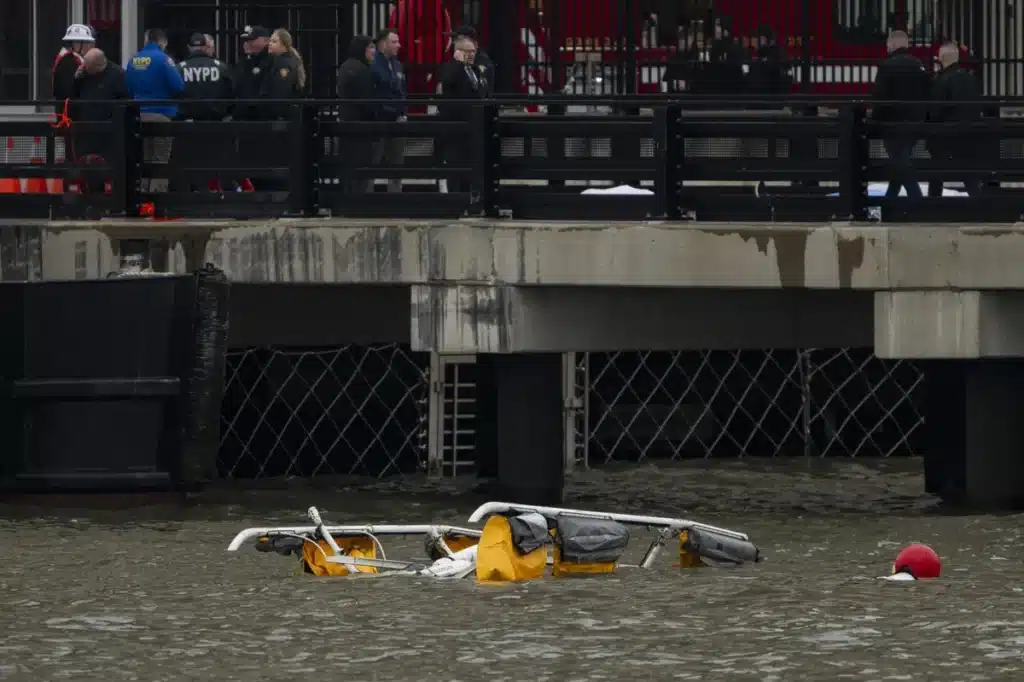
The helicopter vanished from radar. At 3:17 p.m., emergency services were alerted. Moments later, another pilot flying nearby spotted it—upside down in the Hudson River, pieces drifting, landing skids barely visible above the surface.
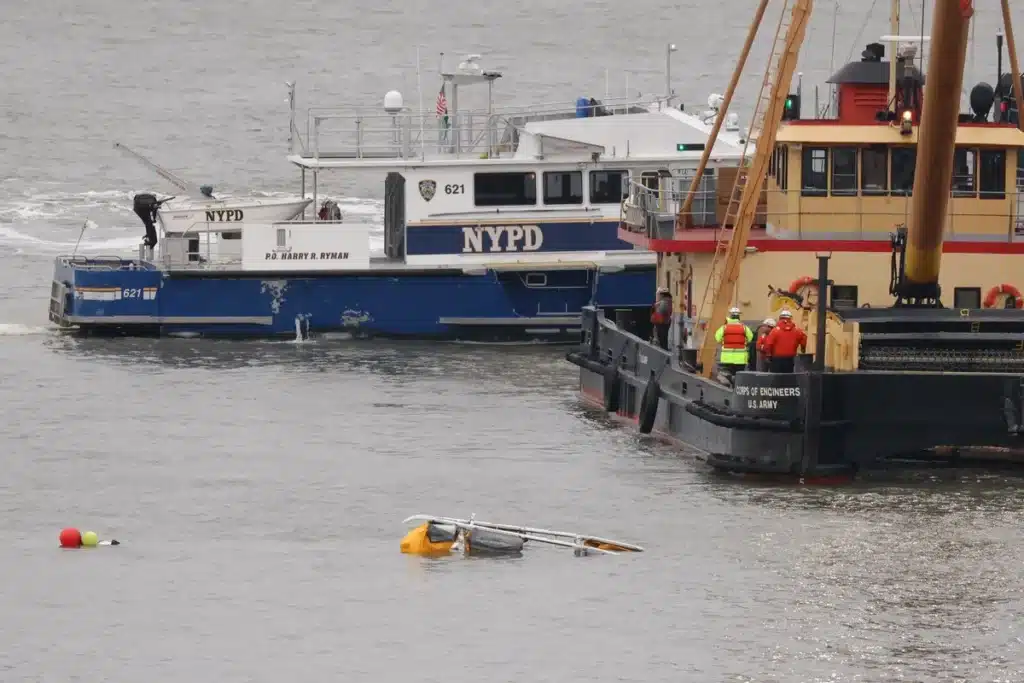
No one on board survived. The victims included the pilot, whose identity has not been publicly released. Escobar, a visionary leader in global transportation, and his family were gone in an instant.
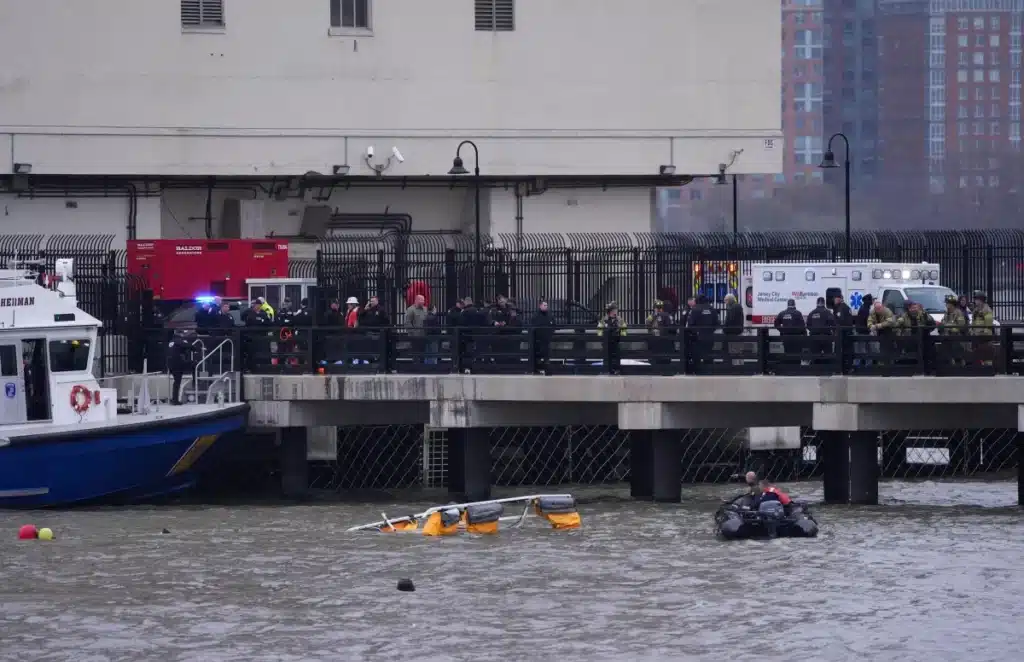
Images of the wreckage stunned viewers around the world: rescue boats circling, authorities scanning the river, landing skids bobbing near the Jersey City shoreline. Police Commissioner Jessica Tisch confirmed the worst: “The aircraft lost control and hit the water.”
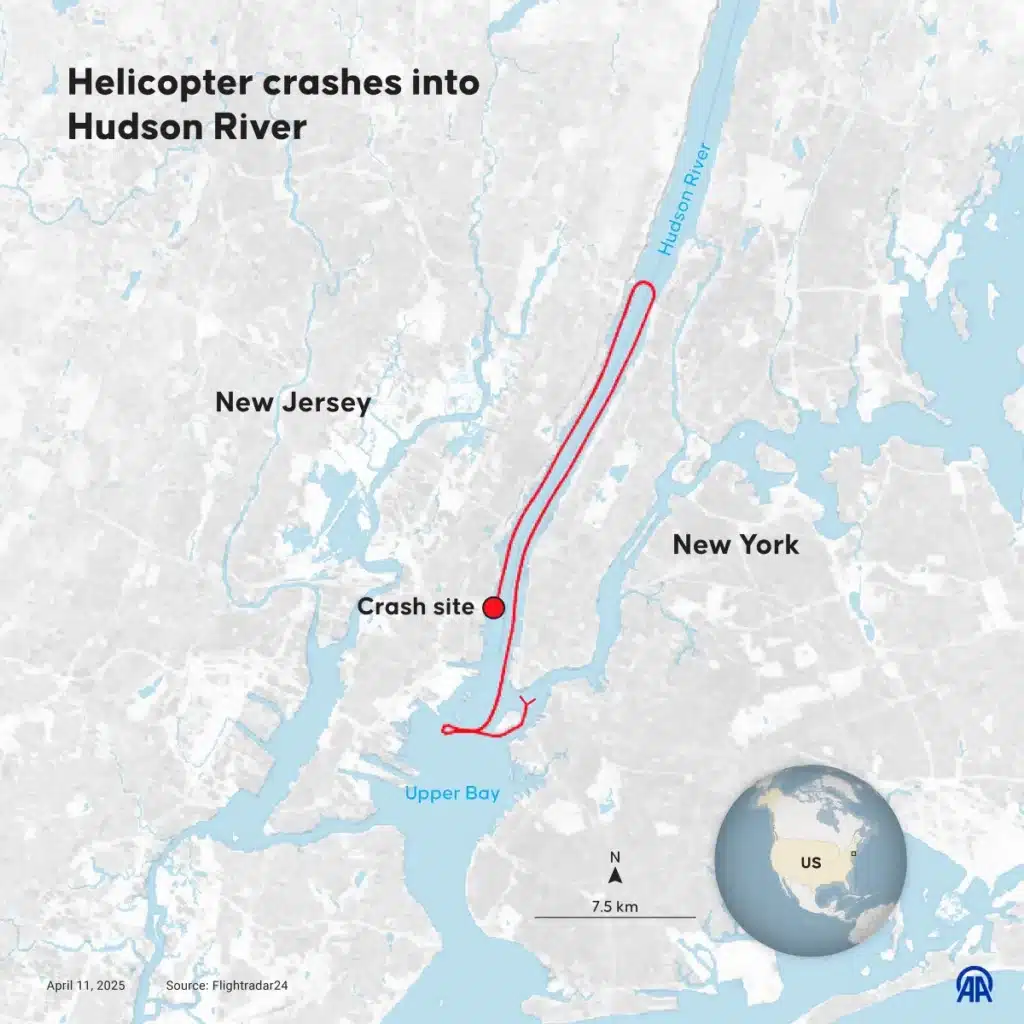
Initial findings suggest the helicopter followed a common sightseeing route—over Governor’s Island, near the Statue of Liberty, and north along the Hudson. But after looping around the George Washington Bridge and turning back south, something went terribly wrong.
Michael Roth, owner of New York Helicopter, the company behind the tour, was devastated. “He called in that he was landing and needed fuel. He should’ve arrived in three minutes. Twenty minutes later, he didn’t. We knew,” Roth said, his voice breaking. “This has shattered us. My wife hasn’t stopped crying.”
Investigators are now working around the clock to uncover what happened during what should have been a routine flight. Aviation experts suspect mechanical failure—potentially catastrophic..
Kyle Bailey, an aviation analyst, believes a rotor blade separation may have occurred mid-air. If the blades detached, it could have severed the tail boom, sending the craft into an uncontrollable spin. “If that rotor head separated,” said another expert, JP Tristani, “that helicopter was doomed. There’s no surviving that.”
Witnesses reported hearing loud snapping noises—like gunfire in the sky—and then watching in horror as pieces of the helicopter broke off before it plunged into the water nose-first. One bystander said it “vanished in seconds,” a blur of metal, sound, and sudden silence.
Adding to the grim picture is surveillance and bystander footage that captured the final seconds: the helicopter spiraling downward, tail high, nose tipping. A helpless fall from which no one could walk away.
Weather conditions that day weren’t ideal—gusty winds reaching 25 mph, overcast skies, and light rain moving in—but visibility was good. Still, even a slight mechanical error in such a setting could have deadly consequences.
Emergency crews responded immediately, and air traffic controllers issued alerts to nearby aircraft: “Keep your eyes on the river. Report anything unusual.” But by the time they arrived, it was already too late.
The FAA quickly imposed a no-fly zone for drones over the crash site as investigators from the National Transportation Safety Board began piecing together the wreckage, hoping to recover data and determine a definitive cause.
The tragedy has rocked communities across the globe—especially in Spain, where Escobar was a prominent figure. Spain’s Prime Minister issued a public statement mourning the family’s loss, calling the accident “unimaginable.”
Escobar, who served as Global CEO of Rail Infrastructure for Siemens Mobility, was based in Berlin but had a deep professional connection to New York from earlier in his career. His leadership spanned more than two decades, shaping sustainable transport networks across Europe, North Africa, and the Americas.
Colleagues described him as a visionary—a leader devoted to innovation, efficiency, and the future of clean, reliable transit. That vision was extinguished in an instant, along with the lives of his young children who had their whole futures ahead of them.
The aircraft in question—a Bell 206—has long been considered a reliable tour helicopter. Yet questions linger. How did a seemingly ordinary flight deteriorate so fast? And what can be done to prevent it from happening again?
New York Helicopter, which owns just two aircraft, has emphasized its commitment to safety and pilot training. But that commitment is now under intense scrutiny, especially in light of the footage showing the helicopter descending in a terrifying spiral—its rotor seemingly absent.
“We’ve never seen anything like this in our 30 years,” Roth said after reviewing the footage. “The blades weren’t even attached. We’re stunned.”
Photos of the family smiling before the flight, taken on the helipad with souvenir bags in hand, have circulated widely—now etched with unbearable sadness.
What began as a simple sightseeing tour—a joyful family moment—ended in one of the most devastating helicopter crashes in recent memory. The investigation is ongoing, but the grief is immediate, heavy, and far-reaching.
And for those left behind, especially those who saw the crash unfold or knew the Escobar family, the Hudson River may now hold more than just memories of the city skyline. It holds a reminder of how fragile life can be—and how quickly a dream can become a nightmare.
More From Daily Positive
 Military haircut got my son in trouble – now I’m facing a bigger battle
 The Shocking Reason Tucker Carlson Dumped His New Truck: Media Star’s Unusual Consumer Habit Exposed!
 Karoline Leavitt, 27, Shares Rare Look Into Family Life With Husband Nicholas, 59, and Baby—Fans Are Stunned!
 I FAILED MY DRIVING TEST—BUT THE OFFICER GAVE ME SOMETHING I DIDN’T EXPECT
 Reports: Family killed in NYC crash was on birthday flight
 My Neighbor Didn’t Show Her Child to Anyone for Three Years