Tensions over Greenland are escalating again, and this time the language coming from Washington is sharper than ever.
Despite a poll last year showing that 85% of Greenlanders oppose becoming part of the United States, Donald Trump appears increasingly determined to assert control over the Arctic territory. On Monday morning, the president issued a stark new warning that immediately reverberated across Europe.
In a post on Truth Social, Trump accused Denmark of failing to counter what he described as a growing “Russian threat” on the island, writing bluntly:
“Unfortunately, Denmark has been unable to do anything about it. Now it is time, and it will be done!!!”
Trump claimed that NATO has pressured Denmark for two decades to address security concerns in Greenland and suggested that the United States may now act unilaterally.
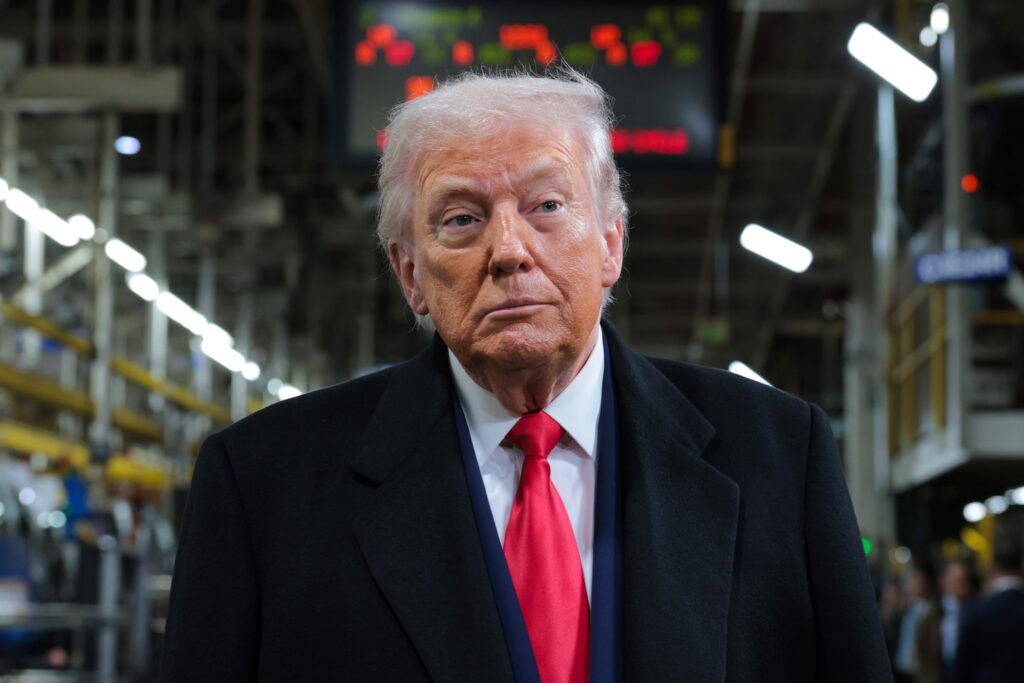
The warning came just one day after Trump announced a sweeping 10% tariff on goods from Denmark, Norway, Sweden, France, Germany, the United Kingdom, the Netherlands, and Finland. According to the president, the tariffs—set to take effect on February 1—will remain in place “until Greenland becomes American.”
The move triggered immediate backlash across Europe. Emergency talks among EU ambassadors were held over the weekend, and Antonio Costa released a forceful statement warning that the tariffs would “undermine transatlantic relations” and violate existing EU–U.S. trade agreements. He added that the European Union is “ready to defend ourselves against any form of coercion,” with a special EU leaders’ summit scheduled for later this week to address the growing crisis.
Meanwhile, Greenland itself has become a focal point of protest. In Nuuk, around 1,000 residents recently marched through the city center to the U.S. consulate, voicing opposition to Trump’s remarks and reaffirming their stance on sovereignty. Greenland remains an autonomous territory within the Kingdom of Denmark, and local leaders have repeatedly stated that its future is for Greenlanders alone to decide.
Denmark and several allied nations attempted to lower the temperature by issuing a joint statement emphasizing that troops deployed to Greenland under Operation Arctic Endurance pose “no threat to anyone.” Danish Foreign Minister Lars Løkke Rasmussen said dialogue remains ongoing but stressed, “we will not give up on that… we will stay on track — unless the U.S. decides differently.”

Norwegian Foreign Minister Espen Barth Eide was more direct, stating that “those types of threats are unacceptable between close allies” and warning against the use of economic pressure within longstanding partnerships.
The rhetoric has also drawn criticism from within the United States. Republican Congressman Michael McCaul, former chair of the House Foreign Affairs Committee, cautioned that any military action against Greenland would put the U.S. in direct conflict with its own allies.
Speaking on This Week, McCaul noted that the U.S. already has extensive military access to Greenland through existing agreements. “If the president wants to purchase Greenland, that’s one thing,” he said. “But a military invasion would turn Article 5 of NATO on its head and, in essence, put us at war with NATO itself. It would end up abolishing NATO as we know it.”
As diplomatic tensions rise, the Greenland question has become a flashpoint for broader concerns about alliance stability, sovereignty, and the future of transatlantic cooperation. Whether the situation de-escalates through negotiation or hardens into deeper confrontation may shape not only Arctic politics, but the global balance among longtime allies.
More From Daily Positive
 With heavy hearts, we announce the passing. When you find out who he is, you will cry
 Breast Cancer Awareness: Four Early Warning Signs Every Woman Should Recognize, From Unusual Lumps and Changes in Breast Shape to Swelling in the Armpit and Persistent Pain — Understanding These Symptoms Early Can Save Lives Through Timely Detection and Proper Medical Evaluation
 Tim Walz Scrambles With Damage Control After Viral ‘Ghost’ Daycare Video
 If a Man Doesn’t Appreciate You, Here’s What You Should Do
 NBA Game in London Sees Crowd Moment During National Anthem
 My Mother Disowned Me for Marrying a Single Mom – She Laughed at My Life, Then Broke Down When She Saw It Three Years Later