Tyna Webb, 77, was gliding through the water the way she had nearly every morning for almost two decades when a massive great white shark began circling her. Moments later, in full view of shocked onlookers along Jager’s Walk in Fish Hoek, the shark struck with overwhelming force. By the time the water stilled, all that remained was her bright red bathing cap drifting on the surface.
For 17 years, Webb had followed the same routine, setting out for her daily swim with the ease and confidence of someone who knew the ocean intimately. Shark attacks on humans are extraordinarily rare — statistically, the odds of being attacked in the U.S. are about 1 in 11.5 million — but when they occur, the outcome can be catastrophic.
On that November morning in 2004, the experienced swimmer moved through the water as she always did, unaware of the shadow that had begun tracking her from below. André Mentor, a 48-year-old spotter working with a fishing crew on the mountainside, saw the shark approach and tried desperately to warn her. “Every morning this woman swims the backstroke,” he later said, “but this morning as she was swimming the shark came to inspect, and although we screamed and waved the flag trying to warn her, the shark got hold of her.”
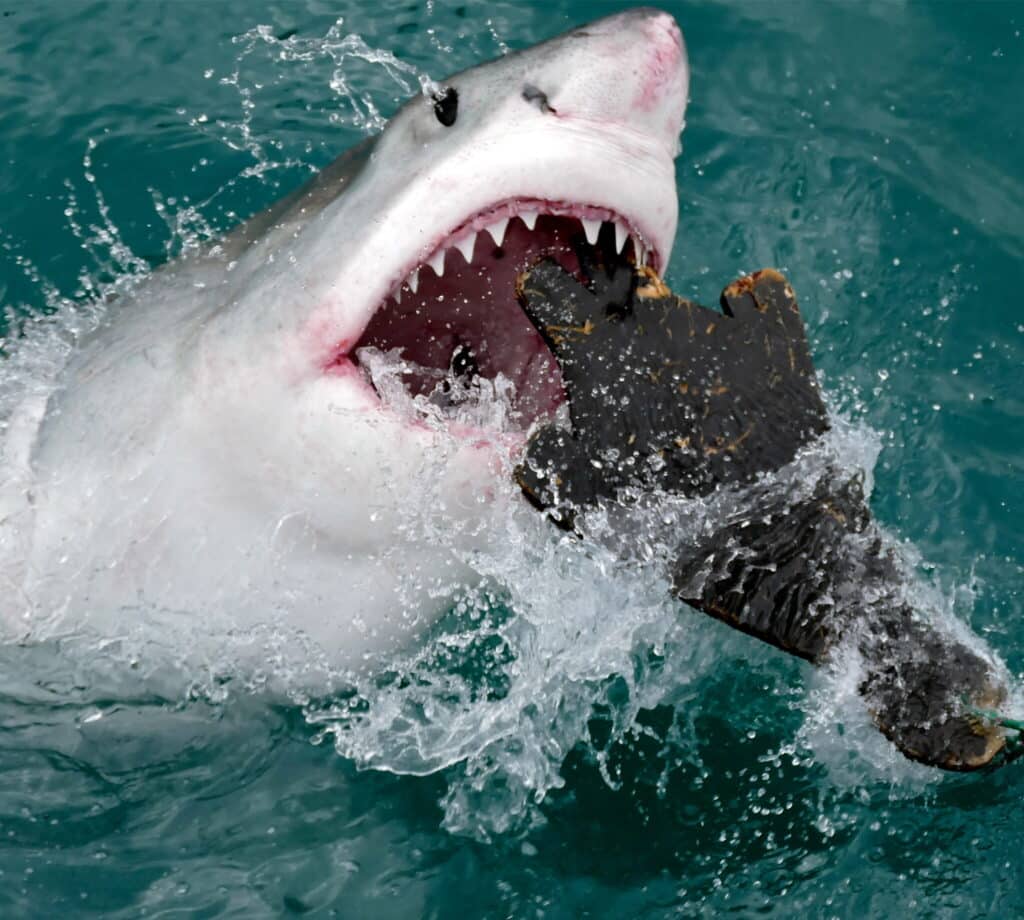
Others saw it too. Beachgoers shouted and waved frantically, but according to Webb’s family, she likely couldn’t hear them — her ears were covered by her swimming cap, and she was facing the sky as she backstroked. Witnesses described a terrifying scene as the 16-foot shark surged upward. “It came at her, hit her in the thigh and threw her clean out of the water,” a fisherman recalled. “Then she was gone.”
Paul Bennet, commodore of the False Bay Yacht Club, watched it happen from his home. At first, he thought the shark was attacking a seal. Then he realized it was a human body being shaken violently. “It left the woman and swam away a short distance, turned, came back at great speed and hit her. Its whole mouth came out of the water and took her down. I never saw her again.”
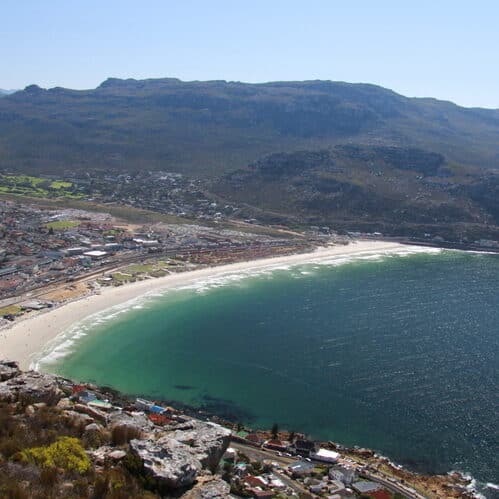
Her son-in-law, Dr. Thomas Spies, arrived shortly after the attack, but by afternoon, there was still no sign of her body. Authorities eventually called off the search. National Sea Rescue Institute spokesperson Craig Lambinon confirmed that Webb was presumed dead, describing the shark seen in the area as “huge — bigger than the helicopter.” He suggested that discarded fish from local fishermen might have triggered a feeding response.
In the days that followed, friends and family gathered to remember the woman behind the headlines. To them, she was not just the victim of a tragic encounter but a vibrant presence with twinkling eyes, sharp intellect, and a deep love of nature. Born Cecilia Mathilda Webb, the youngest of nine children, she earned a BA in English and Latin, taught in Pretoria and Johannesburg, and eventually made her home in Cape Town in 1987. She had lived in Fish Hoek since 1989, often hosting full moon gatherings and always treating the sea with reverence.
Those closest to her believed she faced her final moments with grace. Webb understood the ocean intimately — its beauty, its unpredictability, and the creatures that lived within it. Over her years of swimming, she had encountered dolphins, seals, even whales. She knew sharks shared those waters too.
At her remembrance service at St. George’s Cathedral, a friend offered a reflection that resonated with many who loved her: the sea that claimed her had also shaped her. “We feel the way she went is the completion of a circle. That the sea took her is the spiritual completion of her whole life. You know, she swam in that sea for 17 years.”
To them, her passing carried a kind of mythic symmetry — a woman who had treated the ocean as home was ultimately embraced by it, leaving behind a legacy of independence, kindness, and a life lived fully in the place she loved most.
