Grief and anger continue to ripple through Minneapolis following the fatal shooting of 37-year-old Renee Nicole Good, a mother of three whose death has ignited national debate and deeply divided reactions.
Renee was killed on January 7 during an ICE protest, shot in front of her wife as the confrontation escalated. Almost immediately, the Trump administration — including South Dakota Governor Kristi Noem — labeled Renee a “domestic terrorist,” asserting that she had attempted to run over an ICE officer, later identified as Jonathan Ross. That narrative, however, has been challenged by video footage that appears to show Renee trying to drive away as Ross fired three shots, killing her.
In the days that followed, former President Donald Trump placed responsibility for the incident squarely on Renee, a stance echoed by Vice President JD Vance. Vance went further, suggesting — without presenting evidence — that Renee had been “brainwashed” and tied to a broader left-wing network. Those comments intensified backlash, even as Renee’s family and supporters across the country mourned her death.

Among those speaking publicly is Renee’s former father-in-law, Tim Macklin Sr., who told NBC News that he had always shared a positive relationship with her. He described Renee as outgoing and kind, saying her death had been “really hard” on the family.
Renee had previously been married to Macklin’s son, Tim Macklin Jr., for about five years before they separated. Together, they shared a six-year-old son, one of Renee’s three children. Macklin Jr. died in 2023 at age 36, according to an online obituary. Despite the separation, Macklin Sr., a preacher from Knoxville, said he remained in close contact with Renee and that she often brought his grandson to visit.
“I think she’s a great person,” he said, reflecting on her life and the loss the family is now facing.
The case took on an added layer of complexity during an interview on CBS Evening News, when anchor Tony Dokoupil told Trump that Renee’s father — a Republican and a supporter of the former president — was heartbroken by both his daughter’s death and the administration’s swift decision to label her a domestic terrorist.
“Well, I want to say to the father that I love all of our people,” Trump responded. “They can be on the other side, as you say, he might be on my side. And I think that’s great.”
Trump went on to say that Renee, “under normal circumstances,” was likely “a very solid, wonderful person,” though he also characterized her actions as “pretty tough.”
When pressed on whether deadly force was justified, Trump shifted focus to Renee’s wife, Becca Good, criticizing what he described as disrespect toward law enforcement.
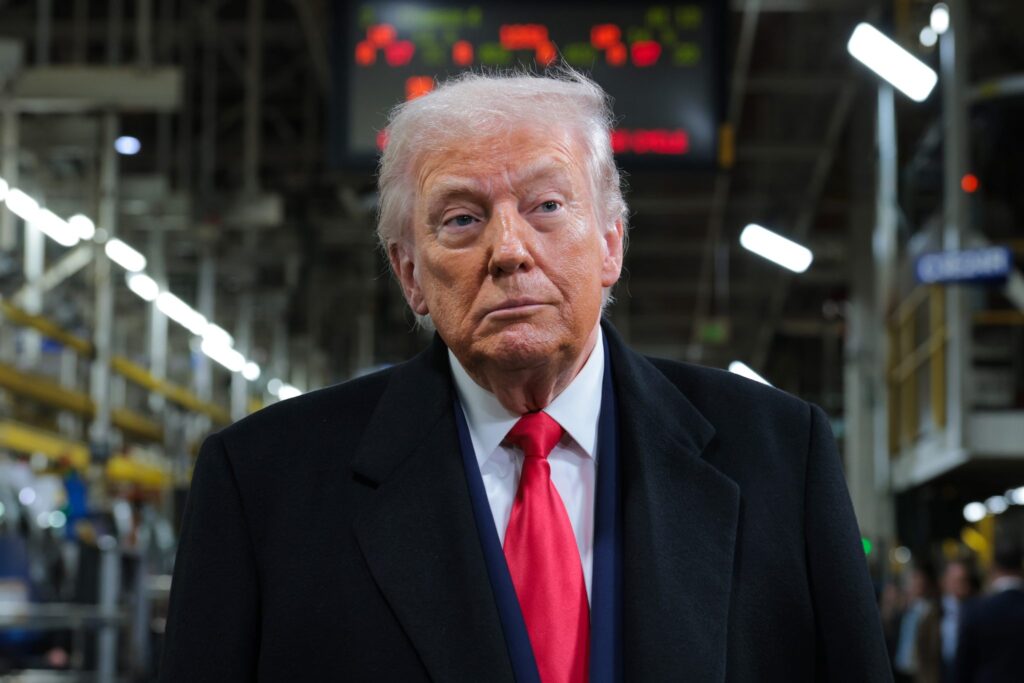
“The woman and her friend were highly disrespectful of law enforcement,” he said. “Law enforcement should not be in a position where they have to put up with this stuff.”
He later described the actions of Renee and her wife as “outrageous.”
Despite supporting Trump, Macklin Sr. has publicly acknowledged the emotional and situational complexity surrounding Renee’s death. Speaking to CNN’s Erin Burnett OutFront, he emphasized that the incident was “hard for everybody involved.”
“I’m not blaming anybody,” he said. “I mean, the ICE agent — at first I didn’t see the footage where… he was actually being rammed. I’ve seen the bumper of the car hitting his legs. And so in a flash like that, it’s hard to say how you would react.”
As investigations and public debate continue, Renee Nicole Good remains at the center of a painful national conversation — one shaped by grief, conflicting narratives, and unresolved questions about force, accountability, and the human cost left behind.
More From Daily Positive
 I Found Out My Husband Booked a Romantic Dinner with His Mistress – So I Showed Up as the Chef
 My Neighbor Kept Dumping Snow from His Snowplow onto My Driveway – So I Taught Him a Lesson
 My Husband Said His Mom Deserved the Front Seat More than Me – I Taught Him a Lesson
 Is Trump facing impeachment? Some longshot initiatives have been started
 Renee Good’s Apparent Last Words and Moment Just Before She Was Fatally Shot Captured in ICE Agent’s Video
 My Neighbor Refused to Pay My 73-Year-Old Mother for Babysitting, Saying She Was 'Just Sitting at Home Anyway' – So I Stepped In