There was serious buzz before Bad Bunny stepped onto the stage for the halftime show at Super Bowl LX. Whether you tuned in out of excitement or skepticism, one thing was clear: people were watching closely.
The 31-year-old global superstar’s selection had already sparked debate in the weeks leading up to the game. Turning Point USA even staged a rival “All-American” halftime livestream, encouraging viewers to boycott the official show and opt instead for a lineup led by Kid Rock.
But once the lights hit Levi’s Stadium and the music began, the conversation shifted.
A “Huge Party” — Delivered
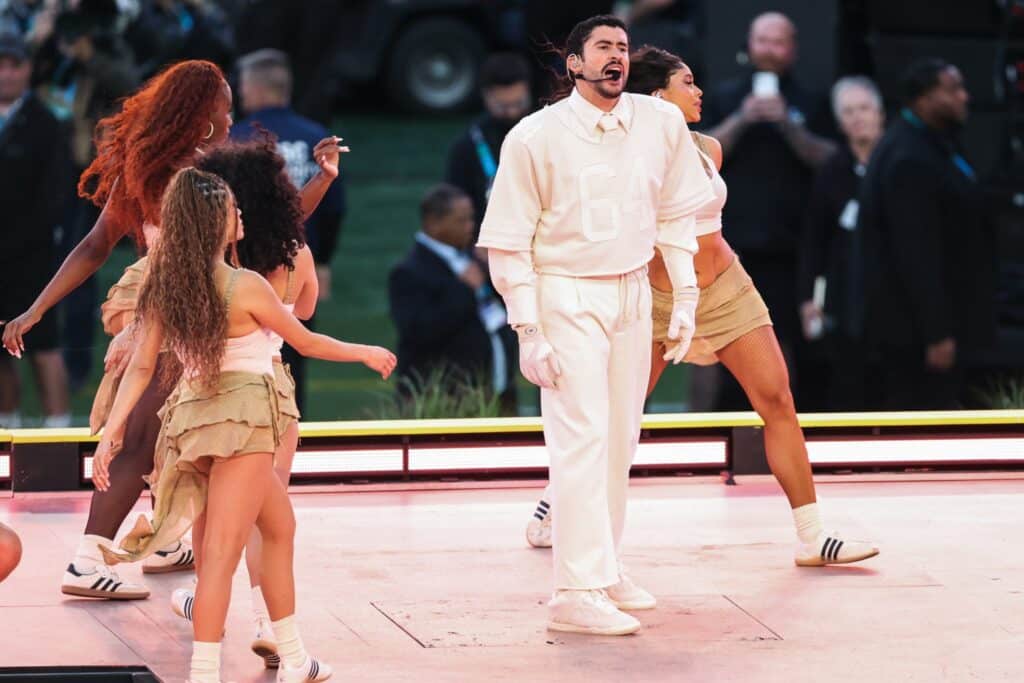
Bad Bunny had promised a “huge party,” and that’s exactly what he delivered. The performance was high-energy, visually explosive, and unapologetically rooted in Latin culture. The entire set was performed in Spanish — a choice that had drawn criticism beforehand — yet the stadium pulsed with choreography, percussion, and crowd participation.
The show also featured surprise appearances from Lady Gaga and Pedro Pascal, adding star power and theatrical flair. Flags from countries around the world filled the stage during one sequence, reinforcing the global tone of the spectacle.
Even viewers who had questioned the language choice found it difficult to deny the scale and polish of the production.
The Football That Sparked Questions
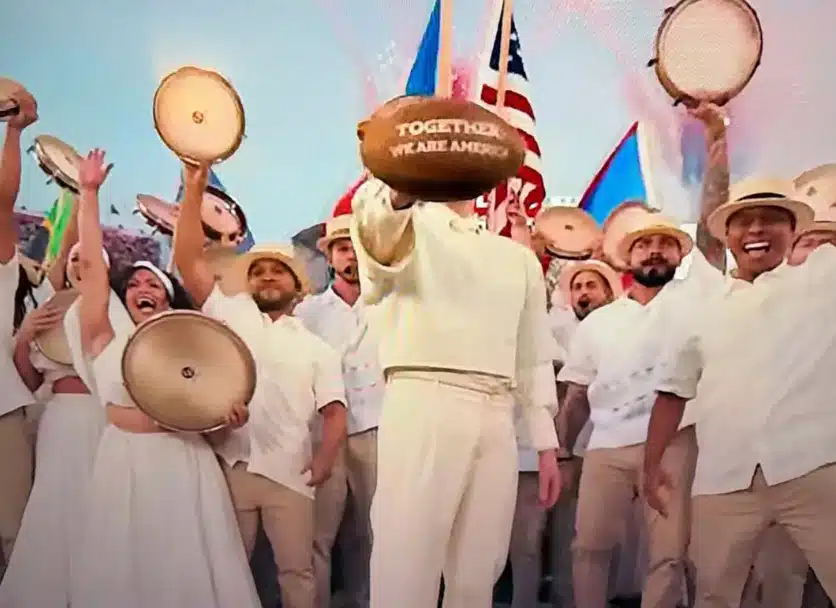
One of the most talked-about moments came when Bad Bunny held an American football under his arm during the set. Eagle-eyed viewers immediately noticed writing on it.
Social media lit up with speculation.
“Can anyone tell me what was clearly written on the ball that Bad Bunny held up?? Because I know it was political as heck,” one viewer posted.
The message wasn’t fully visible until later in the performance. When he finally held it up clearly, the words read:
“Together We Are America.”
Behind him, another message appeared prominently on screen:
“The only thing more powerful than hate is love.”
For supporters, it was a statement of unity in a moment that had become politically charged. For critics, it reinforced their concerns about the tone of the event.
Political Reactions Follow
Among those weighing in was Donald Trump, who did not mince words in his criticism of the show.
He described it as “an affront to the Greatness of America,” arguing that it did not represent what he called standards of success or excellence. He also criticized the language choice and elements of the choreography, suggesting it was inappropriate for younger viewers.
Trump further claimed that mainstream media outlets would praise the performance regardless of public sentiment and pivoted to unrelated NFL policy concerns in his remarks.
As expected, reactions online quickly split along familiar lines. Some echoed his criticism, while others praised the halftime show as one of the most culturally vibrant in recent memory.
Culture, Language, and the Super Bowl Stage
Halftime performances have long been cultural flashpoints. From wardrobe controversies to political symbolism, the stage has frequently become more than just entertainment.
This year was no different.
Bad Bunny’s decision to perform entirely in Spanish was historic in its own way, highlighting the growing influence of Latin music in the United States. For millions of fans, it reflected the multicultural reality of modern America. For detractors, it represented a departure from what they believe the event should showcase.
Regardless of where one stands politically or culturally, the performance undeniably sparked conversation — which, in many ways, is what halftime shows tend to do best.
Now that the dust has settled, the question remains: was it simply a high-energy global celebration, or a moment that revealed deeper divides?
What did you make of the halftime show?
More From Daily Positive
 Tragic Deaths of Three Sisters Reported at Ninth-Floor Apartment – leave tragic note
 Trump Sparks Super Bowl Fury After Teasing His Winner Pick, Dodging Patriots vs Seahawks Prediction, Slamming Halftime Stars, Skipping California Trip, and Leaving Fans Frustrated With a Cliffhanger Video That Cut Off Before Revealing His Choice for the 2026 NFL Championship Showdown
 Moments before kickoff, Trump issued a statement celebrating the Super Bowl as a uniquely American tradition, wishing both teams well and highlighting the event’s unity and spirit. His message emphasized respect for the sport and the dedication of players and fans nationwide
 My Husband Controlled Every Dollar I Spent and Demanded I Save – When I Found Out Where the Money Was Really Going, I Nearly Fainted
 Detained in Nancy Guthrie's Case, Derrick Callella Contacted the Victim's Family
 Update about Turning Point USA’s halftime show