Pope Francis, admired across the globe for his humility and unassuming lifestyle, passed away on April 21 at the age of 88. While he was known for breaking tradition in life — opting for modest lodgings and simple meals — his death initiated a series of deeply symbolic and centuries-old Vatican rituals, many of which are shrouded in secrecy and meaning.
Soon after the announcement of his passing, a quiet but powerful act unfolded within the Vatican walls. The Pope’s residence was sealed. Though it may appear ceremonial, the sealing of the pope’s living quarters is a significant moment in the transition of power. In accordance with tradition, a silk cord was tied across the door, sealed with wax, and left untouched. This act, carried out by the Vice-Camerlengo — currently Archbishop Ilson de Jesus Montanari — signals the official end of a papal reign.
Even though Pope Francis had chosen to live in Casa Santa Marta, the Vatican’s guesthouse, rather than the opulent papal apartments in the Apostolic Palace, the sealing ritual was still carried out with the same reverence. His modest room, a small space more reminiscent of a priest’s quarters than a pontiff’s palace, is now sealed and will remain so until a new pope is elected. The reason? Historically, the tradition began to prevent looting in the wake of a pope’s death. Today, it also serves to protect sensitive documents, private correspondence, and personal belongings until the next pope determines their fate.
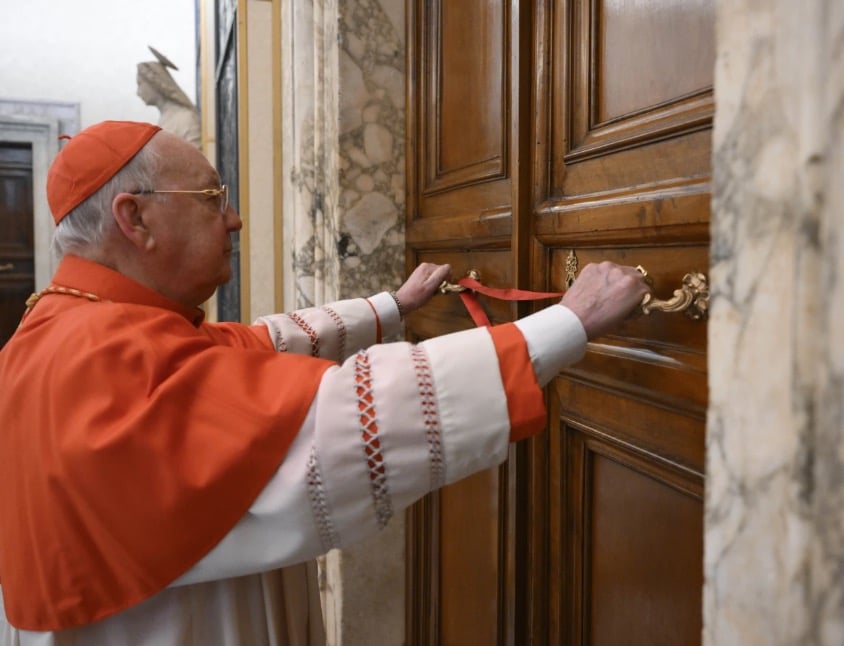
The Camerlengo, Cardinal Kevin Farrell, is now entrusted with overseeing these transition protocols. As head of the Vatican’s Dicastery for the Laity, Family, and Life, Farrell also bears the solemn responsibility of managing the Church’s temporal affairs during the period known as the sede vacante — the time between papacies.
Inside the sacred halls of the Vatican, another powerful ritual has begun. As photos from Tuesday show, Pope Francis now lies in repose — dressed in red vestments, the color of martyrdom, with a rosary nestled in his hands. His body rests in an open casket, surrounded by ceremonial guards, as those closest to him gather for a final private goodbye.
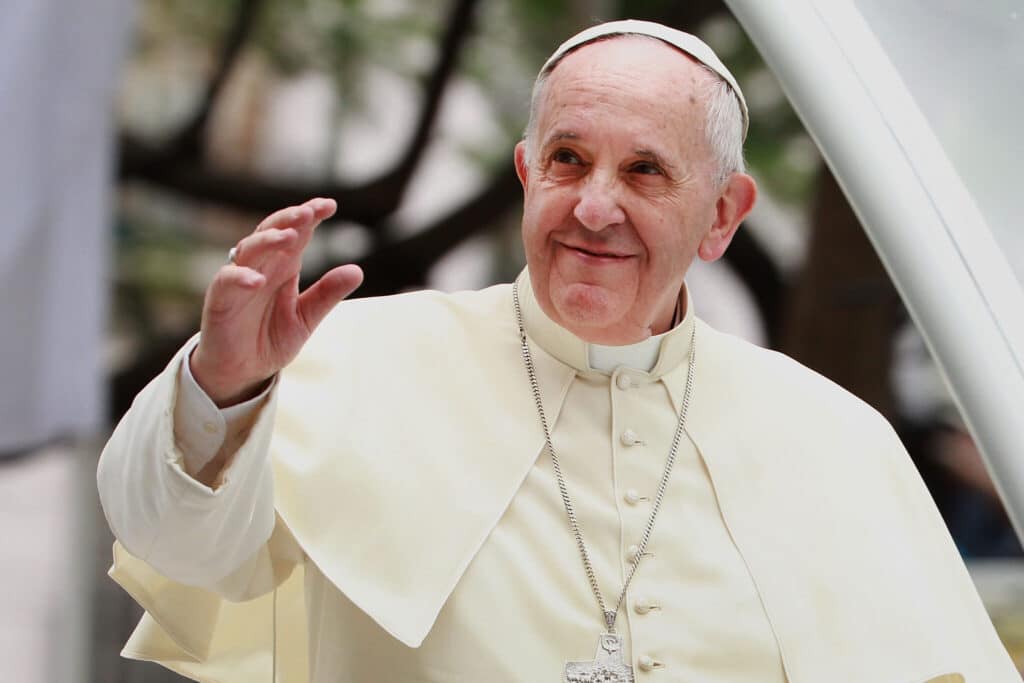
Alongside the sealing of his residence, another ancient custom takes place — the destruction of the Fisherman’s Ring. Given to each new pope, the gold ring, engraved with the image of Saint Peter casting his nets, is a symbol of papal authority. Originally, it functioned as a seal to authenticate papal documents. Though it is no longer used for that purpose, the ring remains one of the most iconic emblems of the pope’s sacred office.
Upon a pope’s death, the ring is destroyed in a solemn ritual led by the Camerlengo, a practice designed to prevent forgery and misuse. The destruction of the ring, and of the accompanying papal seal or bulla, serves as a symbolic end to a unique spiritual reign — one that cannot be imitated, extended, or replicated.
This symbolic dismantling of authority is carried out in the presence of the College of Cardinals, just prior to the beginning of the conclave, the secretive election process that will determine the next Bishop of Rome.
Despite the magnitude of these sacred rites, the focus for many remains on the simple man they knew as Pope Francis — the one who preferred pizza over plated banquets, who rode the bus instead of a limousine, and who lived in a humble guesthouse to remain close to the people he served.
His upcoming funeral, set for Saturday, April 26 at 10 a.m. local time in St. Peter’s Square, is expected to draw millions, both in person and virtually. After the service, his body will be transported not to the Vatican grottos where many of his predecessors lie, but to the Basilica of Santa Maria Maggiore — the place he requested as his final resting ground.
That quiet wish, like the many he made during his life, is in keeping with the values he preached from the balcony of St. Peter’s: humility, service, and a deep, unshakable belief that the Church exists to walk with the people, not above them.
In death, as in life, Pope Francis reminds the world that legacy is not found in gold-trimmed chambers or jeweled rings — but in choices rooted in simplicity, love, and the unwavering call to serve.
