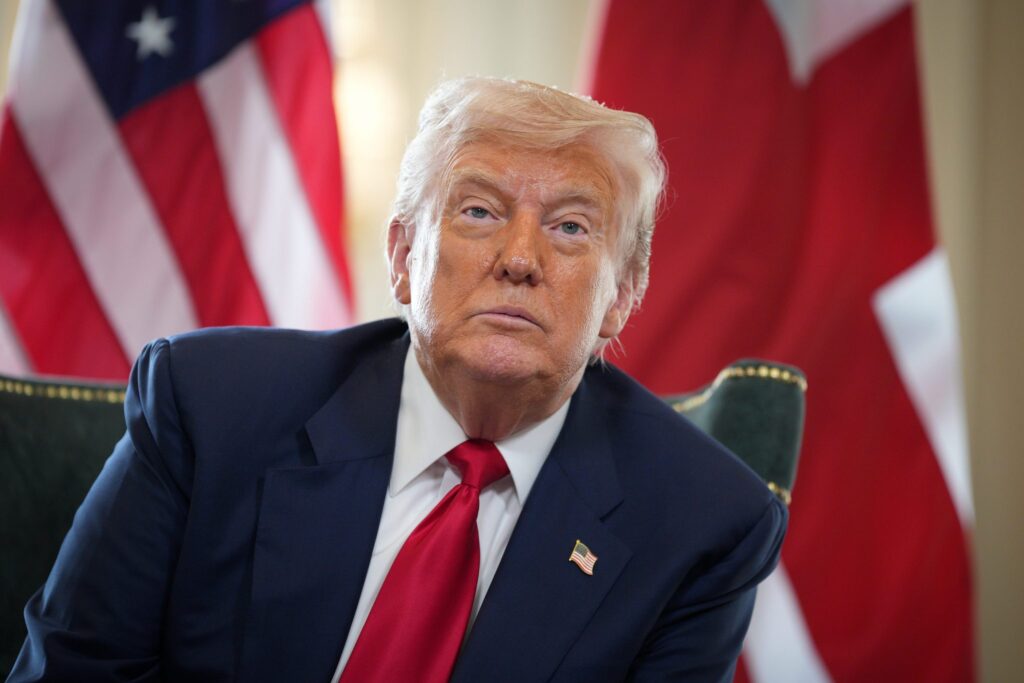
President Donald Trump has been teasing the idea of giving Americans a $2,000 “tariff dividend,” a phrase that has generated excitement, skepticism, and plenty of questions. Chief among them: When would these checks actually arrive?
The concept, as Trump describes it, is a financial reward funded by years of tariff revenue collected during his administration. While the announcement stirred up substantial public curiosity, it also left people with very few specifics.
Trump suggested the payments could begin “by the middle of next year, a little bit later than that,” though he offered almost no firm details on eligibility, timing, or distribution. “We’ve taken in hundreds of billions of dollars in tariff money,” he said in November. “We’re going to be issuing dividends,” adding that the money would be directed toward “low, moderate and middle incomes.”
Despite the big promise, nothing is official. No legislation, no IRS plan, and no federal guidance exist yet. But some commentators have begun speculating about what eligibility might look like.
Social Security analyst and YouTuber Blind to Billionaire believes the threshold could be extremely simple, based almost entirely on income. According to him, the real question could boil down to: “Is your income below $75,000 a year as an individual?” If the answer is yes, he argues, “you are most likely eligible.” He noted that previous federal relief efforts relied on similar guidelines, typically capping individuals at $75,000 and married couples at $150,000.
That would mean many unemployed individuals, gig workers, and nontraditional earners could qualify — but again, nothing has been approved. Everything hinges on Congress.
And that is where the proposal faces its biggest challenge.
The IRS has not authorized $2,000 payments for 2025, and Treasury Secretary Scott Bessent expressed uncertainty about the plan’s feasibility. When pressed, he simply said, “We will see,” while emphasizing that “we need legislation for that.” In other words, Congress would need to approve a spending package that could cost hundreds of billions of dollars.
Some lawmakers remain unconvinced. Republican Senator Ron Johnson argued that any tariff revenue should go toward reducing the nation’s $1.8 trillion deficit instead of funding checks. “Look, we can’t afford it,” he said. “I wish we were in a position to return the American public their money, but we’re not.” Johnson pointed to ballooning deficits, calling them “completely unacceptable.”
And those cost estimates aren’t small. The Committee for a Responsible Federal Budget projects that the proposal could cost around $600 billion per year — far more than the government currently collects from tariffs. Even narrowing eligibility doesn’t meaningfully reduce the price tag; the Tax Foundation’s Erica York noted that restricting payments to households under $100,000 would still cost an estimated $300 billion.
Bessent also hinted that the payout may not come in the form of direct checks at all. “Could come in lots of forms,” he said, suggesting alternatives like tax credits or benefits linked to Trump’s One Big Beautiful Bill Act. So far, total tariff revenue sits at about $195.9 billion — a fraction of what would be required for nationwide dividends.
Still, Trump appears committed to the idea. Speaking aboard Air Force One, he reiterated his intention: “It will be next year… The tariffs allow us to give a dividend. We’re going to do a dividend, and we’re also going to be reducing debt.”
The last time Americans received stimulus checks — direct federal payments aimed at easing financial hardship — was in 2021 under the American Rescue Plan, with up to $1,400 sent out to millions.
For now, the so-called “tariff dividend” remains more of a political promise than a concrete policy. Until legislation appears, Americans will be left waiting to see whether this proposal becomes actual cash — or simply stays theoretical.
