What was supposed to be one of the most emotional comeback stories of the Winter Games turned into a gut-punch just 13 seconds into the run.
At 41, Lindsey Vonn entered the women’s downhill at the Milano Cortina 2026 Winter Olympics already carrying a torn ACL — a risk that had divided fans and analysts alike. But if there’s one thing Vonn has never lacked, it’s defiance in the face of doubt.
Then came the moment.
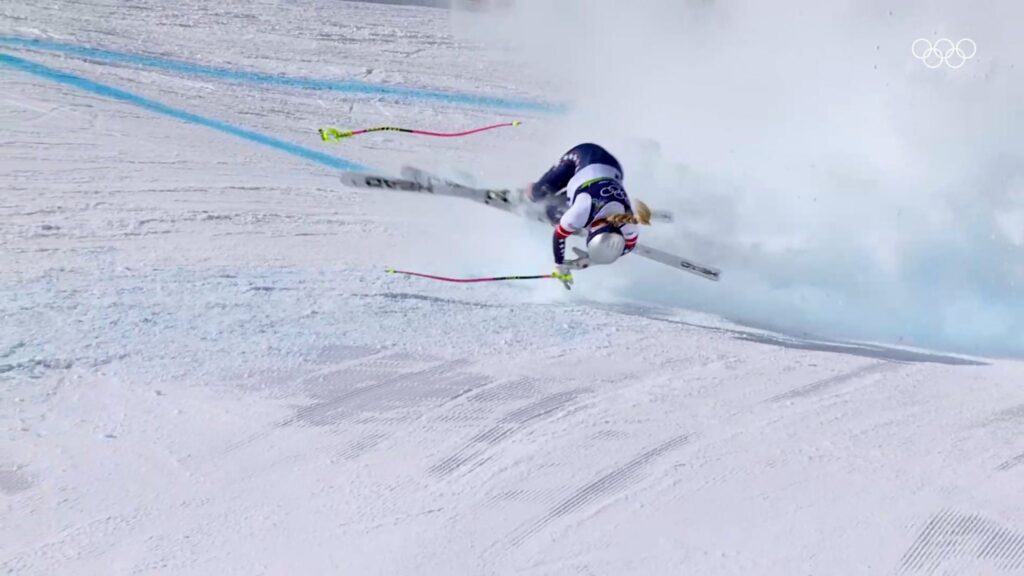
Clipping a gate at high speed, she lost her edge and crashed hard, sliding down the course in visible agony. The silence that followed inside the Tofane Alpine Skiing Centre in Cortina d’Ampezzo felt heavier than the impact itself. She was airlifted to a nearby hospital, where doctors confirmed a broken leg. Officials later said her condition is stable, but recovery will take time.
As U.S. Alpine Director Anouk Patty told the Associated Press:
“She’ll be OK, but it’s going to be a bit of a process. This sport’s brutal, and people need to remember when they’re watching, these athletes are throwing themselves down a mountain and going really, really fast.”
That reminder felt necessary. Downhill skiing is exhilarating to watch — but unforgiving in reality.
The Words That Stunned Her Coach
While Vonn has not yet spoken publicly, her coach, Norwegian alpine legend Aksel Lund Svindal, revealed what she said in the moments before being airlifted.
It wasn’t about pain.
It wasn’t about the injury.
It wasn’t about regret.
It was about her teammate.
“Tell Breezy congrats and good job.”
That was the message she wanted passed along.
Her teammate, Breezy Johnson, went on to win Olympic gold in the downhill, finishing ahead of Emma Aicher and Sofia Goggia with a blistering time of 1:36.10.
Svindal later reflected:
“Real character shows up in the hard moments.”
It’s hard to argue with that.
A Divided Reaction
The crash has sparked intense debate.
Some critics have questioned whether Vonn should have been allowed to compete at all, given the torn ACL she suffered just nine days earlier. At 41, with a body that has already endured multiple surgeries and comebacks, was the risk too great?
Others see it differently.
They argue that elite athletes deserve agency over their own bodies — and that Vonn, perhaps more than anyone, understands the cost of pushing limits. After all, her entire career has been defined by resilience, reinvention, and refusal to bow out quietly.
Teammate Isabella Wright summed up the locker-room sentiment:
“If anyone can, Lindsey can.”
That belief — almost mythic at this point — is part of Vonn’s legacy. She has built a reputation for doing what seems impossible.
A Moment Bigger Than Medals
Johnson broke down in tears after securing gold. Wright admitted she was heartbroken watching Vonn fall. And yet, the image that lingers isn’t just the crash — it’s the message.
In a moment when pain would have justified selfishness, Vonn chose generosity.
That’s why this story resonates.
Yes, she is a decorated champion. Yes, she is one of the most recognizable names in alpine skiing. But in that brutal, raw second before being airlifted, she demonstrated something harder to quantify than medals: perspective.
There’s something quietly powerful about an athlete who, in her worst moment, still thinks of someone else’s best.
The road back will be long. At 41, recovery will not be simple. Whether this marks the end of her Olympic chapter remains unclear.
But if legacy is measured not only by podiums but by character under pressure, Lindsey Vonn may have just added one of the most defining moments of her career.
What did you think when you saw the crash?
More From Daily Positive
 Kid Rock responds after being mercilessly mocked for ”Redneck” halftime show
 Fans stunned at what Green Day did during Super Bowl act
 Bad Bunny left message “for America” on football during Super Bowl halftime show – here’s what it said
 Tragic Deaths of Three Sisters Reported at Ninth-Floor Apartment – leave tragic note
 Trump Sparks Super Bowl Fury After Teasing His Winner Pick, Dodging Patriots vs Seahawks Prediction, Slamming Halftime Stars, Skipping California Trip, and Leaving Fans Frustrated With a Cliffhanger Video That Cut Off Before Revealing His Choice for the 2026 NFL Championship Showdown
 Moments before kickoff, Trump issued a statement celebrating the Super Bowl as a uniquely American tradition, wishing both teams well and highlighting the event’s unity and spirit. His message emphasized respect for the sport and the dedication of players and fans nationwide