Military strikes carried out by Israel and the United States against Iran have triggered not only international repercussions but also sharp divisions within President Donald Trump’s political base.
Coordinated Strikes and Escalation
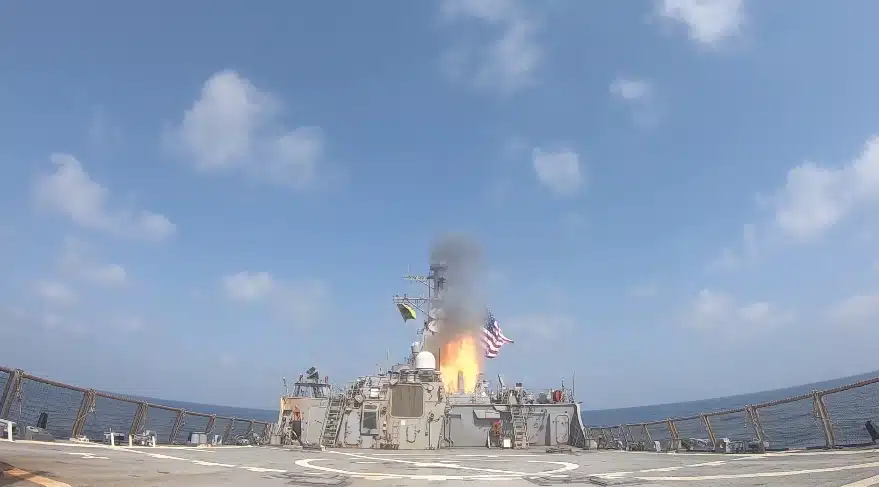
According to U.S. officials, coordinated U.S.–Israeli military operations targeted Iranian positions in Tehran on February 28. Reports indicate that Iran’s Supreme Leader, Ayatollah Ali Khamenei, was killed during the strikes, along with numerous senior officials.
In an interview with Fox News, Trump described the operation as highly successful and moving “rapidly.”
“It’s moving along. It’s moving along rapidly. This has been this way for 47 years,” he said, adding: “Nobody can believe the success we’re having, 48 leaders are gone in one shot.”
The U.S. Central Command (CENTCOM) confirmed that three American service members were killed and five others seriously wounded during the ongoing operation. Iran retaliated with missile and drone strikes aimed at U.S. military installations across the Gulf region, including bases near Bahrain, Qatar, and Dubai.
Trump later stated that U.S. combat operations would continue “until all of our objectives are achieved,” warning Iranian security forces to “lay down your arms and receive full immunity or face certain death.”
He defended the campaign by arguing that an Iran equipped with long-range missiles and nuclear capabilities would pose a severe threat to the United States.
Growing Conservative Backlash
While the administration frames the action as necessary for national security, several prominent conservative figures have publicly criticized the move.
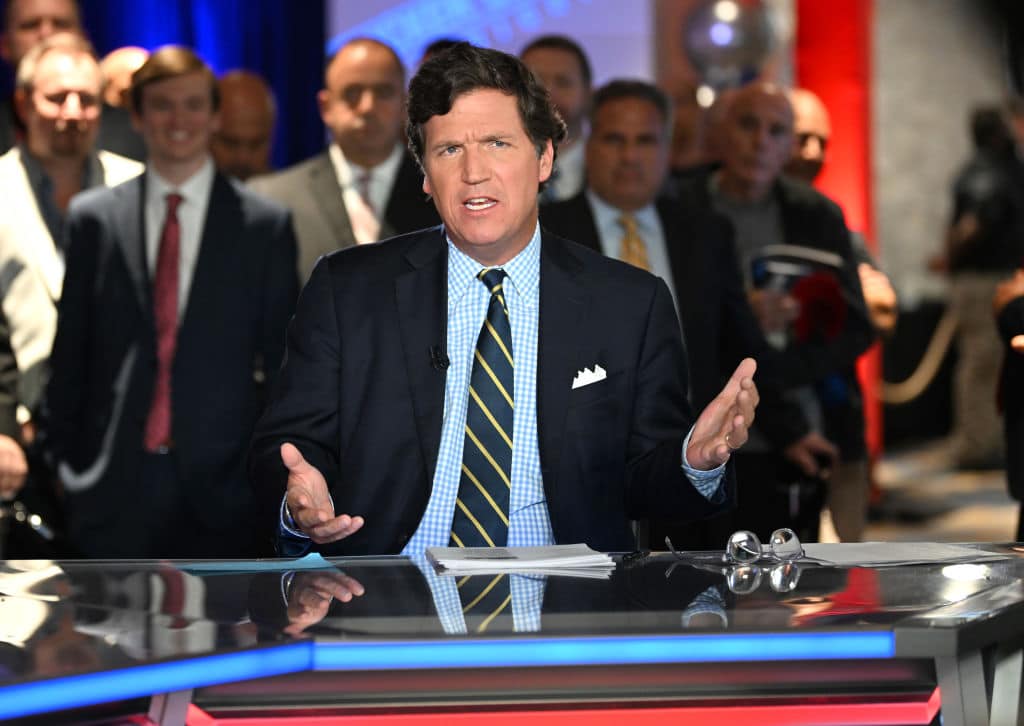
Independent journalist Tucker Carlson, who previously defended Trump during his tenure at Fox News, condemned the strikes in unusually strong language during an interview with Jon Karl.
Carlson described the decision as “absolutely disgusting and evil,” and stated that he had personally urged Trump not to authorize military action during a recent meeting.
Former congresswoman Marjorie Taylor Greene also voiced opposition, criticizing what she characterized as continued U.S. involvement in foreign conflicts.
“Thousands and thousands of Americans from my generation have been killed and injured in never ending pointless foreign wars and we said no more. But we are freeing the Iranian people. Please.”
She further questioned the framing of the conflict as a liberation effort, arguing that Iran’s internal political future should not be America’s responsibility.
Senator Rand Paul raised constitutional concerns, emphasizing that Congress holds the authority to declare war.
“The Constitution conferred the power to declare or initiate war to Congress for a reason, to make war less likely… As with all war, my first and purest instinct is wish American soldiers safety and success in their mission. But my oath of office is to the Constitution, so with studied care, I must oppose another Presidential war.”
Conservative commentator Matt Walsh similarly argued that military intervention should be evaluated strictly through the lens of American national interests, not humanitarian ambitions.
“As Americans, the freedom of Iranians is not our responsibility. If a single American life is lost in the service of that goal, it will be a travesty.”
Political and Strategic Implications
The latest escalation follows earlier U.S. actions reportedly targeting Iranian nuclear facilities, including Fordow, Natanz, and Isfahan, after Israeli strikes on military infrastructure.
The current situation marks one of the most direct confrontations between Washington and Tehran in decades. While the administration asserts that the objective is to neutralize long-standing threats, critics within Trump’s own political coalition argue that the move risks entangling the U.S. in another prolonged and costly conflict.
Beyond the battlefield consequences, the episode appears to be widening ideological fractures within the conservative movement—between those who prioritize aggressive national security measures and those who advocate for restraint and constitutional limits on executive war powers.
As military operations continue, both the international ramifications and the domestic political fallout remain uncertain.
More From Daily Positive
 An iconic singer-songwriter has left us - You'll cry when you recognize him
 My 15-year-old daughter had been complaining of nausea and stomach pain. My husband said, “she’s just faking it. Don’t waste time or money.” I took her to the hospital in secret. The doctor looked at the scan and whispered, “there’s somet
 While I was away on a work trip, my Mother-in-law changed our house into two parts. She asked me to pay $100k for the changes. I said, ‘Huh? But I’m not married.’ She replied, ‘Huh?’ The surprising truth came out, and her face went pale.
 Entitled Woman Called Me, a 72-Year-Old Waitress, 'Rude' and Walked Out on a $112 Bill – I Showed Her She Picked the Wrong Grandma
 Brave firefighter has face transplant after suffering third-degree burns, & survives against odds
 I Was Picking Up Groceries for Lunch When I Heard a Little Boy Behind Me Say, 'Mom, Look! That Man Looks Exactly Like Dad'