What should have been an ordinary landing turned into something far more unsettling — a chain of moments that unfolded so quickly that even those inside the aircraft struggled to process what was happening.
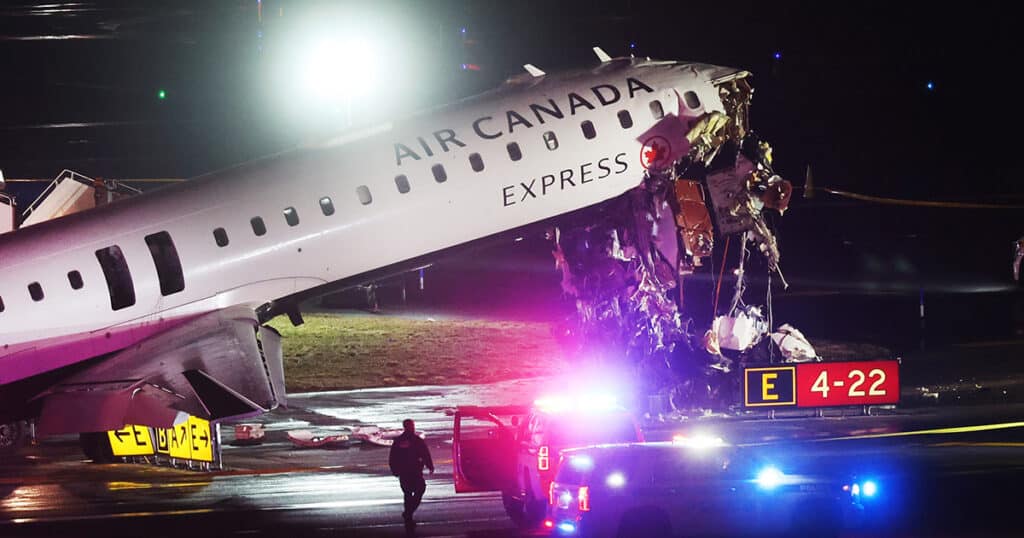
According to accounts from passengers, the Air Canada Express flight had already touched down at LaGuardia and was taxiing when the situation suddenly changed.
There was no gradual build-up.
Just impact.
One passenger described the moment simply: a sharp jolt forward, followed immediately by a loud bang, and then the strange, disorienting sensation of the aircraft sliding sideways along the runway. At first, many onboard didn’t fully understand what had happened. It felt wrong — but not yet real.
Then came the realization.
Another traveler recalled how the braking felt unusually aggressive, as if something had gone off-script. Within seconds, confusion turned into panic. The sense that something had gone seriously wrong spread through the cabin faster than anyone could explain it.
What stands out in the aftermath is not just the collision itself, but what may have happened in the final seconds before it.
Some passengers believe the pilots attempted a last-moment response — likely engaging reverse thrust in an effort to slow the aircraft as much as possible before impact. While investigations will ultimately determine the exact sequence, that instinctive action may have reduced the force of the collision.
In situations like this, seconds matter.
Small decisions can change outcomes dramatically.
And that is why many survivors are now pointing to the cockpit with a sense of gratitude — not just for what happened, but for what might have been prevented.
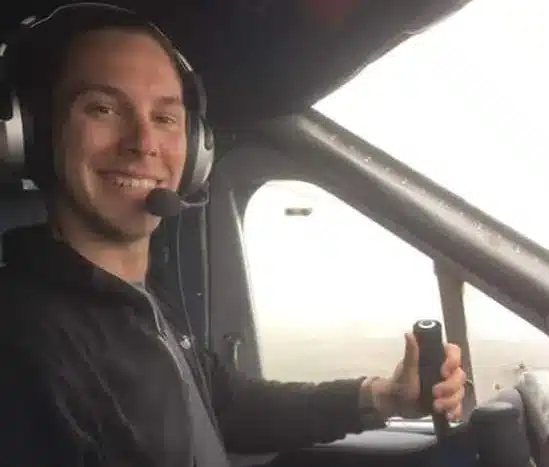
Tragically, both pilots lost their lives.
Early reports describe one of them as deeply committed to aviation from a young age — someone who pursued the profession with persistence and passion, even working to overcome language barriers to achieve it. It is the kind of detail that adds weight to the loss, turning a headline into something more personal.
Alongside passenger accounts, air traffic control audio has added another layer to the story.
Moments before the collision, controllers can be heard issuing urgent instructions to a vehicle on the runway — a clear command to stop. What follows, based on available recordings, is a brief window of confusion, then silence, and finally the acknowledgment that something had gone wrong.
In high-pressure environments like busy airports, communication is everything. When timing breaks down, even slightly, the margin for error becomes dangerously thin.
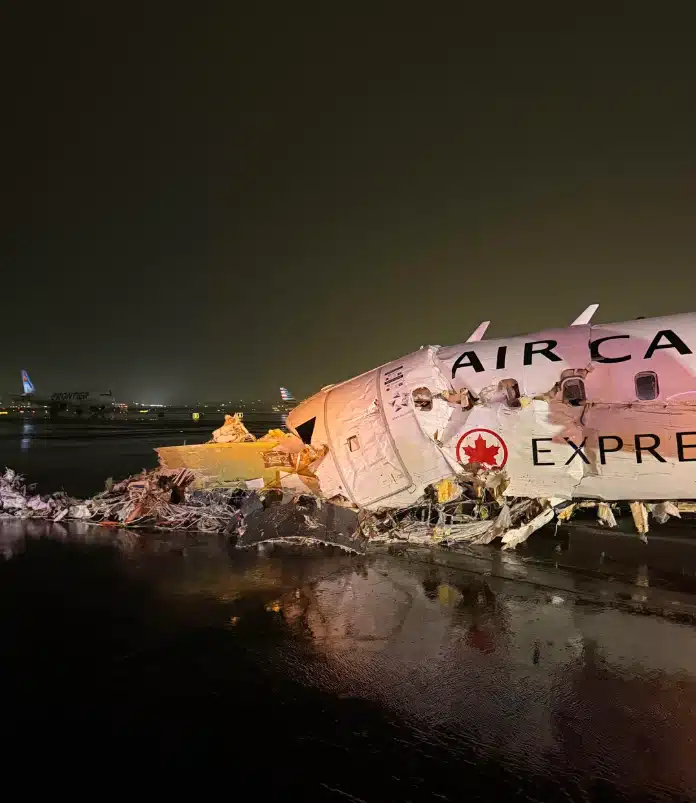
The collision itself brought operations at LaGuardia to a halt. Flights were grounded, terminals filled with stranded travelers, and emergency crews moved quickly across the airfield. For those inside the aircraft and those nearby on the tarmac, the scene was chaotic and difficult to process.
Some described how close they were to the incident — just a short distance away, yet witnessing something that felt far more severe than expected. In those moments, perspective shifts quickly. What begins as someone else’s situation suddenly feels uncomfortably close.
In the days following the crash, attention has naturally turned toward broader concerns.
Recent incidents at the airport, including taxiway collisions and near misses, have already raised questions about congestion, communication, and operational pressure. Pilots and safety reports have pointed to increasing complexity in managing traffic — especially during peak times or challenging weather conditions.
These are not new concerns.
But events like this tend to bring them back into focus with greater urgency.
At the same time, it is important to approach early reports with caution. Details in the immediate aftermath of an incident can be incomplete or even inaccurate. Official investigations will take time, and the full picture often emerges gradually, piece by piece.
What remains clear, however, is the human side of the story.
Passengers remembering the moment everything shifted.
Voices on the radio trying to make sense of unfolding events.
Families now grieving a loss that came in the course of routine work.
And a growing recognition of how fragile normal moments can be — how quickly they can turn into something else entirely.
For those who were onboard, the memory will likely stay with them not just as a moment of fear, but as a reminder of how much can depend on decisions made in seconds.
And for many, that includes a quiet acknowledgment:
that even in chaos, someone in the cockpit was still trying to make things better.
