They came from different corners of Canada, shaped by different journeys, different beginnings, and different rhythms of life.
Yet on a Sunday evening, everything aligned in a way no one could have predicted.
They ended up in the same cockpit.
And in the final moments of their lives, what they did there became something far greater than the headlines that followed.
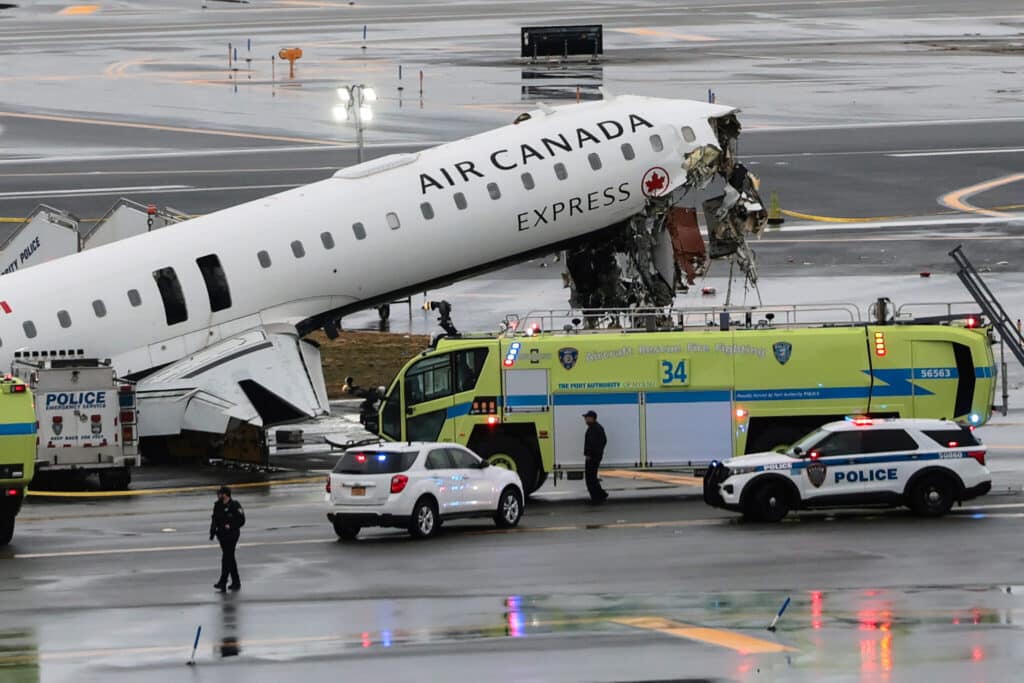
The crash at LaGuardia Airport sent shockwaves far beyond New York. Reports confirmed that an Air Canada Express CRJ-900 collided with a fire truck on the runway late Sunday, leaving both pilots dead and dozens injured. Forty-one people were taken to hospitals, and for many, the chaos of that moment will linger long after the news cycle moves on.
But behind the numbers were two men.
And behind the tragedy, a story that refuses to be reduced to a single line in an obituary.
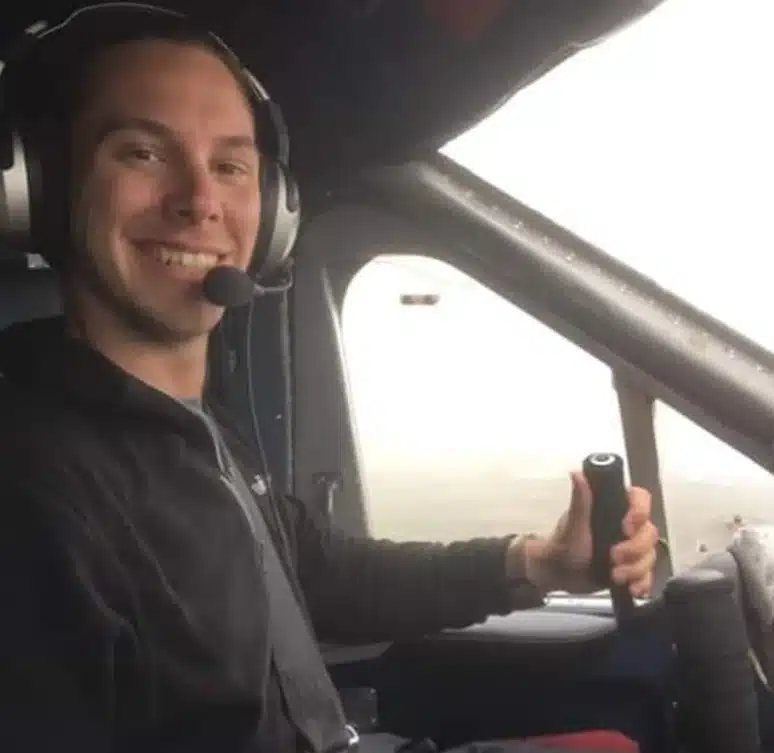
Antoine Forest was 29 years old, from the small Quebec town of Coteau-du-Lac — a place where, as locals often say, everyone knows everyone. His loss rippled through the community immediately, not as distant news, but as something deeply personal.
His path to aviation wasn’t straightforward.
He started small — bush planes, maintenance work, long hours learning every detail of the aircraft he hoped one day to command. From Air Saguenay to Canadian Helicopters Limited, and later Exact Air, he built his career piece by piece, earning his place through persistence rather than shortcuts.
“He was unstoppable,” his great-aunt once said. “Always studying, always flying.”
He flew his first plane at sixteen.
By 2022, he had joined Jazz Aviation, stepping into the role of first officer — a milestone that marked years of quiet determination finally taking shape.
Outside the cockpit, his life carried the same energy. Hiking, kayaking, sailing, climbing — he didn’t just work in the air, he lived fully on the ground.
And he loved.
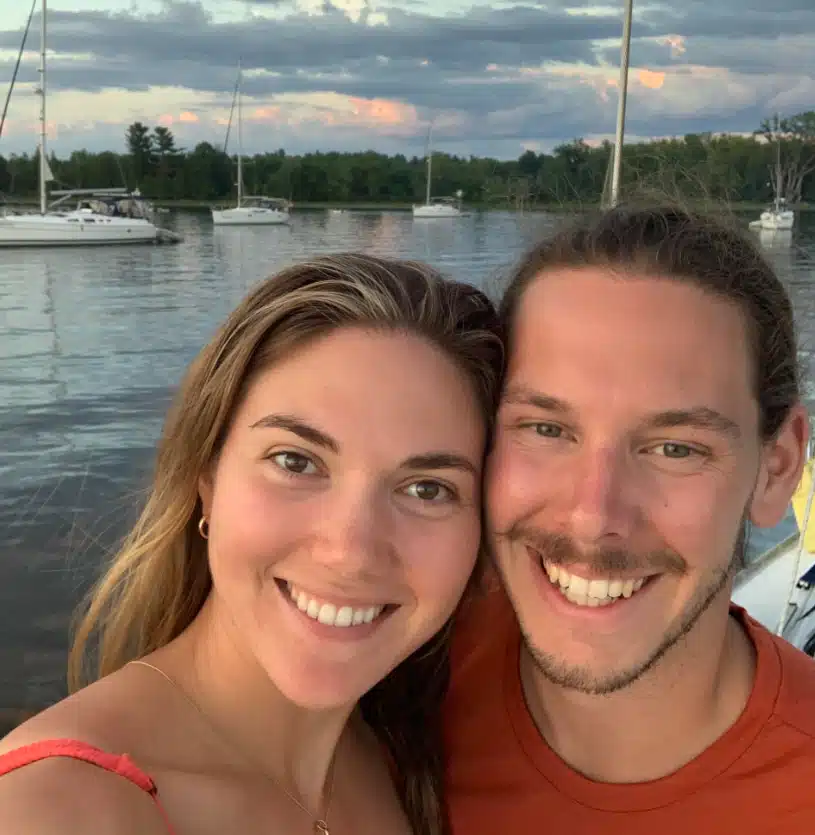
Just days after the crash, his partner, Kahina Gagnon — a pilot herself — shared a simple message alongside their photo:
“The love of my life.”
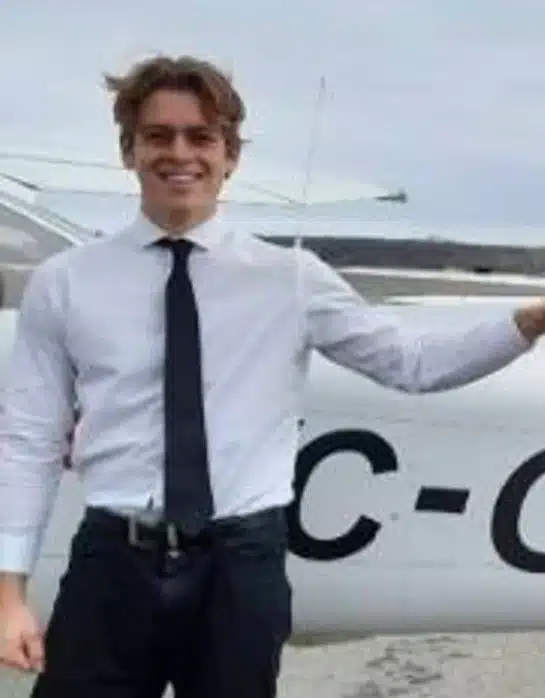
Beside him in the cockpit sat someone at the very beginning of that same journey.
Mackenzie Gunther.
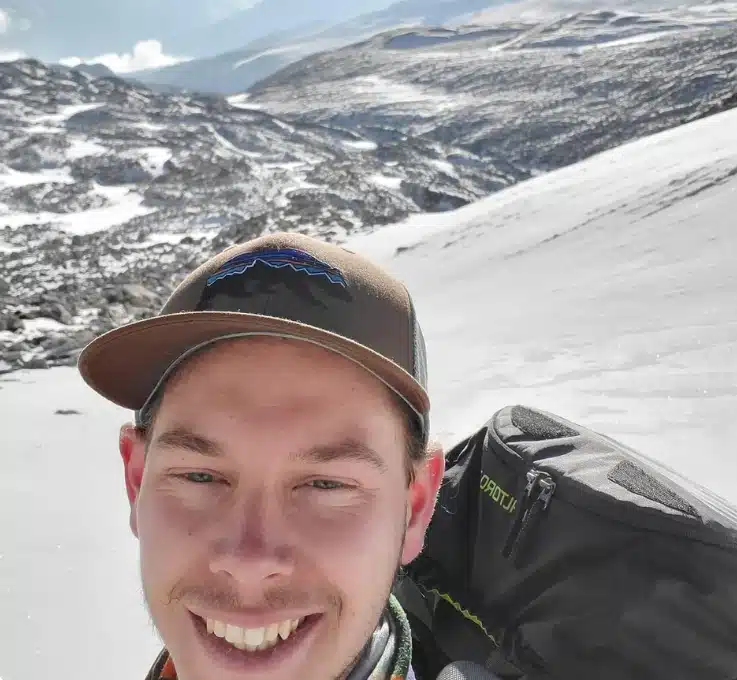
Where Antoine’s story was built over years of persistence, Mackenzie’s was just beginning to open. A recent graduate of Seneca Polytechnic, he had earned his aviation degree in 2023 and moved directly into the role of first officer through the Jazz Aviation Pathways Program.
It was the start of something.
Not the peak.
Not the conclusion.
Just the beginning.
His life was grounded in quieter steps — co-op placements, part-time work, steady progress. Nothing flashy. Nothing handed to him. Just consistent effort moving him closer to the sky he had always wanted.
People who knew him remembered something else.
Not just ambition.
Kindness.
A coffee shop owner who saw him regularly described him simply:
“MacKenzie was an amazing young man… he was really excited about flying.”
He had recently married.
He had plans.
He had time.
And yet, in a matter of moments, everything changed.
What happened on that runway unfolded faster than most people can fully comprehend. Air traffic control audio later revealed the urgency — rapid communication, split-second decisions, and an environment where hesitation simply wasn’t an option.
Somewhere inside that chaos, both pilots acted.
Reports indicate they engaged reverse thrust — a critical maneuver that may have reduced the severity of the impact and prevented even greater loss of life, not only for those onboard, but for the firefighters on the runway as well.
They did not survive.
But others did.
And for those passengers, survival is not an abstract concept — it is something tied directly to the decisions made in those final seconds.
In the aftermath, people began sharing what they remembered.
Not technical details.
Not procedures.
Something more human.
Calm voices.
Control under pressure.
A sense that, even as everything was going wrong, someone was still trying to make it go less wrong.
That matters.
Because in disasters, outcomes are often measured in numbers — casualties, injuries, damage.
But meaning is measured differently.
In Montreal, in Coteau-du-Lac, in Toronto, and across aviation communities, the grief is immediate and heavy. Families are left with silence where voices used to be. Colleagues are left with empty spaces in cockpits and crew rooms.
Yet alongside that grief, something else remains.
Recognition.
Not of perfection.
But of response.
Of two men, from different stages of life, placed in the same moment — and choosing to act with professionalism, focus, and responsibility when it mattered most.
One passenger said it simply:
“They are heroes.”
It’s a word that can sometimes feel overused.
But in this case, it doesn’t come from headlines.
It comes from people who walked away.
And that gives it weight.
Because what Antoine Forest and Mackenzie Gunther left behind is not just a record of where they came from, or how they trained, or what they achieved.
It is something quieter, but more enduring.
The knowledge that in a moment where fear could have taken over, they chose skill.
In a moment where seconds mattered, they used them.
And for those who survived, that is not something that fades with time.
It becomes part of how they remember being alive.
More From Daily Positive
 At a drunken party, my husband lost a card game to his friend, betting ‘a night with me’.” “Go work off my debt, you stupid hen!” he growled, shoving me into the bedroom. “But when his friend walked out of there five minutes later, pale
 My Boyfriend Proposed After Just 4 Months of Dating – When I Found Out Why, My Knees Buckled
 Country music legend dies in tragic motorcycle accident
 “I Didn’t Think You Would Actually Come.” My Ex-Husband Said That When He Saw Me Walk Into The Reception He Had Planned To Humiliate Me. But The Entire Room Fell Silent The Moment The Man Standing Beside Me Appeared.
 I ran away pregnant and penniless to save my baby. 10 years later, my sister finally found the “new life” I built from nothing.
 My Future DIL Handed Me a Mop in Front of 20 Guests at Her Bridal Shower and Told Me to 'Earn My Meal' – The Gift I Pulled Out of My Purse Made the Whole Room Gasp