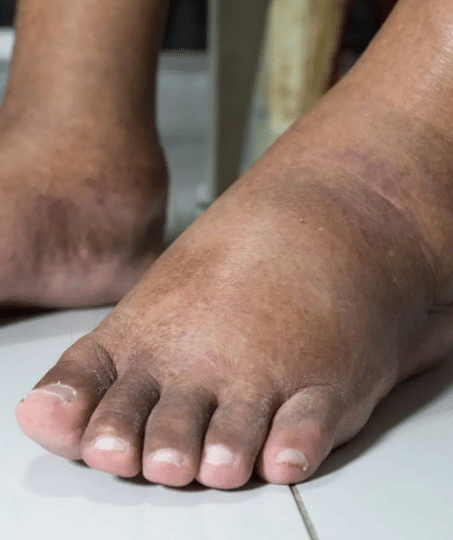
Swollen feet, medically known as edema, occur when excess fluid builds up in the tissues. It’s a common issue that can feel uncomfortable and sometimes alarming, especially when it appears suddenly or doesn’t go away.
What swollen feet look and feel like
You might notice your feet appearing larger than usual or feeling tight inside your shoes. The skin can look stretched or shiny, and in some cases, pressing on the area leaves a temporary dent—this is known as pitting edema. For many people, it develops gradually, often at the end of a long day.
Why it happens
There are several everyday reasons why swelling can occur. Spending long hours standing or sitting in one position can slow circulation, allowing fluid to accumulate. Hot weather can also cause blood vessels to expand, which may lead to puffiness.
Diet plays a role too. High salt intake encourages the body to retain water, making swelling more likely. Pregnancy is another common cause, as hormonal changes and pressure on blood vessels affect circulation.
However, swelling can also be linked to underlying conditions such as poor circulation or issues involving the heart, kidneys, or liver. Certain medications, as well as injuries or infections, may also contribute.
When it could be serious
While mild swelling is often harmless, there are situations where it should not be ignored. Medical attention is recommended if the swelling:
- Appears suddenly without a clear reason
- Affects only one foot
- Is accompanied by pain, redness, or warmth
- Occurs alongside shortness of breath or chest discomfort
These signs may indicate a more serious condition that requires prompt evaluation.
Natural support: medicinal herbs
For those looking to ease mild swelling and support circulation, certain medicinal herbs have been traditionally used as complementary options. While they are not a substitute for medical care, they may provide gentle relief when used appropriately.
Ginkgo biloba
Known for supporting blood flow, this herb may help improve circulation and reduce inflammation. It is commonly available as a supplement or in topical preparations.
Calendula
Calendula has soothing, anti-inflammatory properties. A warm foot soak made from calendula infusion can help relax tissues and encourage better circulation.
Butcher’s broom
Often used to support vein health, this herb may help strengthen blood vessel walls and reduce swelling. It is typically found in supplements or creams.
Chamomile
Chamomile is valued for its calming and anti-inflammatory effects. A chamomile foot soak can provide both physical relief and relaxation.
Ginger
With natural warming and circulation-stimulating properties, ginger can be consumed as tea or used in massage oils to help reduce swelling.
Witch hazel
This astringent herb can be applied as a cool compress to help tighten tissues and reduce puffiness.
Horse chestnut
Commonly used for circulation support, horse chestnut may help reduce fluid buildup and improve vein function when used in creams or supplements.
Dandelion
A natural diuretic, dandelion supports the body in eliminating excess fluid, which can help reduce swelling over time.
Rosemary
Rosemary stimulates circulation and may help reduce inflammation. It is often used in oils or infusions for massage.
Turmeric
Rich in anti-inflammatory compounds, turmeric can support overall inflammation reduction when added to meals or used in teas.
Simple dandelion foot soak
A gentle and natural way to relieve swelling is through a warm herbal soak.
Ingredients:
- 1 tablespoon dried dandelion root
- 1 cup hot water
- Optional: honey or lemon
Preparation:
- Pour hot water over the dandelion root
- Cover and let it steep for 10–15 minutes
- Strain the liquid
How to use:
- Allow the infusion to cool to a comfortable temperature
- Pour into a basin large enough for your feet
- Soak for 15–20 minutes
- Gently dry your feet afterward
This can be repeated daily or whenever needed.
A balanced approach
Herbal remedies can offer gentle support, but they work best alongside simple lifestyle adjustments—such as elevating your feet, staying active, reducing salt intake, and wearing comfortable footwear.
Most importantly, persistent or severe swelling should always be evaluated by a healthcare professional. Natural solutions can complement care, but understanding the root cause is essential for lasting relief.