Few figures in modern entertainment have built a legacy as vast and influential as Tyler Perry. With a career spanning decades, he has become not only a dominant force in Hollywood but also one of its most financially successful creators—amassing a fortune estimated at around $1 billion.
Yet behind that success lies a deeply painful story, one that shaped both the man and the work that would eventually make him a household name.
From Stage Plays to a Media Empire
Born in New Orleans in 1969, Perry’s journey into entertainment did not begin in film studios or on red carpets. It started with stage plays—raw, emotional productions that traveled from city to city, slowly building a loyal audience.
While mainstream Hollywood often overlooked the communities he was speaking to, Perry recognized that gap early. He created stories that reflected real-life struggles, faith, resilience, and family dynamics—topics that resonated deeply with audiences who felt unseen.
That grassroots success eventually expanded into television and film. Over time, Perry transitioned from performer to producer, director, and studio owner. His work didn’t just succeed—it dominated, leading to the creation of one of the largest production facilities in the United States: Tyler Perry Studios in Atlanta.
Among his most recognizable contributions is the creation of the fictional character Madea, a bold, comedic figure who became the centerpiece of a highly successful franchise. Across stage and screen, those projects generated hundreds of millions of dollars and solidified Perry’s place in entertainment history.
A Childhood Marked by Trauma
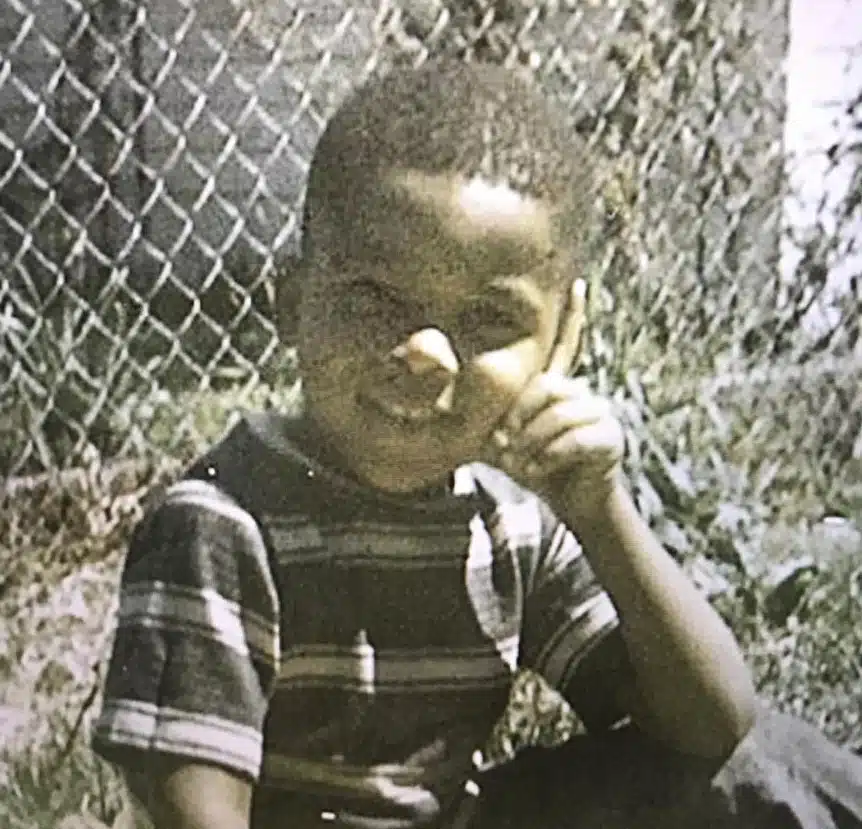
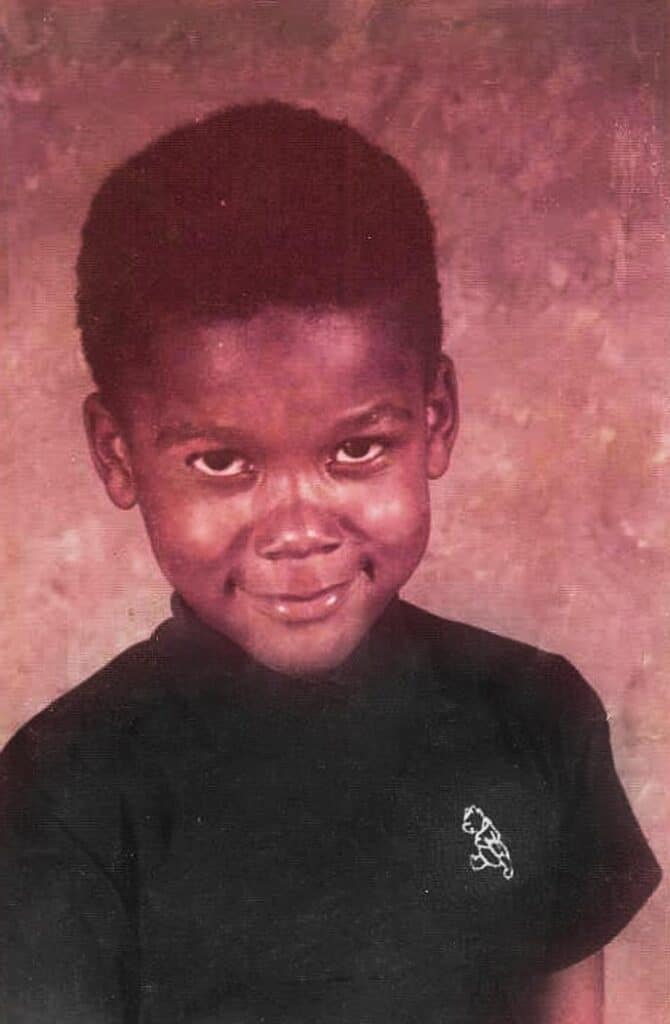
Despite his achievements, Perry has openly spoken about the severe trauma he endured as a child.
In interviews, including a widely discussed appearance with Oprah Winfrey, he described growing up in an environment defined by fear. He has recounted instances of intense physical abuse at the hands of his father, including beatings so severe they left lasting physical and emotional scars.
“To this day, I don’t know why he did it… I remember him cornering me in a room and hitting me with a vacuum cleaner cord… I had to wait for him to go to sleep.”
Beyond the physical violence, Perry has also revealed that he was subjected to sexual abuse by multiple adults during his childhood—experiences that left a profound psychological impact.
These events, he has explained, shaped how he understood pain, trust, and survival from a very young age.
Breaking Cycles and Reclaiming Identity
Perry has often spoken about the long process of healing—of separating his identity from the trauma he experienced.
“I think that everyone who’s been abused… there is a string to the puppet master… At some point, you have to be responsible for them… I was able to free myself and understand that even though these things happened to me, it was not me.”
Faith played a significant role in that journey. He has credited his mother, and her presence in church, as one of the few sources of stability and hope during his childhood.
There were moments, he admitted, when the weight of everything felt overwhelming. At one point, as a young person, he reached a breaking point and questioned whether life was worth continuing. What followed, however, was a gradual rebuilding—one rooted in purpose, creativity, and persistence.
From Homelessness to Hollywood Power
Perry’s path to success was far from immediate.
In the early 1990s, he invested everything he had into his first stage production. It failed financially. He tried again—and failed again. Eventually, he found himself homeless, living out of his car while continuing to rewrite, produce, and perform his work.
<blockquote> “I spent all my money to put this play up, and it didn’t work… I ended up homeless… For three months, I lived in a Geo Metro.” </blockquote>
That period, though difficult, became a turning point. Through repeated attempts, his work began to gain traction. Audiences returned. Word spread. The same plays that once failed started selling out.
From there, the trajectory changed completely.
Legacy, Philanthropy, and Purpose
Today, Tyler Perry is widely regarded as a visionary—someone who not only succeeded within Hollywood but reshaped parts of it.
His contributions extend beyond entertainment. Through The Perry Foundation, he has supported initiatives focused on community development, education, and crisis relief. His approach to giving reflects a broader philosophy:
“When you’ve been given a lot, you have to do a lot.”
Despite immense success, Perry has consistently emphasized responsibility—both personal and social. His story is often framed not just as one of wealth or fame, but of transformation.
A Story That Resonates Beyond Fame
Tyler Perry’s journey is not easily simplified.
It includes extraordinary success, but also profound hardship. It speaks to resilience, but also to the long-lasting effects of trauma. It reflects both personal reinvention and a broader cultural impact.
What stands out most is not just what he built—but what he overcame to build it.
And in that sense, his legacy extends far beyond film, television, or financial milestones. It becomes a story about endurance, identity, and the possibility of reclaiming one’s life, even after its most difficult beginnings.
{"post":49907,"page":1,"next":[{"id":49881,"url":"https:\/\/dailypositive24.com\/49881","title":"My Son Built a Ramp for the Boy Next Door \u2013 Then an Entitled Neighbor Destroyed It, but Karma Came Faster than She Expected","image":"https:\/\/dailypositive24.com\/wp-content\/uploads\/2026\/04\/handramp-modular-portable-wheelchair-ramps-with-handrails-768x510.jpg"},{"id":49878,"url":"https:\/\/dailypositive24.com\/49878","title":"Man Screamed, \u0027If You Can\u0027t Afford a Baby, Maybe Don\u0027t Have One!\u0027 at a Sobbing Nurse at a Grocery Store \u2013 And My Life Took a Sharp Turn After That","image":"https:\/\/dailypositive24.com\/wp-content\/uploads\/2026\/04\/652596865_858110160574372_81487308947364393_n.jpg"},{"id":49875,"url":"https:\/\/dailypositive24.com\/49875","title":"My mother-in-law burst into the house, shouting, \u201cWhere\u2019s the money from your mother\u2019s apartment sale?\u201d","image":"https:\/\/dailypositive24.com\/wp-content\/uploads\/2026\/04\/659694521_1507090420809652_3608347889350007492_n-768x953.jpg"},{"id":49871,"url":"https:\/\/dailypositive24.com\/49871","title":"After Kids Destroyed My Little Sister\u0027s Jacket, the Principal Called Me to School \u2013 What I Saw There Made My Heart Stop","image":"https:\/\/dailypositive24.com\/wp-content\/uploads\/2026\/04\/658941006_1281228590892078_8624563914293080437_n-768x960.jpg"},{"id":49866,"url":"https:\/\/dailypositive24.com\/49866","title":"How this struggling kid went from addiction to becoming the highest-paid actor in Hollywood","image":"https:\/\/dailypositive24.com\/wp-content\/uploads\/2026\/04\/feja1.jpg"},{"id":49863,"url":"https:\/\/dailypositive24.com\/49863","title":"Trump\u2019s bombshell accusation against Karoline Leavitt confirms rumors","image":"https:\/\/dailypositive24.com\/wp-content\/uploads\/2026\/04\/trumpleavitt-768x403.jpg"},{"id":49856,"url":"https:\/\/dailypositive24.com\/49856","title":"My Date Ordered a $150 Lobster Dinner on Our First Date and Then Refused to Pay \u2013 Moments Later, Karma Struck Her Right There in Front of Me","image":"https:\/\/dailypositive24.com\/wp-content\/uploads\/2026\/04\/m_3384946d-93a1-43e3-aea9-7acaeea970b8.webp"},{"id":49853,"url":"https:\/\/dailypositive24.com\/49853","title":"I Took Guardianship of My 7 Grandchildren and Raised Them on My Own \u2013 10 Years Later, My Youngest Granddaughter Handed Me a Box That Revealed What Really Happened to Her Parents","image":"https:\/\/dailypositive24.com\/wp-content\/uploads\/2026\/04\/m_d68de907-7103-4d4c-8cd9-113c80637d25.webp"},{"id":49850,"url":"https:\/\/dailypositive24.com\/49850","title":"My 5-Year-Old Asked Why \u0027Mr. Tom\u0027 Only Comes at Night When I\u0027m Asleep \u2013 I Don\u0027t Know Any Toms, So I Set Up a Camera in Her Room and Waited","image":"https:\/\/dailypositive24.com\/wp-content\/uploads\/2026\/04\/652471894_1519585369655049_1173933600333064431_n-768x768.jpg"},{"id":49846,"url":"https:\/\/dailypositive24.com\/49846","title":"With heavy hearts, we announce the passing of this musician who gave us so much: \u2018Keyboard wizard\u2019 of Ambrosia","image":"https:\/\/dailypositive24.com\/wp-content\/uploads\/2026\/04\/kea1-768x403.jpg"},{"id":49843,"url":"https:\/\/dailypositive24.com\/49843","title":"I bathed my paralyzed father-in-law behind my husband\u2019s back\u2026 and upon discovering a mark on his body, I fell to my knees as the secret of my past was revealed.","image":"https:\/\/dailypositive24.com\/wp-content\/uploads\/2026\/03\/618808338_1451956452989716_5627544648473578646_n-768x922.jpg"},{"id":49840,"url":"https:\/\/dailypositive24.com\/49840","title":"My Teenage Daughter\u2019s Stepdad Kept Taking Her on Late-Night \u2018Ice Cream Runs\u2019 \u2013 As I Pulled the Dashcam Footage, I Had to Sit Down","image":"https:\/\/dailypositive24.com\/wp-content\/uploads\/2026\/03\/615448490_1452579342927427_4297494951831678994_n-768x1052.jpg"},{"id":49837,"url":"https:\/\/dailypositive24.com\/49837","title":"Missing for 17 years \u2014 his WIFE saw him at the bank, followed him and discovered that","image":"https:\/\/dailypositive24.com\/wp-content\/uploads\/2026\/03\/pkxh-768x922.jpg"},{"id":49834,"url":"https:\/\/dailypositive24.com\/49834","title":"I never told my sister-in-law I was a four-star general. To her, I was just a \u201cfailure soldier,\u201d while her father was the police chief.","image":"https:\/\/dailypositive24.com\/wp-content\/uploads\/2026\/03\/658290658_1506942337491127_8544045164918363517_n-768x953.jpg"}]}


 The night my sister forgot to lock her iPad, I found the group chat my family never meant me to see. In it, they mocked me, used me, and joked that I’d keep funding their lives if they faked love well enough. I said nothing. I let them feel safe.
 Susan Boyle is now ”aging backwards” 17 years after Britain’s Got Talent
 My Sweet 78-Year-Old Neighbor Left Me a Note and a Key to Her Shed – When I Discovered What She Had Been Storing Inside, My Knees Buckled
 I Flew Across the Country to See My Son – He Looked at His Watch and Said, 'You Are 15 Minutes Early, Just Wait Outside!'
 When doctors informed him that his wife had only a few days left, he bent over her hospital bed and, masking his satisfaction with a cold smile, murmured
 I used to think my wife was just clumsy—always brushing off the bruises on her wrists with, “I bumped into something, it’s nothing.” Then the kitchen camera showed my mother crushing her wrist and whispering, “Don’t let my son find out.” I replayed it three times, and what made my bl:ood run cold wasn’t just that moment