Before labels like “MILF” and “cougar” had entered everyday conversation, The Graduate was already doing something far more daring. When it arrived in 1967, it didn’t just stir audiences—it defined a cultural moment. Anne Bancroft gave a magnetic, career-shaping performance as Mrs. Robinson, blending elegance, sensuality, and sadness in a way that made the character impossible to forget. Opposite her, Dustin Hoffman turned Benjamin Braddock into the perfect embodiment of awkward young confusion, making every uncomfortable pause feel both hilarious and painfully real. And of course, the line everyone still remembers—“Mrs. Robinson, you’re trying to seduce me, aren’t you?”—became part of movie history.
The film premiered at a time when America was already in upheaval. Beatlemania was still in the air, the Vietnam War was driving outrage into the streets, and a younger generation was openly challenging authority, social expectations, sex, and romance. The Graduate managed to capture all of that tension and uncertainty in one sharp, stylish, unforgettable story.
But like many classics, it came with its own hidden stories, casting drama, and surprising mistakes.
Dustin Hoffman, who made Benjamin so unforgettable, was nearly 30 when he auditioned for the role. At the time, he was far from a major star and wasn’t even the first person producers had in mind. In fact, when Hoffman showed up for the audition, producer Joseph E. Levine reportedly mistook him for a window cleaner. Realizing what had happened, Hoffman leaned into the misunderstanding and actually started cleaning a window before Levine figured out who he really was.
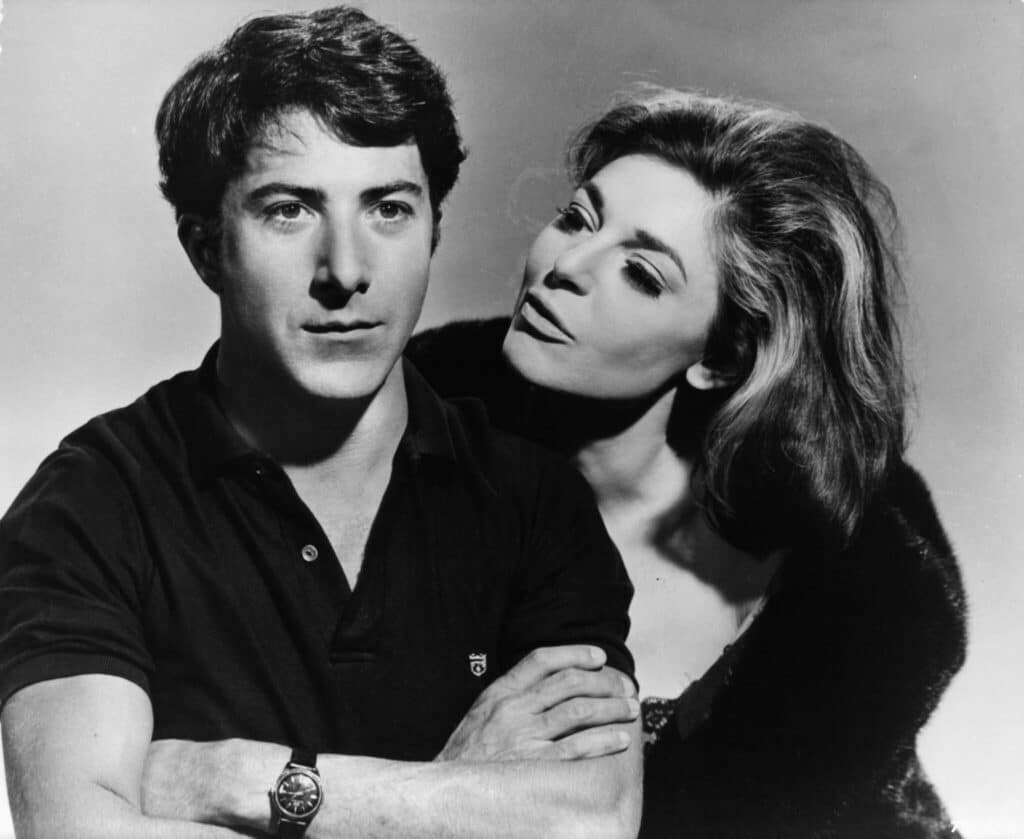
Robert Redford was once considered for Benjamin and even screen-tested with Candice Bergen. But Mike Nichols felt Redford simply didn’t fit the part. The character needed to seem awkward, insecure, and out of place, and Redford was almost too effortlessly handsome for that. When Nichols explained his doubts, Redford argued that he understood the character completely. Nichols responded with a line that said it all:
“Bob, look in the mirror. Can you honestly imagine a guy like you having difficulty seducing a woman?”
That ended the debate.
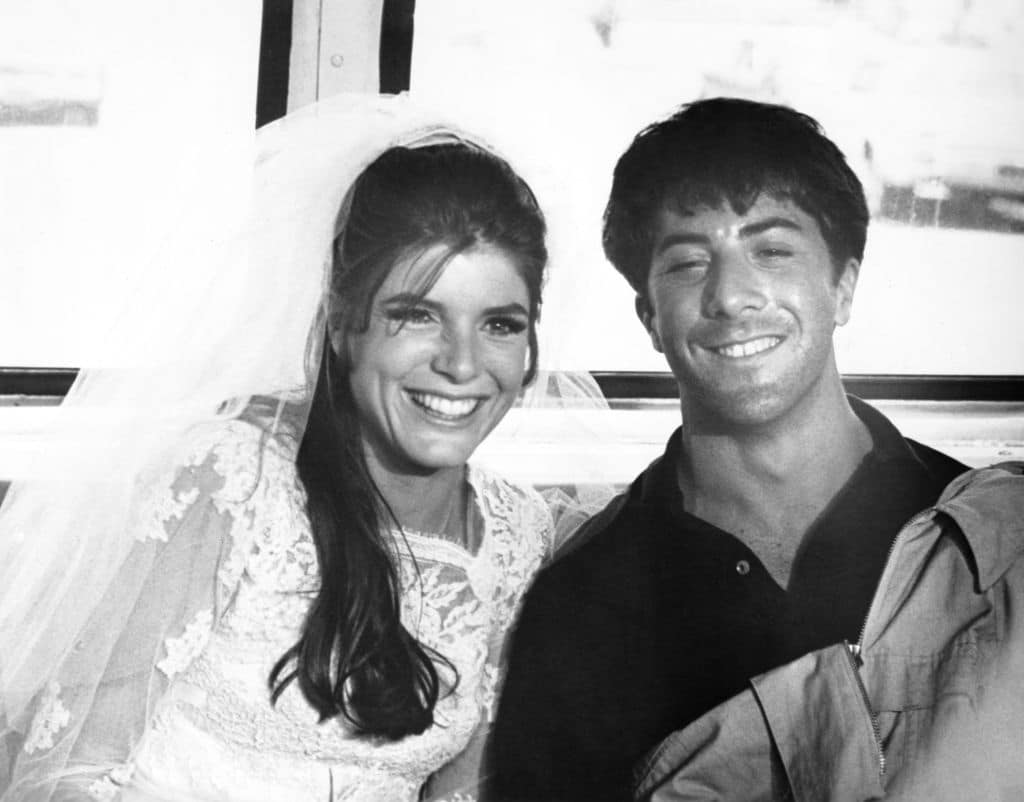
Hoffman faced doubts from others too. During the chaotic casting process, he was asked to perform a love scene with Katharine Ross despite having no experience with that kind of scene. He later admitted that someone like Ross would never have gone for someone like him “in a million years,” while Ross herself reportedly thought he looked far too disheveled and awkward for it to work. Yet that exact discomfort became part of the film’s magic. Nichols saw something in Hoffman others didn’t, and his gamble paid off.
Hoffman would later speak openly about the criticism he received, saying some reactions to his casting were laced with anti-Semitism.
“As far as I’m concerned, Mike Nichols did a very courageous thing casting me in a part that I was not right for, meaning I was Jewish. In fact, many of the reviews were very negative. It was kind of veiled anti-Semitism…. I was called ‘big-nosed’ in the reviews; ‘a nasal voice’,”
he recalled.
Ironically, although The Graduate earned a massive $104.9 million and became the biggest hit of 1967, Hoffman saw very little of that money. He was paid $20,000 for the film, and after taxes and living expenses, he reportedly had only about $4,000 left. After starring in one of the year’s biggest box office successes, he ended up filing for unemployment in New York and collecting $55 a week.
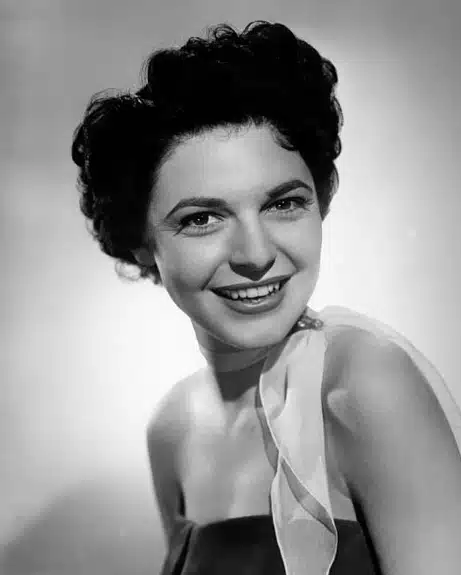
Anne Bancroft, meanwhile, made Mrs. Robinson iconic. It is difficult to imagine anyone else in the role now, but Nichols originally wanted French actress Jeanne Moreau. Doris Day also turned it down, reportedly unwilling to do the required nudity. Bancroft eventually stepped in and delivered a performance that has lasted for decades.
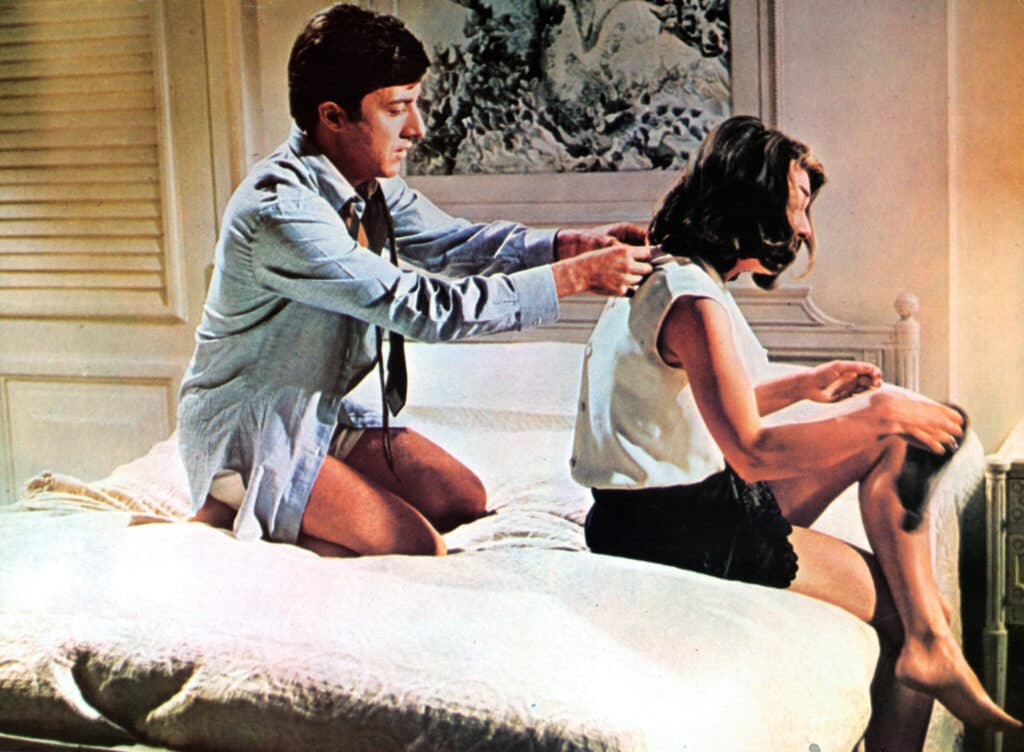
One of the film’s most memorable scenes—the hotel room sequence—came with a surprising behind-the-scenes story. During rehearsal, Bancroft reportedly had no idea what Hoffman was about to do when he suddenly grabbed her breast. Hoffman later said the moment was inspired by the kind of clumsy, mischievous move teenage boys might try while pretending innocence. Nichols burst out laughing, Hoffman turned to the wall and banged his head trying not to laugh too, and the spontaneous awkwardness ended up staying in the film. That strange burst of discomfort audiences see on screen was, in large part, completely real.
Despite becoming the symbol of the “older woman,” Bancroft was only 36 during filming—just six years older than Hoffman and only eight years older than Katharine Ross, who played her daughter. Hollywood styling helped create the illusion, but so did Bancroft’s mature screen presence and Hoffman’s youthful look.
Bancroft later admitted she had mixed feelings about Mrs. Robinson because the part overshadowed much of her other work. Years after the film, young men still told her she had been their first fantasy. She died in 2005 from uterine cancer at 73, having kept her illness largely private. At her memorial, Broadway lights were dimmed in her honor, and Paul Simon performed “Mrs. Robinson.”
The music itself became part of the film’s legend. Mike Nichols and editor Sam O’Steen initially used Simon & Garfunkel songs only as temporary editing material, but Nichols realized the film lost something when those songs were removed. So he kept them, which was unusual at the time. Interestingly, “Mrs. Robinson” had not originally been written for the movie at all. Paul Simon had been working on a song called “Mrs. Roosevelt,” but Nichols heard enough to know it belonged in the film.
Visually, The Graduate was just as inventive. In one late scene, Benjamin runs toward the camera with full force, yet a long telephoto lens makes it look as though he is barely moving, perfectly capturing his emotional paralysis. In another, Benjamin moves from right to left while the rest of the world flows left to right, subtly reinforcing the sense that he is moving against the natural order of things.
Even classics have their imperfections. Among the best-known goofs: a lipstick mark disappears from Benjamin’s cheek without explanation, a nighttime drive suddenly looks like bright daytime in the greenhouse sequence, and music that Mrs. Robinson turns on vanishes mysteriously when Benjamin rushes downstairs.
And then there are the famous topless scenes. Bancroft had firmly refused to appear topless, so the production had to search for body doubles. The first candidate would not remove her pasties, forcing the crew to keep looking until they finally found another stand-in willing to do the scene.
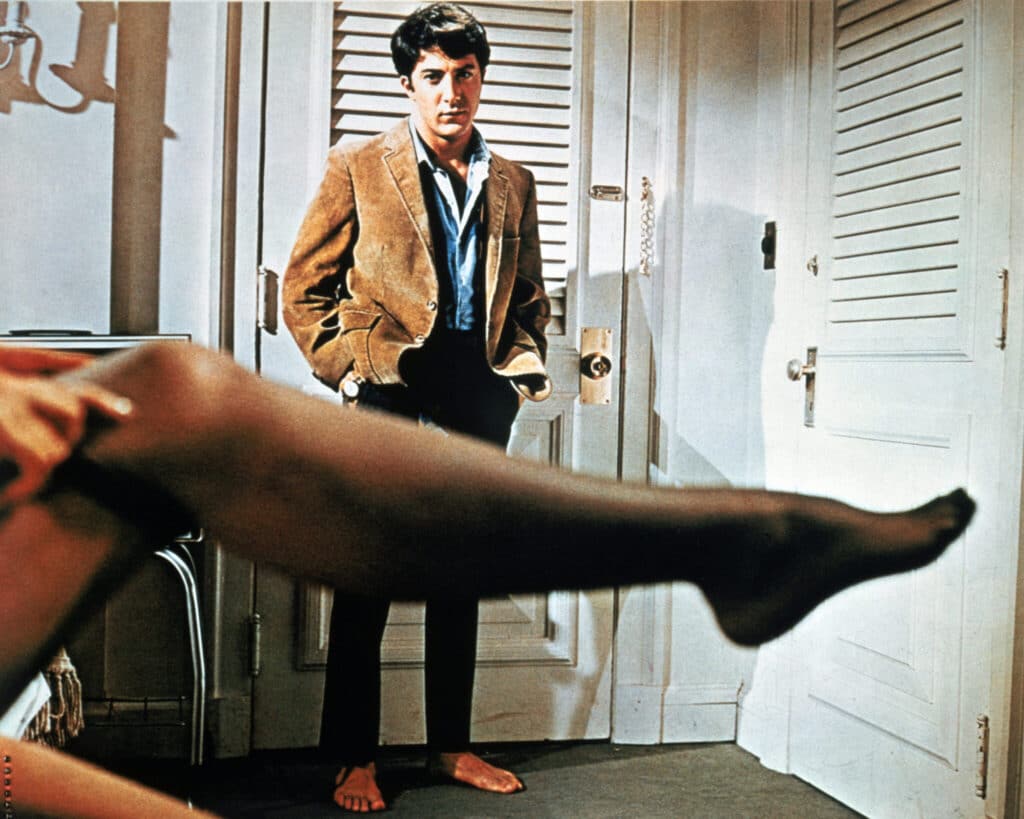
Nearly six decades later, The Graduate still feels alive. The famous shot of Mrs. Robinson’s leg framing Benjamin became so iconic that it has been parodied again and again, including in Roseanne and The Simpsons. That kind of staying power says everything.
What made The Graduate endure was never just the scandal or the seduction. It was the tension beneath it all—the confusion, the loneliness, the social pressure, the uneasy humor, and the performances that made every uncomfortable moment unforgettable. Between Hoffman’s vulnerable awkwardness, Bancroft’s mesmerizing control, and Simon & Garfunkel’s haunting soundtrack, the film remains one of those rare classics that never fades. It simply reveals new layers every time you return to it.
More From Daily Positive
 I covered all the bills, but my mother-in-law still demanded an extra $5,000.
 “Your kids can eat when you get home,” my dad said, tossing them napkins while my sister boxed $72 pasta for her boys. Her husband laughed, “Feed them first next time.” I just said, “Got it.” When the waiter returned, I stood up and said…
 As a Nurse, I Was Assigned to Treat the Woman Who Made My Teenage Years a Living Hell – When She Recovered, She Told Me, 'You Should Resign Immediately'
 At the airport, I nearly dropped my suitcase when I saw my husband’s arm locked around a younger woman’s waist
 The Sin of Cremation: What Does the Bible Say?
 The doctor who held my hand! A story of loss, healing, and hope!