A spokesperson for Bill Clinton has called for the full, unredacted release of all federally held records related to Jeffrey Epstein, arguing that partial disclosure risks distorting public understanding rather than advancing transparency.
The request follows a recent release by the U.S. Department of Justice of a large batch of Epstein-related documents. The release, made in accordance with a statutory deadline under the Epstein Files Transparency Act, included hundreds of thousands of pages of material such as flight logs, deposition excerpts, correspondence, and photographs referencing Epstein and numerous public figures.
Clinton’s spokesperson, Angel Ureña, criticized what he described as a selective and heavily redacted disclosure process. While acknowledging the volume of material released, Ureña argued that the manner in which it was presented—often with extensive blackouts and incomplete context—undermines the stated goal of transparency.
The documents reference or depict a wide range of well-known individuals, including Clinton, Prince Andrew, and several entertainers and public figures. Federal officials emphasized that inclusion in the files does not imply criminal conduct and that no person named or pictured has been charged solely on the basis of appearing in the records.
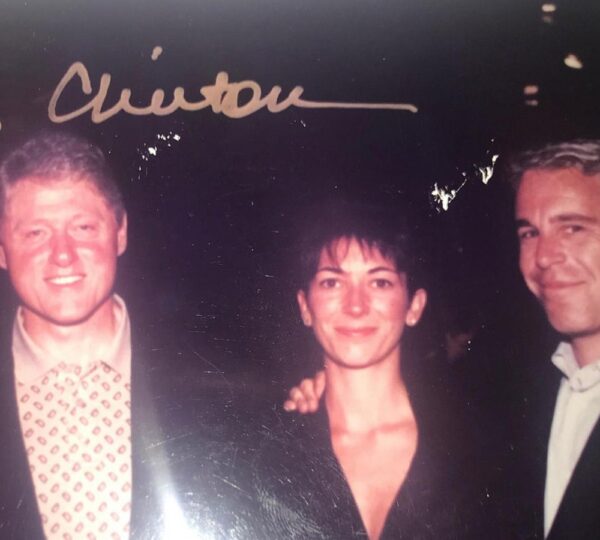
Ureña nonetheless expressed concern that selective emphasis—particularly the prominence of decades-old photographs showing Clinton with Epstein and Ghislaine Maxwell—creates misleading impressions. Clinton has never been charged with or accused of wrongdoing in connection with Epstein, and multiple investigations under both Democratic and Republican administrations have not found evidence warranting charges against him.
According to Ureña, partial disclosure invites speculation rather than clarity. He argued that extensive redactions raise legitimate questions about whether other individuals or investigative findings remain shielded from public view. “Full transparency,” he said, “means releasing the complete record, not fragments that can be taken out of context.”
The Epstein Files Transparency Act was intended to limit prolonged secrecy around federal records related to Epstein’s activities, while still allowing redactions for narrowly defined reasons such as protecting victims’ privacy or active investigations. Clinton’s team contends that the current release falls short of that standard and has urged the administration to disclose any remaining responsive documents.
Public reaction to the release has been swift and polarized, with renewed debate over accountability, reputational harm, and the role of government discretion in managing sensitive information. Media coverage has similarly focused on the tension between public interest and selective disclosure.
At its core, the request from Clinton’s representatives is not framed as a defense against investigation, but as a demand for consistency. Ureña maintains that transparency cannot be partial without risking distortion, and that public trust depends on access to the full factual record.
As scrutiny of Epstein’s network continues, the debate underscores a broader challenge for democratic institutions: how to balance transparency, privacy, and fairness in cases involving profound public interest. Whether additional disclosures follow may shape not only public perception of this case, but confidence in how justice and transparency are administered more broadly.
{"post":44616,"page":1,"next":[{"id":44595,"url":"https:\/\/dailypositive24.com\/44595","title":"My Husband Promised to Take Care of the Baby If I Had One\u2014But After I Gave Birth, He Told Me to Quit My Job","image":"https:\/\/dailypositive24.com\/wp-content\/uploads\/2026\/01\/images-3.jpg"},{"id":44591,"url":"https:\/\/dailypositive24.com\/44591","title":"The SHOCKING Battle That Could Change America\u2019s Climate Future!","image":"https:\/\/dailypositive24.com\/wp-content\/uploads\/2026\/01\/609190250_122238027704104669_6002640137268787382_n-768x960.jpg"},{"id":44588,"url":"https:\/\/dailypositive24.com\/44588","title":"Zelensky Makes Power Move With Canada\u2014T.r.u.m.p STUNNED Hours Before U.S. Talks","image":"https:\/\/dailypositive24.com\/wp-content\/uploads\/2026\/01\/608810292_122281024424027953_8511689178781952792_n-768x886.jpg"},{"id":44585,"url":"https:\/\/dailypositive24.com\/44585","title":"Jelly Roll Discusses Progress on His Long-Term Wellness Goals","image":"https:\/\/dailypositive24.com\/wp-content\/uploads\/2026\/01\/606477925_122304940778011573_2425772544328597864_n-768x960.jpg"},{"id":44582,"url":"https:\/\/dailypositive24.com\/44582","title":"Navy Lawyer Just Nuked Democrats\u2019 Claims That Trump\u2019s Narco Boat Strikes Are \u2018Illegal\u2019","image":"https:\/\/dailypositive24.com\/wp-content\/uploads\/2026\/01\/608906968_122281027250027953_9042680131179481077_n-768x960.jpg"},{"id":44579,"url":"https:\/\/dailypositive24.com\/44579","title":"This One Vitamin Could Help Stop You From Waking Up to Pee Every Night and Why a Small, Overlooked Signal From Your Body Might Be Asking for Attention, Balance, and a Gentler Way Back to Restful Sleep, Steady Nights, and Confidence in Your Own Health Again","image":"https:\/\/dailypositive24.com\/wp-content\/uploads\/2026\/01\/605714216_1206554578281167_4064358502521444732_n.jpg"},{"id":44576,"url":"https:\/\/dailypositive24.com\/44576","title":"Uh-Oh: Tim Walz Issues Panicky Damage Control Statement After Viral Video Showing \u2018Ghost\u2019 Daycare Centers","image":"https:\/\/dailypositive24.com\/wp-content\/uploads\/2026\/01\/608920403_122281020332027953_6183386403504322449_n-768x960.jpg"},{"id":44567,"url":"https:\/\/dailypositive24.com\/44567","title":"My Wife Of 11 Years Cheated On Me With An Unemployed Dude","image":"https:\/\/dailypositive24.com\/wp-content\/uploads\/2025\/12\/607955645_732202786613470_6146144024285344665_n-1.jpg"},{"id":44560,"url":"https:\/\/dailypositive24.com\/44560","title":"JFK\u2019s Granddaughter Died Less Than Two Years After Giving Birth \u2014 Here\u2019s What We Know","image":"https:\/\/dailypositive24.com\/wp-content\/uploads\/2025\/12\/55cb3e275fd071e00aa7614d37e8d2cc0ac9a0636abebf0792a4cef2f395fff3-768x384.webp"},{"id":44557,"url":"https:\/\/dailypositive24.com\/44557","title":"The Truth That Changed Everything","image":"https:\/\/dailypositive24.com\/wp-content\/uploads\/2025\/12\/605706303_731858223314593_963058082432877781_n.jpg"},{"id":44551,"url":"https:\/\/dailypositive24.com\/44551","title":"My Mother-in-Law Agreed to Be Our Surrogate\u2014But When the Baby Was Born, She Said, \u0027You\u0027re Not Taking Him\u0027","image":"https:\/\/dailypositive24.com\/wp-content\/uploads\/2025\/12\/lily-collins-baby-768x550.png"},{"id":44487,"url":"https:\/\/dailypositive24.com\/44487","title":"Holly Madison shares \u2018disturbing\u2019 details about life with Hugh Hefner","image":"https:\/\/dailypositive24.com\/wp-content\/uploads\/2025\/12\/hollyhefner929-664x350-1.jpg"},{"id":44543,"url":"https:\/\/dailypositive24.com\/44543","title":"BILL CLINTON THANKS SUPPORTERS AFTER HEALTH SCARE","image":"https:\/\/dailypositive24.com\/wp-content\/uploads\/2025\/12\/603874292_122236791626104669_1900923360027037137_n-768x960.jpg"},{"id":44539,"url":"https:\/\/dailypositive24.com\/44539","title":"Just when viewers thought the infamous joke swap was finally retired for good, Saturday Night Live proved once again that live TV has a wicked sense of humor \u2014 and Michael Che has perfect comedic timing. What started as a normal Weekend Update instantly spiraled into chaos when Che pulled a sneaky, last-minute move that no one \u2014 especially Colin Jost \u2014 saw coming. Despite a supposed agreement to skip the joke swap this year, Che flipped the cue cards anyway\u2026 forcing Jost to read jokes he\u2019d never seen before \u2014 LIVE \u2014 including one that dragged his own wife, Scarlett Johansson, straight into the punchline. You can actually see the moment Jost realizes what\u2019s happening. The squint. The pause. The nervous laugh. The dawning horror. It\u2019s that rare kind of comedy that only works when there\u2019s absolutely no escape \u2014 and no undo button. Longtime fans know this has basically become a yearly ritual, with Johansson somehow always ending up as the most famous \u201cunwilling guest star\u201d on Weekend Update. And yet\u2026 it never stops being painfully funny. The laughter. The awkward silence. The audience gasping before bursting out laughing. This is why Weekend Update remains one of the most unpredictable corners of live television. The episode already carried emotional weight, too \u2014 featuring a heartfelt farewell from Bowen Yang after seven seasons and a touching tribute to a comedy legend. But let\u2019s be honest: it\u2019s the exact moment Jost realized he\u2019d been betrayed again that fans can\u2019t stop replaying. Love it or cringe through it \u2014 this is why live comedy still hits harder than anything else","image":"https:\/\/dailypositive24.com\/wp-content\/uploads\/2025\/12\/605235672_122152656440923039_2128549775025937274_n-1-768x960.jpg"}]}


 Cory Booker Says He Is Prepared To Go To Jail To Fight Trump
 Two Countries Announce Travel Ban on US Citizens, Citing Reciprocity After New American Restrictions, Sparking Diplomatic Tensions, Raising Questions for Travelers, Businesses, and Global Relations, While Governments Signal Policy Retaliation, Visa Changes, Border Controls, and Uncertain Timelines Affecting Tourism, Security Cooperation, and International Mobility Worldwide amid shifting alliances, protests, negotiations
 Students Told Not to Cheer ‘USA’ at School, Their Response Leaves Officials Surprised
 Woman discovers strange snake-like creature in her back garden
 My Husband Left Me During Chemo for His Mom's Luxury Thanksgiving Trip – Then Karma Hit Them Hard
 The Friend Who Forgot Me