Farrah Fawcett didn’t just belong to the 1970s — she defined them. Long before celebrity culture became a nonstop headline machine, she was the face taped to bedroom walls across America, the golden-haired star who made glamour look wholesome and effortless. On Charlie’s Angels, she radiated a kind of sunny confidence that felt both aspirational and approachable. So when illness later shadowed her life, the contrast was heartbreaking. Yet even then, she met it with wit and visible courage.
By the time reality-TV fame and social media reshaped celebrity, Farrah had already secured her place as an American icon. Her role as Jill Munroe, that legendary red swimsuit poster, and her instantly recognizable feathered hair made her one of the most photographed women in the world. When she died in 2009 at 62 after battling cancer, tributes poured in from across the globe. The image of her smiling in that red suit had become more than pop culture — it was shorthand for an era.
What many didn’t know was how grounded her early life was. Raised in a devout Catholic household, she once briefly considered becoming a nun. In a 1979 interview, she admitted:
“I think I only wanted to be a nun for about a week. … It was a week.”
She explained that convent life seemed simple and uncomplicated, especially during adolescence when she felt confused about growing up in a religious environment that discouraged the very feelings she was beginning to experience.
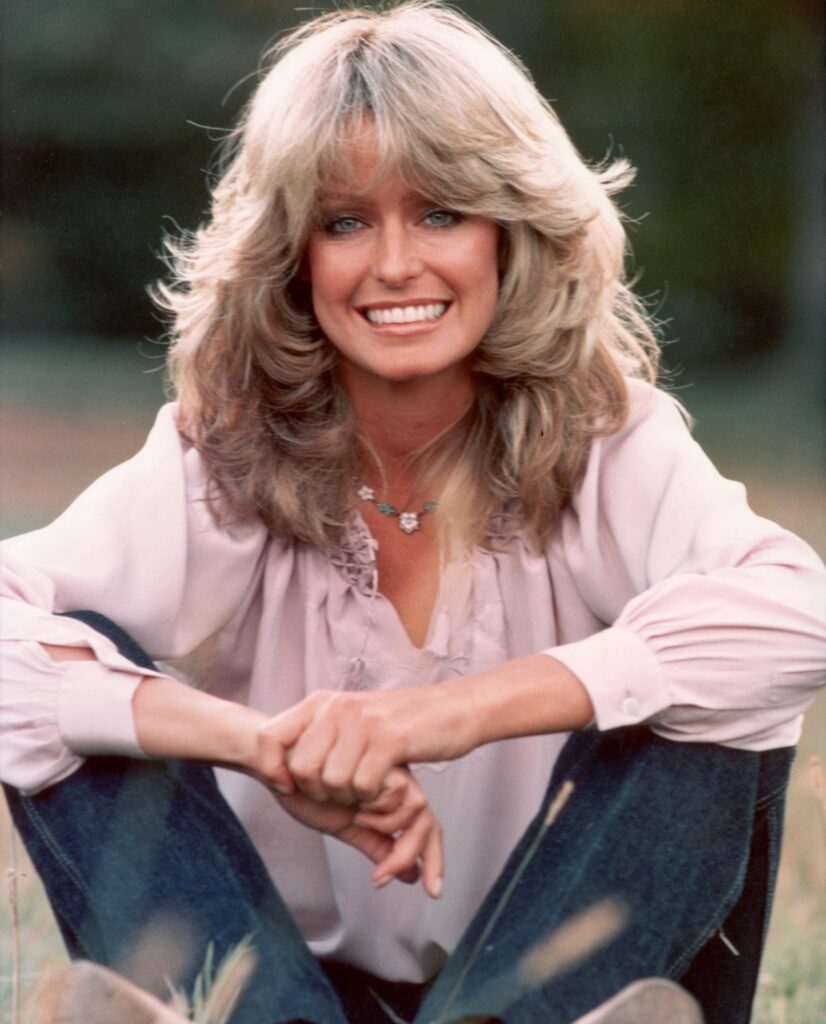
There was always a tug-of-war inside her. She admired her mother Pauline’s homemaker life and once confessed:
“There is a part of me… that is exactly like my mother – loves to cook and clean and get dinner ready.”
At the same time, she felt the thrill of independence and ambition. She openly acknowledged how difficult it was to reconcile traditional expectations with a career in Hollywood.
Her beauty, of course, drew attention early. In high school she was voted “Most Beautiful” three years straight, and she carried that distinction into college at the University of Texas. Strangers approached her mother in stores to comment on her angelic looks. Ironically, Farrah herself often felt self-conscious, once saying she wished people wouldn’t stare so much.
Hollywood noticed quickly. Publicist David Mirisch persistently urged her to leave school and move to Los Angeles. What started as a temporary modeling trip became permanent. Before global fame, she even appeared on The Dating Game, where a staged scuffle between contestants reinforced the image of men competing for her attention.
Her first seismic breakthrough came not from television, but from a poster. The red swimsuit image — shot by photographer Bruce McBroom — sold millions. Cultural commentators later described it as one of the most defining visuals of 1970s American pop culture. Interestingly, Farrah chose the one-piece suit herself instead of the requested bikini, subtly shaping the iconic result.
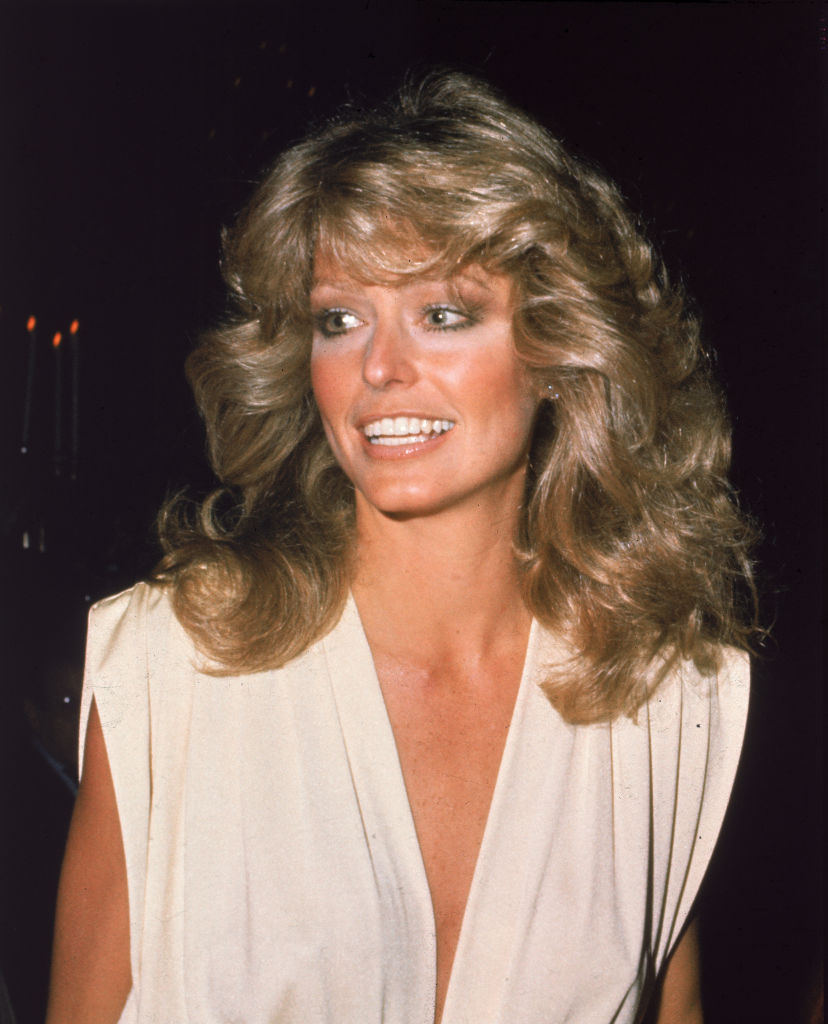
Despite her glamorous reputation, her beauty routine was famously low-maintenance. She believed in sun, sand, and simplicity, often doing her own hair and makeup. The “Farrah flip” hairstyle became a phenomenon. Stylist Allen Edwards once explained the technique involved blow-drying with a brush, clipping sections, then flipping the head upside down for volume — and just like that, a trend was born.
In 1973, she married actor Lee Majors. She described their meeting as instantaneous chemistry, saying she “melted into a thousand pieces.” Yet demanding careers strained the relationship, and they divorced in 1982.
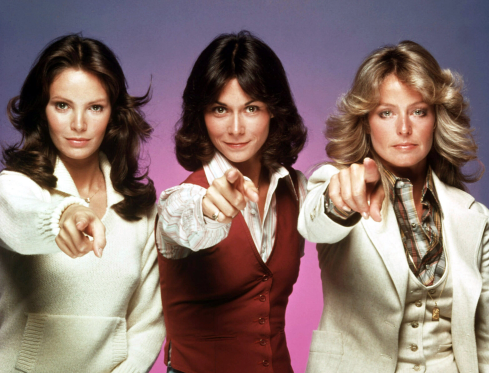
Her breakout role on Charlie’s Angels was partly secured thanks to her tennis skills — developed while playing with producer Aaron Spelling. The show became a ratings juggernaut, though she left after one season, determined not to be confined to the “TV sex symbol” label. She later reflected:
“The industry was furious with me… because I was a TV sex symbol who wanted to be an actress.”
She pursued serious acting, replacing Susan Sarandon in the off-Broadway play Extremities and earning critical praise. Not every project succeeded, but she continued to push beyond expectations.
Her personal life drew scrutiny, particularly during her relationship with Ryan O’Neal, and a 1997 appearance on Late Show with David Letterman sparked rumors she later dismissed as playful nerves. Years earlier, she had charmed audiences on The Tonight Show Starring Johnny Carson, glowing in a red dress while discussing a haircut meant to distance herself from Jill Munroe.
Beyond the spotlight, Farrah sculpted seriously, mentored by Charles Umlauf. Friends like Alana Stewart described decades of close companionship. She remained deeply devoted to her mother, once saying simply, “You’re my best friend.”
In her final chapter, she allowed cameras to document her cancer battle. According to her physician Dr. Lawrence Piro, she fought relentlessly and on her own terms. The woman who once symbolized carefree glamour revealed another kind of strength — quiet, determined, and profoundly human.
Farrah Fawcett may have begun as a poster on a wall, but she endured as something more lasting: a complex woman navigating fame, expectation, artistry, and ultimately, courage.
More From Daily Positive
 A mother shared one plate of food with her children. A millionaire witnessed it—and what came next was beautiful beyond words.
 My mom stole my wife’s card to shop like it was her right—then called me raging when it bounced
 My Ex Refused to Help Pay for Our 5-Year-Old Daughter's Surgery but Bought Himself a New Car Instead — So I Made One Phone Call He Never Saw Coming
 From beaten and bruised to one of the brightest stars in the world
 Viewers warned to watch Nymphomaniac alone on Netflix – here’s why
 Pam Bondi confirms full release of Epstein files as 300 high-profile names are exposed