As tensions between global powers continue to rise, the possibility of wider conflict has once again entered public discussion. Recently, Donald Trump openly acknowledged the grim reality that retaliation against the United States could occur if war escalates with Iran — a statement that has sparked renewed concern about what a large-scale global conflict might look like and where people might be safest if it happened.
During an interview with Time, Trump was asked directly whether Americans should be worried about potential attacks on U.S. soil as the confrontation in the Middle East intensifies. His answer was blunt and reflective of the harsh calculations that come with warfare.
“I guess,” he said when asked if retaliation was possible.
He went on to explain that such scenarios are constantly considered by military planners.
“But I think they’re worried about that all the time. We think about it all the time. We plan for it. But yeah, you know, we expect some things.”
Then he added a sobering reminder about the realities of armed conflict.
“Like I said, some people will die. When you go to war, some people will die.”
The remarks come at a time when fears of a broader global conflict have been growing. Fighting in the Middle East has already claimed more than a thousand lives, according to early reports, and the violence has begun affecting neighboring countries. With tensions spreading across multiple regions, many analysts worry that the situation could spiral beyond a localized confrontation.
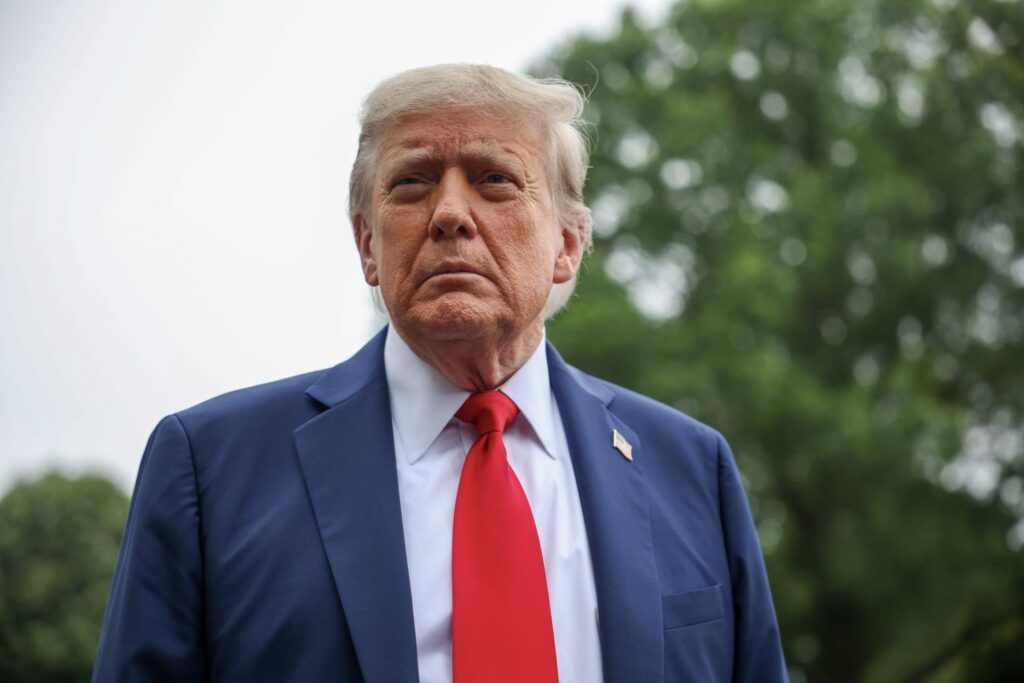
Some world leaders have suggested that the international community may already be closer to a wider conflict than many people realize. Volodymyr Zelensky has warned that the war triggered by Russia’s invasion of Ukraine could represent the early stages of a much larger global struggle.
In an interview with the BBC, Zelensky argued that the ambitions of Vladimir Putin extend far beyond Ukraine’s borders.
“I believe that Putin has already started it,” Zelensky said while discussing the possibility of a third world war.
“The question is how much territory he will be able to seize and how to stop him. Russia wants to impose on the world a different way of life and change the lives people have chosen for themselves.”
Public opinion appears to mirror those concerns. A survey conducted by YouGov across several European nations found that a significant portion of people believe another world war could break out within the next decade. In countries such as the United Kingdom, France, Germany, Italy, and Spain, between 41 and 55 percent of respondents said they consider a global conflict within the next five to ten years to be a real possibility.
In the United States, the numbers were not far behind, with roughly 45 percent of Americans expressing similar fears.
Even more troubling for many observers is the expectation that any future world war would almost certainly involve nuclear weapons. According to the same survey, between 68 and 76 percent of respondents believe nuclear arms would be used if a global war erupted.
Because of that possibility, researchers and analysts have begun examining which places might offer relative safety in the event of a nuclear conflict — though experts stress that such discussions remain theoretical.
Outside the United States, certain countries are often mentioned because of their historical neutrality. Nations such as Switzerland, Ireland, and Austria have long traditions of staying out of major wars, while Denmark is sometimes included in conversations about relatively stable and defensible locations.
Within the United States, however, the picture becomes more complicated.
Research highlighted by Newsweek suggests that areas far from major military installations may face lower immediate risk in a nuclear exchange. Many states along the East Coast and parts of the Southeast — including Maine, New Hampshire, Vermont, Massachusetts, Rhode Island, Connecticut, New York, New Jersey, Pennsylvania, Delaware, Maryland, Virginia, West Virginia, North Carolina, South Carolina, Georgia, and Florida — are sometimes viewed as less likely to be the first targets.
Several Midwestern states are also occasionally included in that category.
But other regions of the country could face significantly greater danger if nuclear weapons were ever used. Experts point out that states in the central United States — including Montana, Wyoming, Colorado, Nebraska, South Dakota, North Dakota, Iowa, and Minnesota — sit close to key American missile silo installations.
Those sites are considered essential parts of the U.S. nuclear deterrent. In a worst-case scenario, they would likely become priority targets for an enemy trying to prevent the United States from launching retaliatory strikes. Destroying those facilities early could weaken America’s response capability, making nearby areas particularly vulnerable.
Even so, specialists emphasize that geography alone would offer no guarantees.
With thousands of nuclear weapons still deployed across the world, major cities, military bases, energy infrastructure, and transportation hubs could all become potential targets in a large-scale conflict.
In other words, while some places might appear slightly less exposed than others, experts consistently arrive at the same conclusion: in a nuclear war, there would be no truly safe place.
More From Daily Positive
 Actor James Ransone dies of suicide aged 46 as police release new heartbreaking details
 My DIL Demanded Full Custody of My Twin Grandsons after Ignoring Us for 10 Years – What One of the Boys Told the Judge Made the Whole Courtroom Freeze
 25-year-old Brit faces life in Dubai prison – devastated mom speaks out
 At my sister’s wedding, I gave my sister the deed to a fully paid $420,000 condo. She looked at it, laughed, and said, “Not the location I wanted. I’m not living in that cheap part of town,” in front of 200 guests. I smiled and watched…
 Candace Owens allegedly uncovers Erika Kirk’s past
 My Husband Kept Visiting Our Surrogate to 'Make Sure She Was Okay' – I Hid a Recorder, and What I Heard Ended Our Marriage