Concerns about a potential global conflict have been growing as tensions rise in different parts of the world. While headlines often focus on military developments and political statements, there is also a quieter, more practical conversation happening—what ordinary people would actually do if a large-scale war disrupted daily life.
In situations like this, the first instinct is often to think about where to go. But in reality, experts consistently emphasize something less dramatic and more effective: preparation where you already are.
One of the key lessons from emergency planning across countries is that most people are safer staying indoors, at least in the early stages of a crisis. Sudden movement, panic travel, or attempting to “outrun” a large-scale event can often increase risk rather than reduce it. A structurally sound home, access to supplies, and reliable information matter far more than distance alone.
That brings attention to something surprisingly simple—communication.
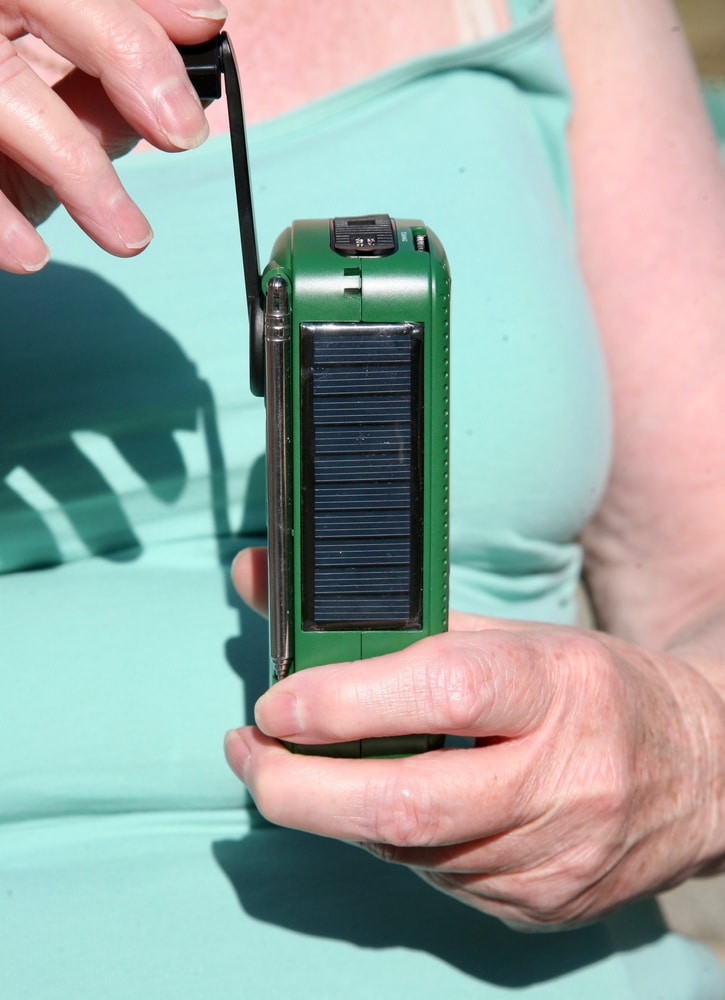
If infrastructure is disrupted, modern tools like smartphones, internet access, and even electricity may fail quickly. In that context, a basic device such as a wind-up (hand-crank) radio becomes extremely valuable. Governments, including those in Europe, have advised citizens to keep one on hand because it does not rely on batteries or power grids. It can provide critical updates when everything else goes silent.
In practical terms, a well-prepared household would focus on a few essentials:
Reliable information source (radio with hand-crank or battery backup)
Light sources (flashlights, preferably not dependent on constant charging)
Water and food supplies for several days
Basic medical kit
Important documents stored safely
The idea is not fear—it is resilience.
When people imagine extreme scenarios like a world war, they often picture immediate chaos everywhere. In reality, most crises unfold in phases. There is usually a period where information, awareness, and calm decision-making make a significant difference. Being able to receive updates—understanding whether to stay put, move, or take protective action—can be more important than any single physical shelter.
As for location, the safest option depends heavily on proximity to strategic or high-risk areas. Large cities, military bases, and critical infrastructure hubs are generally considered more vulnerable in worst-case scenarios. Smaller towns or rural areas may offer more stability, but even then, preparedness matters more than geography alone.
Some analyses and simulations often point to geographically isolated regions—such as parts of Oceania—as potentially less exposed in global conflicts. However, relocating is not a realistic or immediate solution for most people, and long-term survival depends on local resources, governance, and community stability rather than distance alone.
There is also an important psychological element. In moments of uncertainty, fear can drive impulsive decisions. The more prepared a person is—both mentally and practically—the less likely they are to panic. A calm, informed response is often the strongest form of protection.
The broader takeaway is not about predicting worst-case scenarios, but about understanding how fragile modern systems can be. Electricity, communication, and supply chains are so integrated into daily life that even a temporary disruption can feel overwhelming without preparation.
In that sense, something as simple as a hand-crank radio represents more than a tool. It reflects a mindset—one that values awareness, self-reliance, and the ability to stay informed when systems fail.
Rather than asking where someone would run, a more useful question might be: how ready is your current environment to handle disruption?
Because in most real-world situations, survival is not about finding a perfect place—it is about being prepared wherever you already are.
More From Daily Positive
 The day before my birthday, my husband announced that there would be no celebration. Yet in the pocket of his jacket, I found a restaurant reservation for five – paid with my money – and invitations for his entire family. My name wasn’t on the list. I smiled calmly and thought: “Oh, darling… This is a night you’ll remember for the rest of your life…”
 Don’t Ch:eat. Pick The Odd One Out To See How ‘Lucky’ You Really Are
 Coldplay ‘Kiss Cam’ woman speaks out and makes huge accusation on former boss
 Cuba president issues 2-word warning to Trump after the U.S President threatened to ‘take’ the island
 Elon Musk’s daughter makes accusation against Donald Trump
 A Divorced Father Picked Up His 6-Year-Old Son on a Quiet Sunday Evening and Noticed the Boy Could Barely Sit in the Car — Until a Tearful Whisper at Home Revealed He Was About to Expose a Secret That Had Been Hidden for Far Too Long