They may have cast Jeri Ryan for her striking presence, but what unfolded on screen proved far more enduring. Her portrayal of Seven of Nine didn’t just attract attention—it reshaped Star Trek: Voyager at a critical moment.
When she arrived in 1997, the series was struggling to maintain momentum. Ratings had dipped, and the creative direction needed a shift. The introduction of Seven—an ex-Borg drone learning to navigate individuality—was intended to draw viewers back.
It did more than that.
Her arrival reportedly boosted ratings dramatically, but beyond numbers, it introduced something the show had been missing: tension, curiosity, and emotional depth. Seven wasn’t simply a visually memorable character; she was layered, restrained, and quietly complex. Through subtle performance choices, Ryan revealed glimpses of vulnerability beneath a controlled exterior, turning what could have been a one-dimensional role into one of the franchise’s most compelling arcs.
One standout moment came in an episode where Seven cycles through multiple personalities in rapid succession—a demanding performance that showcased Ryan’s range and control. It was a reminder that beneath the sci-fi setting, the role required real dramatic precision.
Interestingly, Ryan nearly never accepted the part.
Born Jeri Lynn Zimmermann in Munich in 1968, she initially declined the role multiple times. When she first explored the show, she reportedly found it unappealing. It took persistence from executive producer Jeri Taylor to convince her to reconsider. Only then did she step into what would become a defining role in her career.
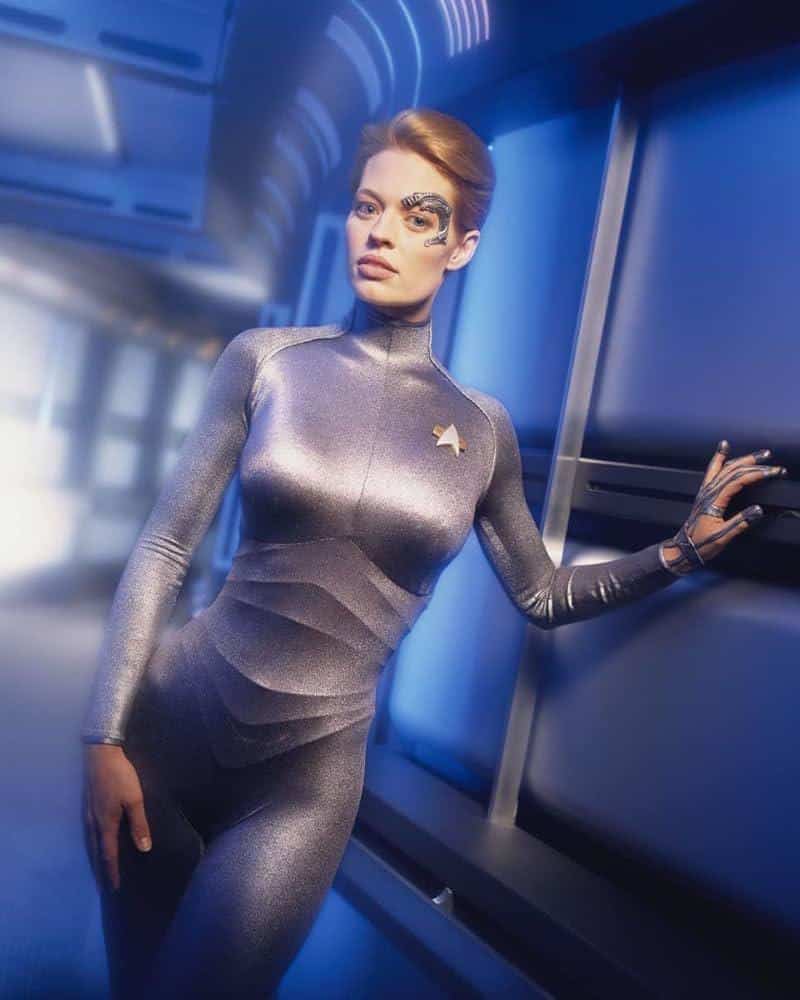
Behind the scenes, however, the experience wasn’t without difficulty.
A quiet tension developed between Ryan and co-star Kate Mulgrew, who had led the show since its beginning. Mulgrew had worked to establish Captain Janeway as a strong, non-sexualized leader, and the introduction of a character perceived as visually driven created friction.
The situation was complex rather than personal. Mulgrew later acknowledged her frustration at the direction the show had taken and admitted she had been hard on Ryan. Over time, that tension softened. Years later, she apologized, praising Ryan’s work and recognizing the difficulty of her role. Today, the two share a much warmer dynamic, often appearing together at fan conventions.
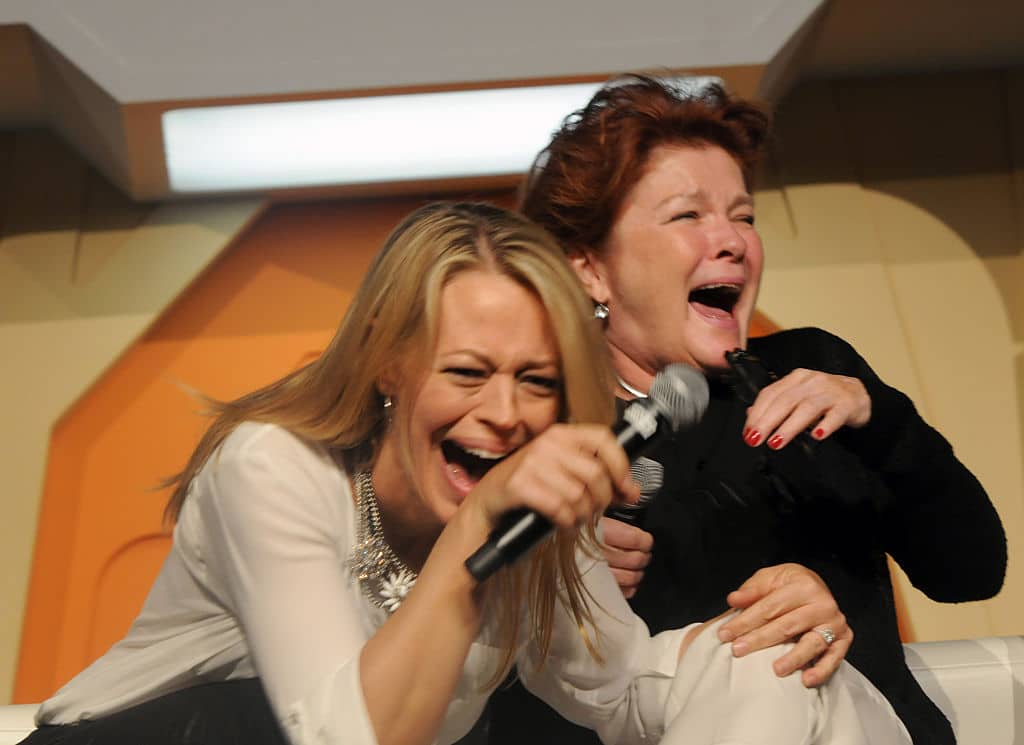
While the on-screen presence of Seven of Nine appeared effortless, the physical reality behind it was anything but.
Her now-iconic catsuit was notoriously restrictive. Designed without practical openings, it required assistance from the costume department each time it was worn. The tight corseting made breathing difficult, forcing Ryan to lie down between takes to recover. Even basic needs became complicated, leading to a behind-the-scenes code—“Code Jeri-Twenty”—for the time required to step away from filming.
By the end of the series, her frustration with the costume had reached its limit. After filming wrapped, she reportedly destroyed it—an act that symbolized closure more than rebellion.
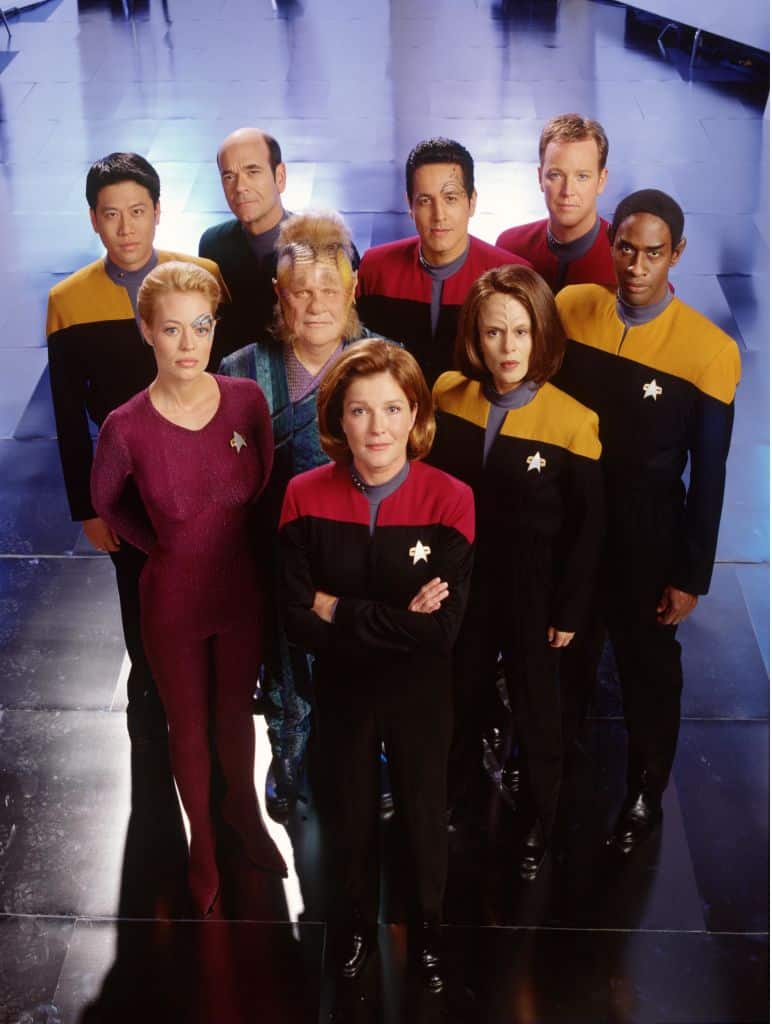
Another challenge came from the nature of science fiction itself.
Much of the performance required reacting to elements that didn’t physically exist. Scenes involving force fields, alien environments, or futuristic technology were often filmed against empty space or green screens. Ryan once described the experience as “acting to nothing,” relying entirely on imagination and timing to make the final result believable.
This created moments that, off-camera, were almost absurd—actors throwing themselves at invisible barriers or reacting to nonexistent threats while the crew tried not to laugh. Yet, when completed with visual effects, those scenes became seamless parts of the story.
At a deeper level, Seven of Nine served a familiar but powerful role within the broader Star Trek universe.
Like Spock or Data, she represented the outsider—someone who reflects humanity back to itself. Through her, the show explored identity, autonomy, and emotional growth. Her struggle wasn’t just about becoming human; it was about understanding what that truly meant.
Even small details, like her high-heeled boots, became part of her visual identity. While often questioned by fans, the choice was largely aesthetic, intended to create a streamlined silhouette consistent with the show’s design language.

Perhaps the most subtle challenge of the role, however, was emotional restraint.
Seven was not devoid of feeling—she was afraid of it. Ryan had to walk a careful line between detachment and expression, revealing just enough to show growth without breaking character. At the same time, she worked alongside a cast known for humor and pranks, making it even harder to maintain that controlled presence during filming.
Looking back, Ryan has described the role as a rare opportunity—one that allowed constant discovery. For audiences, that journey became central to the show’s identity.
Seven of Nine was never just a late addition meant to boost ratings.
She became a defining presence—one that balanced strength with vulnerability, precision with curiosity, and logic with something far more human.
And in doing so, she secured her place among the most memorable characters in science fiction television.
More From Daily Positive
 Neighbors Called the Authorities on My 72-Year-Old Dad for Getting Rid of Dogs for Money – When We Opened His Garage, the Officer Was Left in Tears
 Health Doctors reveal that eating cucumbers causes…
 Most older adults don’t live much past 80: Here are 4 reasons.
 Common changes that can occur after age 70 and why it’s important to know about them early
 A Man Pointed at My Grease-Stained Hands and Told His Son I Was a Failure – Just Moments Later, His Son's View of Me Changed Completely
 70-Year-Old’s Stunning Facelift Has Internet in Awe — Surgeon Dubbed ‘Miracle Worker’