The first time Paul told me we should sell my grandmother’s house, I thought he was being practical.
Grief does strange things to logic. It softens your instincts. It makes you want to believe the people who speak with calm voices and steady hands. So when he stood in the doorway of her bedroom three days after the funeral and said, “We need the money, not your memories,” I flinched, but I still told myself he was just tired. That we were both tired.
My name is Mira. I’m thirty-six, and until that week, I would have told you I had a good marriage.
We lived just outside Portland in one of those quiet neighborhoods where everything looks almost deliberately peaceful. White shutters. Hydrangeas. Lemon tree in the yard. Neighbors waving from porches. My husband wore crisp shirts even on weekends, played on the floor with our daughters, and left me notes on the bathroom mirror with little hearts scribbled in the corners. We had twin girls, Ellie and June, four years old, golden-haired and blue-eyed like him. We walked to the farmers market on Sundays. We watched children’s movies on Fridays until the girls fell asleep in a pile of blankets and sugar.
From the outside, our life looked polished, warm, almost too tidy to question.
From the inside, it had always felt steady too. Not dramatic. Not passionate in the way movies promise. Just dependable. Like gravity. Like something I never imagined I’d have to examine closely.
Then my grandmother died.
She was ninety-two and still living in the little house where my mother had grown up, a place that had always felt as familiar to me as my own skin. The house sat on a hill shaded by old oaks, wrapped in hydrangeas and silence. It smelled like lavender soap, Earl Grey tea, and the faint powdery perfume she had worn for decades. She baked lavender cookies in that kitchen. She told me stories at that dining room table. I learned what safety felt like in those rooms.
When she passed, I mourned her the way you mourn someone who has been stitched into the fabric of your life for so long that you don’t know where they end and your memories begin.
Paul came to the funeral and held my hand so tightly it almost hurt. I mistook that for support.
Afterward, I went back to the house to start sorting through her things. I couldn’t bear the thought of strangers doing it, couldn’t stand the idea of the house being emptied too quickly, as if her life could be packed into boxes and labeled by category.
Paul wasn’t patient with that.
He watched me sit on her bed, still covered with the same floral quilt I’d known my whole life, and said, “It’s an old house, Mira. It needs work. We could use the cash. You’re dragging this out.”
I remember staring at him, the afghan from her armchair clenched in my hands, and feeling something small and cold brush against the inside of my ribs.
Not suspicion. Not yet.
Just discomfort.
When he finally left that evening, it wasn’t because he understood. It was because I asked for a little more time and something in my face must have told him not to argue.
Mrs. Callahan, my grandmother’s longtime neighbor, was waiting by the gate when I stepped outside.
She looked nervous in a way that made me nervous too.
“If you only knew what your husband was doing here while your grandmother was still alive,” she whispered.
Then she pressed an old brass key into my palm.
I recognized it instantly. The attic.
My grandmother had sealed that attic away years earlier, turning it into one of those mysterious places children invent stories about. I hadn’t thought about it in decades. And yet the key sat there in my hand, warm from Mrs. Callahan’s fingers, like it had been waiting for me all along.
“She told me to give this to you personally,” the woman said.
Then she left before I could ask anything useful.
I stood there for a moment watching Paul in the driveway, already tapping impatiently on his phone, and for the first time in my marriage, I felt something that did not fit anywhere inside love.
I told him to go home. I said I needed more time. He didn’t like it, but he left.
The minute his car disappeared, I went back inside.
The attic door was small and crooked, painted over more times than it deserved. The wood creaked under my feet as I climbed the stairs. I still remember the click the key made in the lock. Clean. Final. As if some version of my life had been waiting behind it.
Inside, it was dim and dry, full of dust and cedar and stillness. Boxes. Old books. Folded blankets. Nothing looked dramatic enough to explain the warning I had just been given.
Then I saw the suitcase.
Brown leather, worn smooth at the corners. I used to climb on top of it as a child and pretend it was a pirate’s chest. My grandmother would laugh and hand me foil-wrapped chocolates as “gold.”
I knelt beside it, opened the latches, and found what looked at first like the usual remains of an old life—photo albums, bills, property records, old insurance papers. And sitting on top of them all, an envelope with my name in my grandmother’s handwriting.
That was the moment everything changed.
The letter was short, but not gentle.
She told me Paul had been visiting her for months behind my back. He had urged her to sell the house and move into a care facility. He had told her we needed the money. He had told her not to mention any of it to me because it would “destroy the marriage.” At first, she didn’t want to believe anything bad about him, she wrote. But he kept coming. Kept insisting. Kept saying things that frightened her—about our finances, about me, about what would happen if she didn’t act quickly.
Eventually, she signed preliminary paperwork.
Then she regretted it.
And then came the sentence that knocked the air out of me.
If you can prove he deceived me, the house is yours. I left everything in your name. Be careful, my dear. Paul needed money badly, and I don’t know why.
I read that letter three times.
Each time, it became less unbelievable and more obvious.
That was the cruelest part.
Not that I suddenly saw a stranger. That I could, in hindsight, see the seams. The phone always face down. The tense little lies about taxes and repairs. The overly neat explanations for why we could never get ahead, no matter how carefully I budgeted.
By the time I came down from the attic, I was no longer grieving only my grandmother.
I was grieving my marriage too.
I didn’t go home right away. I stopped at a storage facility and locked the suitcase away. Then I placed the most important documents—her letter, the deed, the will—inside a safety deposit box under my name alone. It was the first time I had ever protected myself from my husband, and I hated how natural it felt.
I barely slept.
The next morning, I waited for him in the kitchen.
When I asked him why he had pressured my grandmother before she died, the first thing he did was smile.
That smile still makes me sick when I think about it. Light. Dismissive. Calm.
He told me I was tired. That someone at the funeral must have upset me. That I was imagining things because grief was distorting my memory.
If I hadn’t had the letter, if I hadn’t seen the documents, that might have worked. That is what terrifies me most now—how close I came to being convinced by him again.
When I said I knew, really knew, the smile vanished.
Then came the truth.
A man from work had offered him an “inside” investment in a crypto startup. Guaranteed returns. Triple the money, he said. Paul had put in two-thirds of our savings. When it collapsed, he panicked. He shifted money around. Invented urgent tax bills. Blamed repairs that were never done. And when the hole became too large to hide, he turned to my grandmother’s house.
He said he had done it for us.
That was his defense.
Not greed. Not deceit. Love.
But there is something monstrous about betrayal that insists on calling itself devotion.
“You gambled our savings,” I said.
He sat at the table with his face in his hands and muttered, “I thought I could fix it.”
It was almost funny. Men like Paul always think the fixing matters more than the damage. They call it a mistake because the alternative is admitting it was a choice.
I asked him why he hadn’t come to me.
He said he was protecting me.
I laughed so hard it hurt.
What he meant, of course, was that he was protecting himself.
That day we fought for hours. He cried. He begged. He promised therapy, transparency, change. He said not to destroy the girls’ family over one terrible mistake.
One mistake.
As if coercing a dying woman, draining our savings, and lying to me for a year could be folded into a single harmless word.
I called a lawyer the next morning.
By the end of the month, the divorce was underway.
There was no dramatic explosion, no plates smashed against walls, no final cinematic scene. He moved out. The girls were shielded as much as I could manage. My attorney handled the practical cruelty of separation while I learned how to live inside the emotional version of it.
And when it was done, I kept the house. My grandmother’s house. The one Paul had tried to pry from her hands before death did.
I changed the locks.
I repainted the living room.
I found an old photograph of my grandmother and me baking together and placed it on the mantel where I could see it every day. I framed her letter and hung it in my office—not as a shrine to betrayal, but as proof that love had seen what manipulation tried to hide.
That is what saved me in the end.
Not the documents. Not the lawyers. Not even the house.
Her clarity.
The fact that even near the end of her life, my grandmother understood what I had not. That danger does not always come with raised voices and obvious cruelty. Sometimes it comes wearing polished shoes, carrying groceries, kissing your forehead, and telling you everything it breaks is for your own good.
For a long time, I thought losing her was the tragedy that split my life in two.
Now I know it was the truth she left behind.
Because once I found it, nothing false could survive it.
More From Daily Positive
 I bought my $550,000 house in secret because I knew the people closest to me would try to take it the moment they found out.
 My Husband Left Me for Giving Birth to a Girl – Years Later, I Saw Him in a Supermarket, and My Daughter Did Something I’ll Never Forget
 Doctors reveal that guava leaf tea causes…
 I won $89 million in the lottery and didn’t tell a soul. Hours later, my son, without a hint of affection, blurted out, “Mom, when are you planning on leaving our house?” Inside, I was devastated, but I didn’t say a word. I left quietly. The next morning, I bought their dream house… and when they discovered it would never be theirs, the real story began.
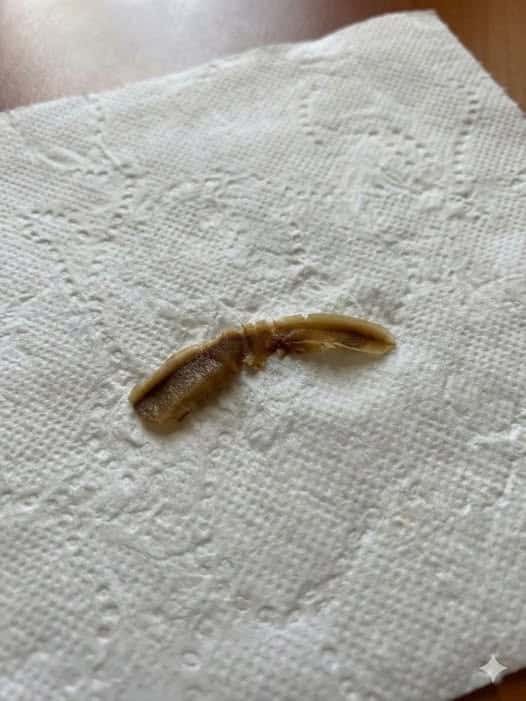 I came across this in my girlfriend’s bathroom, and I’ve been staring at it for an hour—I still have no idea what it’s supposed to be.
 If a woman has small breasts, it means that her part …