The answer arrived too late for a trial, too late for a confession, and too late for most of the people who had spent their lives waiting for it. Investigators say DNA and genetic genealogy work finally identified Ronnie Collins as the man who sexually assaulted Sherry Jo before her death. He died by suicide the day he was scheduled to be interviewed.
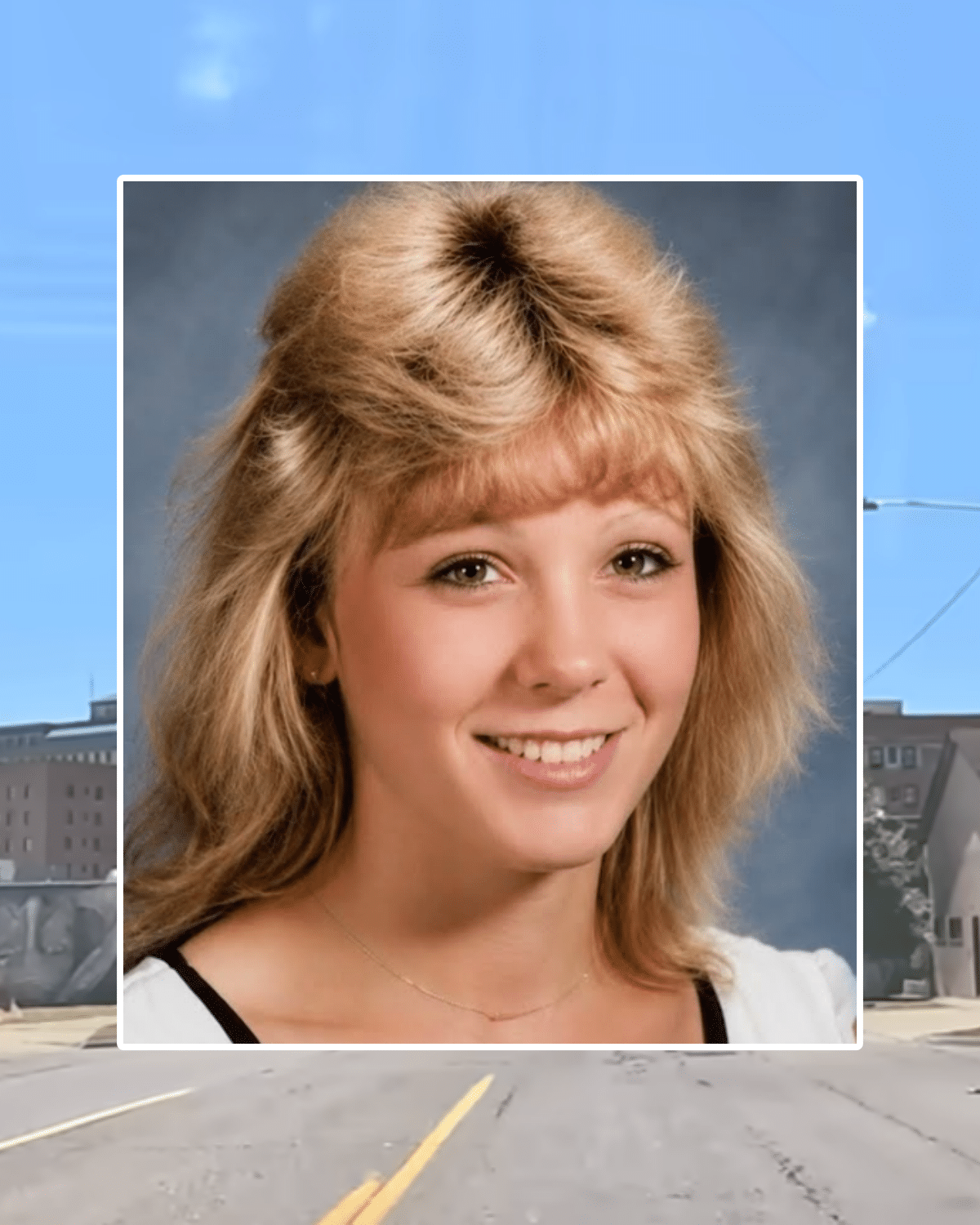
A Quiet Girl, A Cold Morning
Sherry Jo was quiet by nature, according to her mother, Joyce Schultz. As a toddler she could sit for hours with a coloring book. At seven she scraped her nose raw falling off a three-wheeled bike, then recovered in time to serve as flower girl in her uncle’s wedding. As a teenager, she wouldn’t leave the house unless everything matched and every hair was in place.
After her parents divorced in 1972, Sherry Jo split time between two households. Relatives remember her as shy to the point of caution — once, when a car pulled over to ask for directions, a friend walked up to the window while Sherry Jo hung back. An aunt called her “basically the favorite of most people in the family.”
The morning she vanished was cold. Schultz told her daughter to bundle up and, as she often did, warned her not to leave early for the two-block walk to the bus stop. She recalls saying she never wanted a police officer knocking on the door with bad news. “Okay, love you,” Sherry Jo answered. Those were the last words they exchanged.
That afternoon, the house stayed empty — no frozen yogurt, no manicure, no soap opera, the small rituals mother and daughter shared every day. Around noon, Schultz’s husband, Robert “Bob” Schultz, came to tell her Sherry Jo hadn’t come home. By evening there was still no sign of her, and when the family called police, they were told a teenager had probably run away.
“No, she didn’t,” Schultz said. “She would never go with just the clothes on her back.”
On Nov. 20, 1983, a trapper checking his lines along Mueller Road in Saginaw County found her body in a drainage ditch, lying face down in shallow water. She had been shot four times, and her pants were unbuckled. Investigators now believe she was still alive when she was left there and died of blood loss. Her stepfather identified the body.
Decades of Dead Ends
Flint was then a General Motors town with steady paychecks and, by local standards, modest crime. The killing of a schoolgirl shocked the community, and tips poured in by the thousands. One witness reported seeing her climb into a white van; another insisted she’d gotten into a yellow Camaro. Detectives spent weeks chasing both leads. Neither went anywhere.
Investigators also turned early suspicion toward Bob Schultz, the last known person to see her. He declined a requested polygraph, and detectives say they found inconsistencies in his account. Joyce Schultz has always maintained her husband was gentle and incapable of hurting a child, and that the suspicion devastated him. He died in January 2025, never seeing the case resolved.
Over the years, detectives collected roughly 123 DNA samples, voluntary and by warrant. None matched. The case was reopened in 2002 by a state police task force, which re-ran old leads and re-interviewed the stepfather without result.
It sat dormant again until 2022, when an unrelated incident — a man once connected to the original investigation caught living under a false identity, flagged by a border patrol agent at a Utah airport — convinced Detective Sergeant William Art the file deserved another look.
DNA Breakthrough and a Familiar Name
The case file itself was an obstacle: tens of thousands of pages from roughly 20 prior detectives. Students at Western Michigan University helped organize and digitize the material. In 2025, investigators sent biological evidence from Sherry Jo’s clothing to Aram, a forensic genetic genealogy company under contract with the state police.
Analysts built a genetic profile and compared it against family trees in public genealogy databases. An early lead pointed to an elderly woman in Kansas with dozens of grandchildren, a dead end that still took months to rule out. Eventually the genealogical work, combined with investigative reasoning, converged on one name: Ronnie Collins.
Collins was 75 by the time investigators identified him. In 1983 he would have been in his early 30s, living in the Flint area, working as a dental hygienist at a Michigan prison and playing in a traveling band. He owned a white van used to haul equipment — the same type of vehicle named in one of the original tips.
Art reached Collins by phone, and the two spoke several times in what Art described as cordial conversations. Collins postponed a meeting through the holidays before agreeing to an interview in early January 2026. Art said he had no plan to arrest him; it was meant to be a simple interview. Collins never showed.
In early February, Art obtained a search warrant for Collins’s DNA and went to his home. His wife told detectives Collins had died by suicide the day of the scheduled interview. Investigators then collected DNA during the autopsy, and the state crime lab confirmed through a CODIS-compatible comparison that Collins was the man who had sexually assaulted Sherry Jo in November 1983.
An Answer, Not Closure
Not everyone close to Collins accepted the finding. An obituary praised him as a devoted husband and talented musician, and relatives of Sherry Jo say defenders filled the comments beneath it after his death. One relative says she posted her own reply accusing him of murder, and that the backlash grew heated enough that the page was eventually taken down. Collins was never charged and never stood trial.
For Joyce Schultz, the confirmation brought both relief and fresh pain. When Art called to tell her the match was confirmed, she told him, “Nothing’s changed. I still can’t hug her. I still can’t tell her I love her.” She says she still speaks to her late husband and has told him, “We got him.”
Investigators caution the case isn’t fully closed. They say it’s rare for a violent offender’s first crime to be his last, and they are examining whether Collins might be connected to the unsolved 1969 disappearance of two girls, identified as Hobley and Spencer, last seen in northern Michigan.
Collins’s band is known to have played in the same area that weekend, though nothing has been confirmed linking him to that case, and the girls’ bodies have never been found.
Even within Sherry Jo’s case, questions remain unresolved. DNA confirms Collins sexually assaulted her, but whether he also fired the shots is, in Art’s words, an inference — one he believes a jury would have accepted had Collins lived to face one. Whether anyone else was involved is unknown.
Sherry Jo’s relatives say an incomplete answer is still better than none, and point to how long eyewitness tips about a Camaro and a van consumed investigators’ time while physical evidence waited for technology to catch up. Schultz said she agreed to speak publicly in hopes of encouraging other families not to give up hope, however many years have passed.
“She deserved a life,” she said of her daughter. “She deserved children. That was all taken away from her.”
