Her journey, however, began long before she was old enough to understand what fame actually meant.
Barrymore appeared in front of a camera when she was only 11 months old, appearing in a commercial for dog food.
By the time she was five, she had made her film debut in Ken Russell’s science-fiction horror movie Altered States.
But everything changed two years later.
At just seven years old, Barrymore was cast as Gertie in Steven Spielberg’s E.T. the Extra-Terrestrial.
The film became a global phenomenon.
And almost overnight, Drew became one of the most famous children in the world.
Audiences adored her.
She was funny.
Confident.
Precocious.
And completely comfortable in front of cameras.
Her interviews became almost as memorable as her movies.
During appearances on shows such as The Tonight Show Starring Johnny Carson, viewers saw a little girl who seemed remarkably mature, witty, and fearless.
But behind that confidence was a childhood far more complicated than most people realized.
Barrymore was born into one of Hollywood’s most famous acting families.
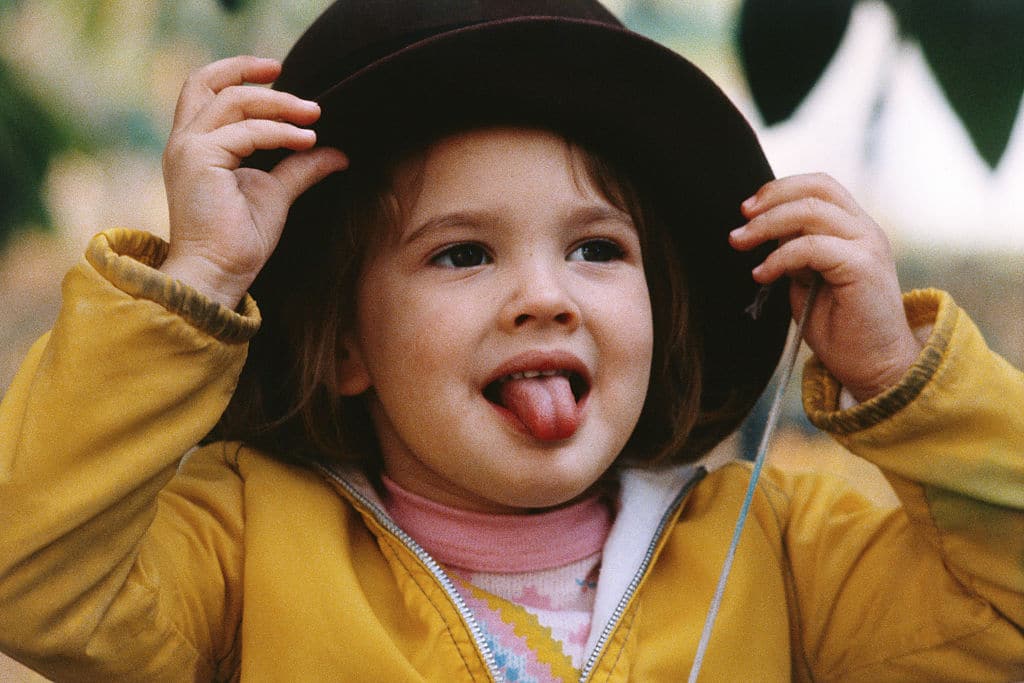
The Barrymore name had been associated with stage and film for generations.
But fame did not give her a stable home.
Her father, actor John Drew Barrymore, struggled with alcohol and was largely absent from her childhood.
For years, Drew said she understood very little about him beyond fragments of information provided by her mother.
She grew up wondering why he wasn’t there.
Her relationship with her mother, Jaid Barrymore, was complicated in a different way.
Jaid acted as her manager and introduced her daughter to an adult Hollywood lifestyle at an extraordinarily young age.
After Drew became famous, she began accompanying her mother to parties and nightclubs.
One of those places was the legendary Studio 54.
While most children her age were worrying about school, homework, and sleepovers, Drew was moving through environments filled with celebrities, alcohol, drugs, and adults.
Looking back, Barrymore has acknowledged that she was essentially raising herself.
“I really parented myself,” she once explained.
She has also said that instead of spending her life blaming her parents, she eventually came to understand that she had been forced into responsibilities no child should have had.
Fame gave her opportunities.
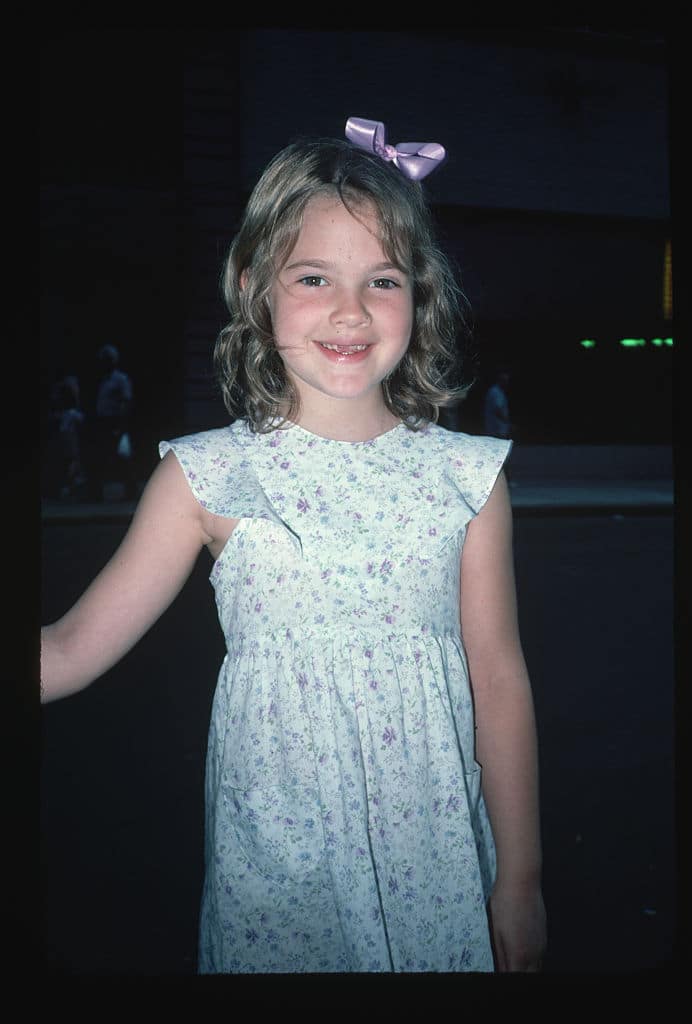
But it also gave her access.
And that combination quickly became dangerous.
Barrymore has spoken openly about drinking at an extremely young age.
She described herself as a “party girl” while she was still a child, regularly accompanying her mother on nights out.
By the time most children were entering middle school, Drew was already struggling with alcohol and drugs.
Her life spiraled quickly.
She eventually entered rehabilitation while still barely a teenager.
At 13, following a suicide attempt, she spent approximately 18 months in an institution where she received treatment and lived under strict rules.
For a child accustomed to almost unlimited freedom, the experience was shocking.
But years later, Barrymore admitted that the discipline may have saved her.
She has described that period as one of the most important turning points of her life.
Before entering the facility, boundaries barely existed.
Suddenly, everything was controlled.
Where she went.
When she slept.
What she did.
Who she saw.
At the time, she hated it.
Later, she came to understand why she needed it.
“My mom locked me up in an institution,” she once recalled, while also acknowledging that the strict environment gave her something her life had been missing.
Boundaries.
Structure.
Discipline.
After leaving treatment, Barrymore briefly stayed with musician David Crosby and his wife.
Crosby later explained that Drew needed to be surrounded by people who were genuinely committed to sobriety.
But rebuilding her life was not simple.
She remained angry.
Rebellious.

Confused.
She had already experienced more chaos before turning 15 than many people face in a lifetime.
Eventually, she made an extraordinary decision.
At 14, Barrymore became legally emancipated from her mother.
By around 15, she was living independently.
The child star who once walked red carpets and appeared in one of the biggest movies in history was suddenly responsible for herself.
And Hollywood was no longer waiting with open arms.
After years of addiction and tabloid headlines, Barrymore struggled to find acting work.
The young actress who had once been one of the most famous children in America was suddenly considered difficult to hire.
By her mid-teens, she was working ordinary jobs.
Waiting tables.
Cleaning.
Doing whatever she could to support herself.
It was an extraordinary fall from the glamorous image people associated with E.T.
But Barrymore kept going.
Her twenties became another period of reinvention.
She was still rebellious.
Still unpredictable.
And still capable of generating headlines.
She married young.
Divorced.
Made famously wild television appearances.
One memorable moment came when she climbed onto David Letterman’s desk and danced during an interview.
Yet slowly, something else was happening.
Barrymore was rebuilding her career.
And this time, she was doing it on her own terms.
She began appearing in films that allowed audiences to see a completely different side of her.
Funny.
Vulnerable.
Romantic.
Quirky.
Warm.
By the late 1990s and early 2000s, she had become one of Hollywood’s most reliable romantic-comedy stars.
Movies such as The Wedding Singer, Never Been Kissed, and 50 First Dates helped transform her public image.
The troubled child star was now a leading lady.
Audiences who remembered little Gertie from E.T. were watching her become one of the biggest actresses of her generation.
But another transformation was still coming.
Motherhood.
In 2012, Barrymore became a mother for the first time.
She later welcomed a second daughter.
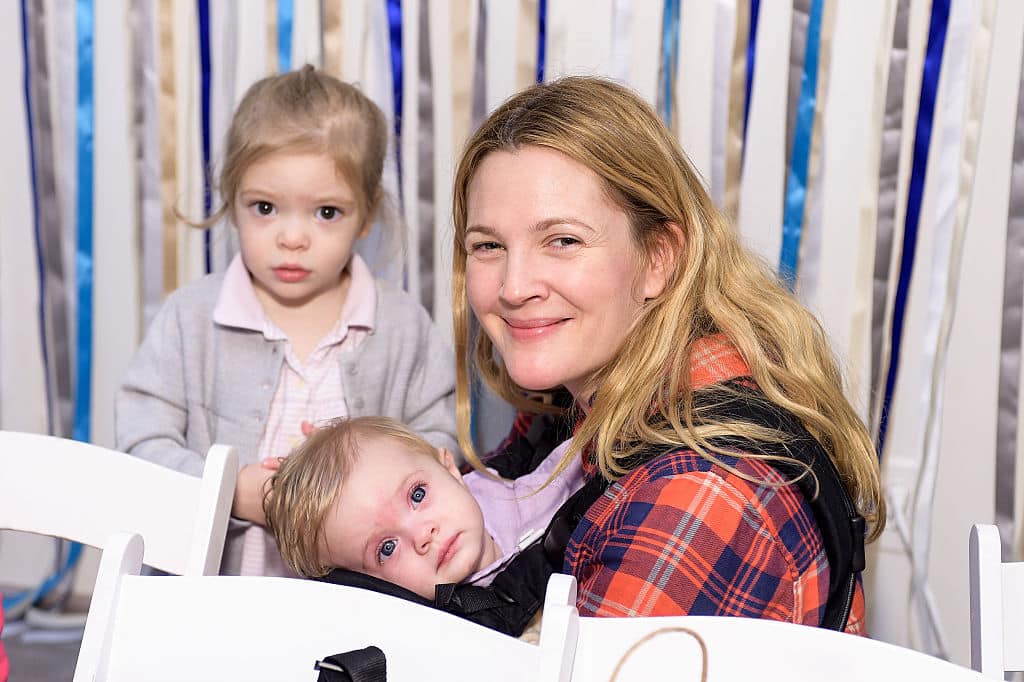
Her daughters, Olive and Frankie, changed the way she viewed both her career and her childhood.
Barrymore has often said that becoming a parent forced her to think deeply about the kind of home she wanted to create.
She had grown up around chaos.
So she wanted stability.
She had grown up without boundaries.
So she created them.
She had spent much of childhood around adults and adult environments.
So she wanted her daughters to actually experience childhood.
Barrymore has spoken about building a warm, grounded home filled with family routines, conversations, meals, and time together.
She has also emphasized limiting screens and being present with her children.
For her, parenting became deeply connected to everything she had survived.
“I didn’t have parents,” she once said.
“I was the parent to them.”
Her childhood had been completely upside down.
Now she had the chance to create something different for her own daughters.
That decision also affected her career.
At the height of her success, Barrymore stepped back from acting to spend more time raising her children.
She remained active professionally through business ventures, including her beauty brand, but she no longer wanted film sets to dominate her life.
That choice attracted criticism.
And Barrymore said some of the strongest reactions surprisingly came from other women.
She had spoken about realizing that, for her personally, trying to do everything simultaneously simply didn’t work.
Some interpreted that as her saying women could not “have it all.”
Barrymore pushed back.
That wasn’t what she meant.
She believed women could pursue whatever they wanted.
What she had discovered was that she personally could not give everything equal attention at the same time without something suffering.
For Barrymore, motherhood became the priority during that period.
Her personal life also changed.
She and Will Kopelman eventually divorced, but they continued raising their daughters together.
In 2023, Barrymore relocated to Manhattan, helping keep the children closer to their father.
By then, she had reinvented herself yet again.
Actress.
Producer.
Entrepreneur.
Author.
Talk-show host.
Her daytime program, The Drew Barrymore Show, introduced another version of Drew to audiences.
Instead of playing a character, she was simply herself.
Emotional.
Curious.
Affectionate.
Sometimes unconventional.
And remarkably open about her past.
Barrymore has never pretended that surviving childhood fame gave her all the answers.
In fact, she has often joked that her younger self probably would not have listened to any advice anyway.
Speaking about her teenage years, she admitted she was stubborn and rebellious.
If someone told her to do one thing, she often wanted to do the opposite.
Perhaps that is part of what makes her story so remarkable.
There was no simple turning point.
No single moment when everything suddenly became easy.
Her life was a series of reinventions.
Child star.
Party girl.
Rehab patient.
Emancipated teenager.
Struggling young actress.
Romantic-comedy queen.
Mother.
Businesswoman.
Talk-show host.
And through every stage, she kept moving.
As she approached and entered her fifties, Barrymore began reflecting differently on aging.
Instead of seeing 50 as something to fear, she described it as a new season.
A moment when something inside her finally felt settled.
After spending much of her youth trying to survive circumstances she was too young to control, independence now means something completely different.
She is no longer the seven-year-old girl charming audiences around the world.
She is no longer the thirteen-year-old girl trapped inside addiction and despair.
And she is no longer the teenager trying to convince Hollywood that she deserved another chance.
She survived those versions of herself.
Then built something new.
That may be the most extraordinary part of Drew Barrymore’s story.
Not that she became famous.
She had already done that before she was old enough to understand fame.
Not even that she became wealthy or successful.
It is that a child who grew up with almost no stability eventually created a life centered around the very things she once lacked.
Home.
Boundaries.
Family.
Freedom.
And the ability to decide for herself what success should look like.
Drew Barrymore’s childhood could easily have become the beginning of a tragedy.
Instead, it became only the first chapter of a much longer story.
And decades after the little girl from E.T. captured the world’s heart, she is still here — still reinventing herself, still laughing, and finally living life on her own terms.
