That little girl was Drew Barrymore.
Her extraordinary story began before she was even old enough to understand what fame meant.
Barrymore was only 11 months old when she appeared in a dog food commercial, offering an early glimpse of the career that would eventually make her famous around the world.
By the age of five, she had made her movie debut in Ken Russell’s science-fiction horror film “Altered States.”
But everything changed two years later.
At seven, Barrymore appeared in Steven Spielberg’s “E.T. the Extra-Terrestrial,” and almost overnight, she became one of the most famous child actresses in Hollywood.
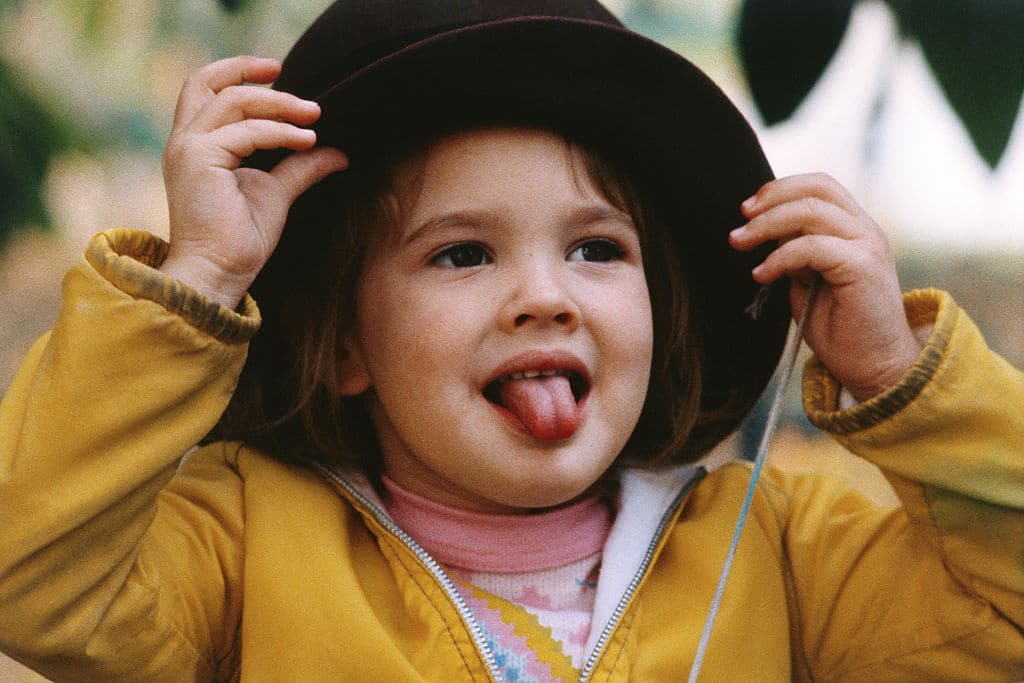
Audiences were captivated by her natural charm, expressive face, humor, and remarkable confidence in front of the camera.
She appeared on television interviews with the kind of personality usually associated with performers many years older.
But behind the adorable child star the public had fallen in love with was a young girl living a very complicated life.
“I don’t think I understood what was good, or pleasurable, or bad. I was probably chasing joy, but I don’t think it was the real joy. I was just too young to know,” Barrymore later reflected.
Her family already had a long history in entertainment, but it also carried a painful history involving addiction.
Barrymore’s father, actor John Drew Barrymore, struggled with alcoholism and was largely absent during her childhood.
For years, she tried to piece together who he was through small stories and details her mother occasionally shared with her.
His absence created questions she struggled to understand.
By around the age of 10, Barrymore finally began directly asking her mother why her father was not part of her life.
Her relationship with her mother, Jaid Barrymore, was also complicated.
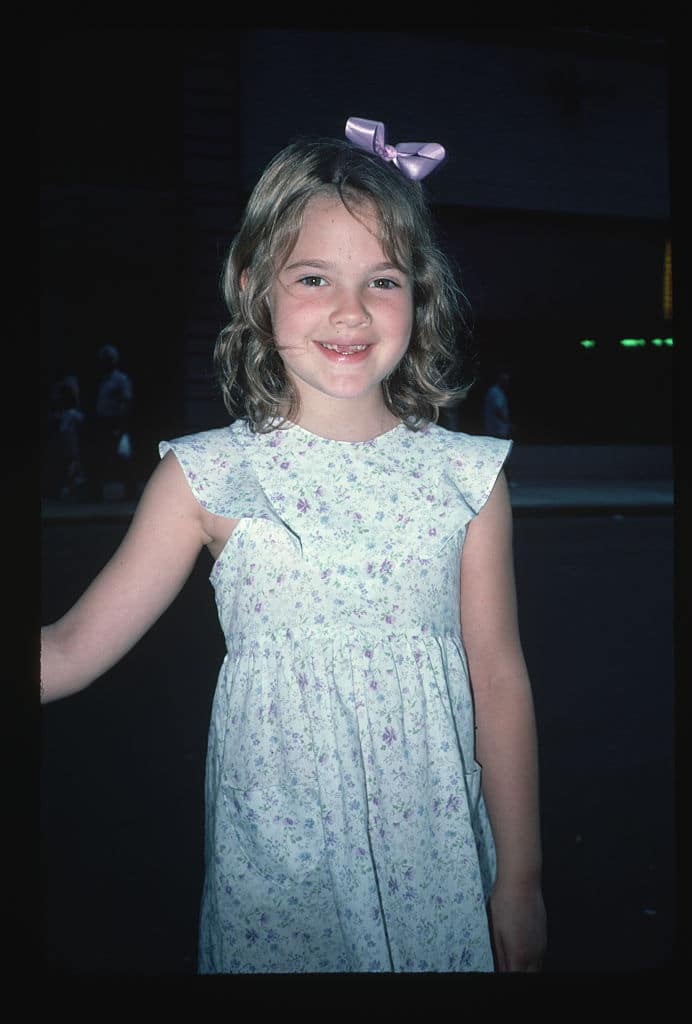
After her parents separated, Drew was frequently exposed to environments that were far from appropriate for a child.
Her mother brought her along to New York nightlife venues, including the legendary Studio 54, where celebrities, musicians, actors, and partygoers gathered.
For a young girl who had suddenly become famous because of “E.T.,” the boundaries between childhood and adulthood began disappearing incredibly quickly.
“I really parented myself, so I am not mad at my mom or dad. I was more disappointed in my own parenting,” she later explained.
By eight, Barrymore was already describing herself as a “party girl.”
She regularly accompanied her mother and older friends on nights out, sometimes several times during a single week.
Alcohol became part of her life at an age when most children were still concerned with school and playground friendships.
As the years passed, things became increasingly serious.
By around 11, she was already struggling with alcohol, and by 12, her behavior and substance use had become far more dangerous.
Eventually, she entered rehab.
But the problems did not immediately disappear.
At 13, Barrymore reached one of the darkest moments of her young life and attempted suicide.
She was subsequently placed in a treatment institution, where she remained for approximately 18 months while dealing with emotional problems as well as substance abuse.
Looking back, Barrymore has spoken openly about just how lonely she felt during that period.
“When I was 13, that was probably the lowest. Just knowing that I really was alone. And it felt… terrible,” she said.
After leaving treatment, Barrymore also spent several months living with musician David Crosby and his wife.
Crosby later explained that Barrymore needed to be surrounded by people who were committed to sobriety.
For a teenager accustomed to chaos and almost unlimited freedom, adjusting to structure was difficult.
Barrymore remained rebellious.
She ran away, struggled with anger, and slowly began understanding how deeply her upbringing had influenced her behavior.
Yet surprisingly, she eventually came to view the institution her mother placed her in as an important turning point.
“My mom locked me up in an institution. But it did give an amazing discipline. I needed that whole insane discipline,” Barrymore revealed.
She later described the experience as one of the best things that could have happened to her.
“It taught me boundaries. Until that point, I had none,” she explained.
At 14, Barrymore took an extraordinary legal step by becoming emancipated from her mother.
By 15, she was living on her own.

For someone who had spent much of her childhood surrounded by famous people, expensive parties, and Hollywood privilege, independence did not immediately mean glamour.
In fact, the opposite happened.
The child star who had once been recognized everywhere suddenly found Hollywood considerably less interested in her.
By 15, she struggled to find acting work.
At 16, Barrymore was taking ordinary jobs, including cleaning toilets and waiting tables.
It was a dramatic fall from the glamorous world she had entered as a young child.
But she kept going.
Rather than viewing those experiences only with bitterness, Barrymore eventually learned to accept the unpredictability of her life.
Her twenties became another period of reinvention.
She continued to attract attention for her rebellious personality, including highly memorable television appearances such as dancing on David Letterman’s desk.
There were romances, two early marriages that ended in divorce, unconventional fashion choices, and plenty of headlines.
But slowly, Barrymore began rebuilding her acting career.
Eventually, Hollywood welcomed her back.
And this time, she was no longer simply the adorable little girl from “E.T.”
She became one of the defining romantic-comedy stars of her generation.
Movies including “The Wedding Singer,” “Never Been Kissed,” and “50 First Dates” helped establish Barrymore as an actress who could combine comedy, vulnerability, awkwardness, and warmth in a way audiences found incredibly relatable.
Her career transformation was remarkable.
The child star who had once been considered unemployable became a major Hollywood leading lady.
Then another transformation arrived when Barrymore became a mother.
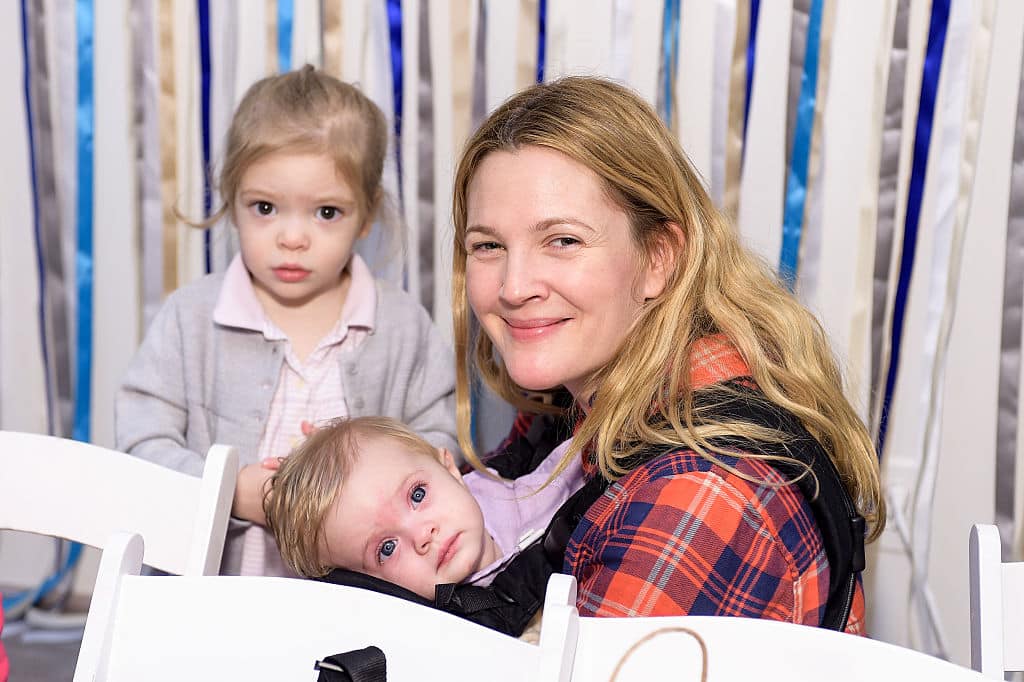
In 2012, she welcomed her first daughter, Olive, with then-husband Will Kopelman. Their second daughter, Frankie, followed in 2014.
Motherhood dramatically changed Barrymore’s priorities.
After spending almost her entire life working in entertainment, she began stepping away from movie sets so she could spend more time raising her daughters.
The decision surprised some people.
Barrymore was still operating successful business ventures, including her beauty brand, but she no longer wanted acting to consume every part of her schedule.
When she explained that she did not believe she personally could “have it all” simultaneously, she faced criticism — particularly, she said, from other women.
“For saying, you can’t have it all. But that’s not what I meant. I absolutely believe you can do anything you want; I just realized I can’t do everything at once. Trying would mean a poor result, and that really pissed people off,” Barrymore explained.
Her approach to motherhood was deeply influenced by her own childhood.
Barrymore has spoken candidly about how growing up without stable parental boundaries shaped the kind of mother she wanted to become.
Her father struggled with alcoholism and could be volatile, while her mother — born in a displaced persons camp in Germany to Hungarian refugees following World War II — lived a free-spirited lifestyle that often lacked structure.
Barrymore remembered feeling as though the traditional parent-child roles in her home had been completely reversed.
“I didn’t have parents, I was the parent to them. It was all totally upside-down,” she said.
That experience made her determined to create something different for Olive and Frankie.
Rather than exposing them to the same chaotic celebrity lifestyle she experienced, Barrymore has tried to build a warm and structured home.
She has spoken about limiting screens, establishing firm rules, eating meals together, enjoying family movie nights, and making time for ordinary conversations.
The woman who once felt she had to raise herself wanted her daughters to experience the stability she never had.
Barrymore’s life also continued evolving professionally.
In 2023, she relocated to Manhattan, helping keep her daughters closer to their father following her divorce from Kopelman.
By then, her career had expanded well beyond acting.
Barrymore had become a producer, entrepreneur, beauty-brand founder, real estate investor, and television host.
Celebrity Net Worth has estimated her fortune at around $85 million, reflecting both decades of acting success and her numerous business ventures.
She also became the host of “The Drew Barrymore Show,” allowing audiences to see a different side of the actress who had spent most of her life in front of cameras.
On the daytime talk show, Barrymore has frequently discussed relationships, motherhood, personal struggles, and what it meant to grow up as one of Hollywood’s most recognizable child stars.
Looking back, she admits that giving advice to the rebellious girl she once was probably would not have accomplished very much.
“If I had tried to give advice to my younger self, I wouldn’t have listened!” she told People in 2024.
“When you’re young, you think you know everything. I was very stubborn and rebellious, so I didn’t just ignore advice — I basically did the exact opposite of whatever anyone told me.”
That stubbornness once contributed to chaos in her life.
But perhaps it also played a role in helping her survive.
Barrymore refused to allow the darkest chapters of her childhood to determine the rest of her story.
Instead, she repeatedly reinvented herself.
She went from child star to troubled teenager, from Hollywood outsider to romantic-comedy favorite, from actress to producer and entrepreneur, and eventually from the young girl forced to parent herself to a mother determined to give her own children something completely different.
Turning 50 gave Barrymore another opportunity to reflect on just how far she had come.
Rather than fearing the milestone, she embraced it.
“You know how sometimes you just feel ready? Like, deep in your bones, something shifts, and you realize – you’re stepping into a whole new season of life, and it actually feels right?” she wrote in a personal essay for Us Weekly.
“That’s me. Right now. Fifty years old. And I have to say…I think I love it here.”
Considering everything that happened during her first decades of life, those words carry particular weight.
Barrymore experienced fame before she could understand it, addiction before reaching adolescence, treatment while other children her age were still being cared for by their parents, and independence long before she should have needed it.
Hollywood nearly swallowed her childhood completely.
But it did not get the final word.
Drew Barrymore survived the instability that surrounded her, rebuilt a career many believed was already over, and eventually created the kind of family life she had once desperately needed herself.
Today, she remains one of Hollywood’s most recognizable personalities — not simply because audiences remember the adorable little girl from “E.T.,” but because they watched that little girl grow into a woman whose life became a remarkable story of survival, reinvention, motherhood, and resilience.
Her beginning may have been chaotic, but Barrymore ultimately managed to write a very different ending for herself.
