Decades passed.
The franchise changed.
New crews took over the Enterprise.
But Koenig remained part of the world that helped turn “Star Trek” into a cultural phenomenon.
Now, fans are mourning the loss of the actor who brought Chekov to life.
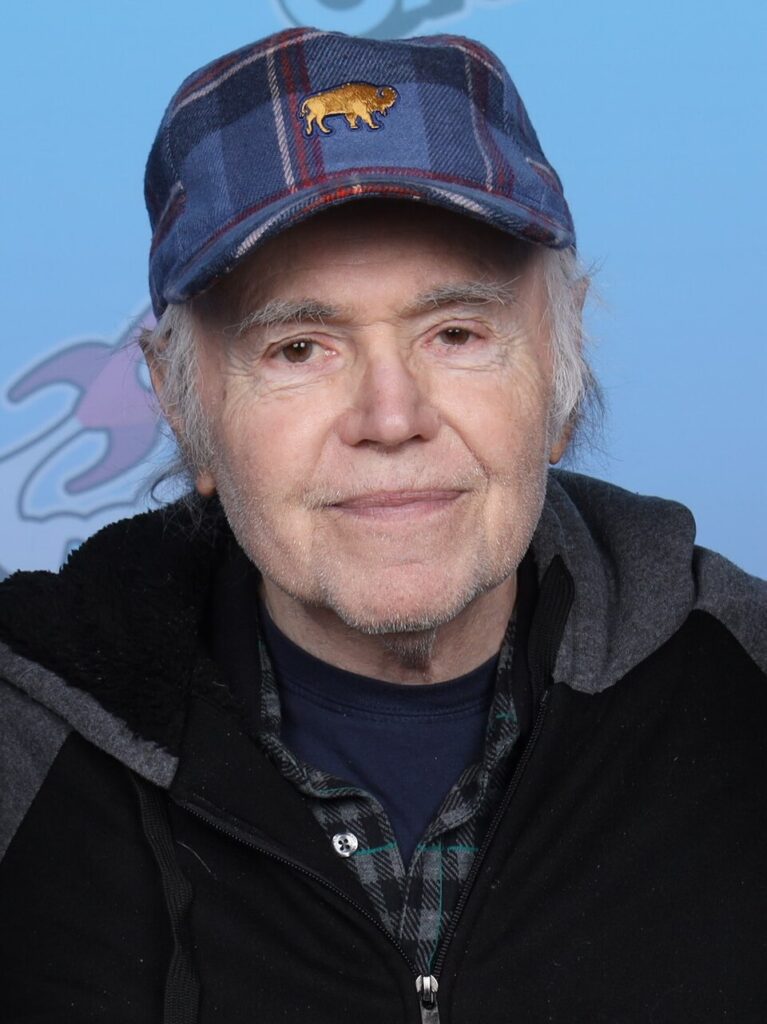
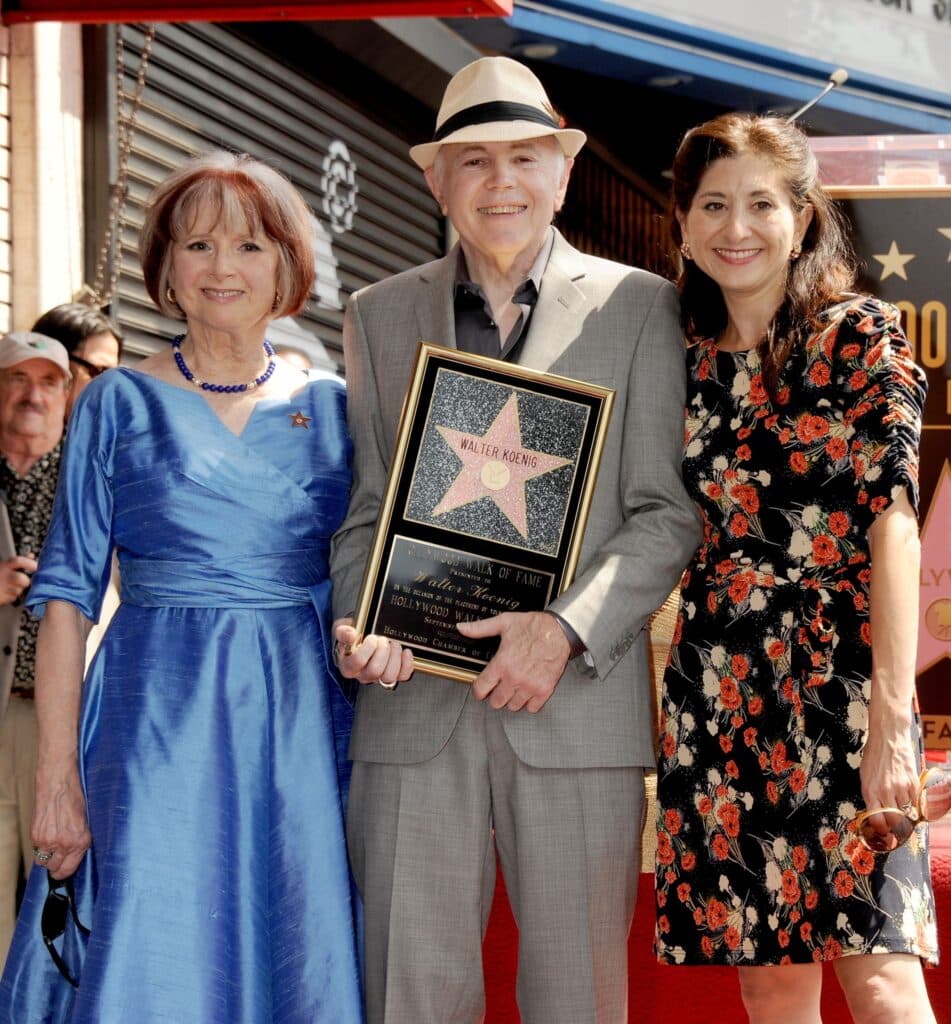
Walter Koenig has died at the age of 90.
According to his representative, Koenig died Sunday of natural causes at his home in North Hollywood.
For longtime “Star Trek” viewers, the news represents another painful goodbye to a familiar face from one of television’s most influential science-fiction franchises.
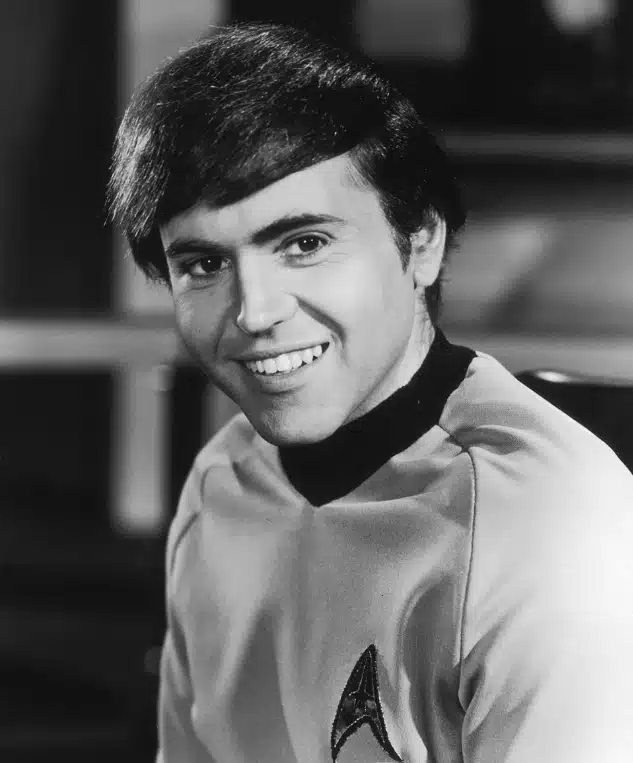
Koenig joined Gene Roddenberry’s “Star Trek” at the beginning of its second season and appeared in 36 episodes over the show’s final two seasons.
Yet in one of the more ironic twists of his career, Koenig wasn’t exactly impressed with “Star Trek” before he joined it.
Years later, he admitted that when he encountered the show while flipping through television channels, the obviously artificial sets did little to convince him to keep watching.
“I’d flip through the channels and I’d see Styrofoam rocks — they were so obviously Styrofoam — and I said, ‘This has got to be phony,’” he recalled during a 2013 interview with the Television Academy Foundation.
“I didn’t give it a chance.”
He could hardly have known that those very sets were about to become permanently connected to his name.
Koenig was born Marvin Walter Koenig in Chicago on September 14, 1936.
His parents, Isadore Koenig and Sarah Strauss, came from Russian Jewish immigrant families with roots in Lithuania.
After coming to the United States, the family shortened its surname from Königsberg to Koenig.
When Walter was still young, the family moved to New York, settling in Manhattan’s Inwood neighborhood.
His childhood was shaped not only by city life but by the political tensions surrounding his family.
Koenig’s father was a committed communist during an era when such political affiliations could bring serious scrutiny.
At the height of McCarthyism, his father’s beliefs drew the attention of federal authorities.
Koenig later recalled that FBI agents even searched the family apartment.
Despite the unusual circumstances of his childhood, acting was not initially part of Koenig’s plan.
He attended Grinnell College as a pre-med student.
Later, he transferred to UCLA and studied psychology.
Then he took an acting class.
That decision changed everything.
His interest in performance eventually led him to New York’s prestigious Neighborhood Playhouse, where he trained alongside several actors who would go on to notable careers, including James Caan, Christopher Lloyd, and Dabney Coleman.
By the early 1960s, Koenig was steadily finding television work.
He proved particularly capable at portraying characters from different backgrounds and using different accents.
Years before audiences knew him as Chekov, he had already played a Russian character in a 1963 episode of “Mr. Novak.”
He also appeared in “The Lieutenant,” a television series created by Gene Roddenberry.
That connection eventually helped bring Koenig into the “Star Trek” universe.
Koenig later remembered that director Joseph Pevney, who had previously worked with him on “The Alfred Hitchcock Hour,” was among those present during his “Star Trek” audition.
Pevney apparently liked what he saw.
“He really liked my work, he kept telling me, ‘You’re going to be a big star,’” Koenig recalled.
“When I came in to read for ‘Star Trek,’ he was very enthusiastic and one of the reasons I got the part.”
Koenig’s actual discovery that he had been cast, however, was far less glamorous than fans might imagine.
After auditioning, he spent hours waiting and wondering whether he had gotten the role.
Eventually, someone approached him and brought him into wardrobe.
Koenig later recalled the awkward moment when a costume employee began taking measurements without much explanation.
Suddenly, the man dropped to his knees in front of him and began measuring his inseam.
Koenig was startled.
Then the wardrobe employee casually explained that Koenig would obviously need a costume.
That was how he learned he had gotten the job.
“And that’s the auspicious way I learned I was on ‘Star Trek’ and it was going to change my life,” Koenig later joked.
He was right.
Chekov was introduced partly because producers wanted to bring younger energy to the Enterprise.
Koenig said the character was initially called Jones, and there was a deliberate attempt to make him appealing to younger viewers, particularly fans of Davy Jones from The Monkees.
That effort worked.
Koenig began receiving large amounts of fan mail, much of it from very young viewers.
“I think you’re groovy,” some wrote.
Others told him they loved his hair.
There was only one problem.
The hair wasn’t real.
Koenig wore a wig.
He later joked that some of Chekov’s youthful mystique disappeared as fans discovered more about the actor behind the character.
He wasn’t actually Russian.
The famous hair wasn’t really his.
And he was married.
According to Koenig, once those details became widely known, some of the fantasy surrounding Chekov began to disappear.
Still, his popularity endured.
Although Chekov wasn’t always given the largest role in individual episodes, Koenig understood what the character contributed.
He once described his job as helping establish the bones of the story so that central characters such as Kirk, Spock, and McCoy could carry the larger dramatic moments.
The original “Star Trek” television series ended in 1969.
But Koenig’s association with Chekov was only beginning.
When the franchise returned to the big screen, he returned with it.
Koenig reprised Pavel Andreievich Chekov in the first seven “Star Trek” films, beginning with “Star Trek: The Motion Picture” in 1979.
He continued appearing in the movie franchise through “Star Trek Generations” in 1994.
By then, Chekov had become inseparable from his public identity.
But Koenig’s career stretched far beyond the Enterprise.
Like many actors associated with iconic characters, he worried about becoming typecast.
Writing became another creative outlet.
He contributed scripts to several television programs, including “Land of the Lost,” “Family,” “The Powers of Matthew Star,” and “The Incredible Hulk.”
Then, years later, Koenig gained another memorable science-fiction role.
He played Alfred Bester on “Babylon 5.”
The role introduced him to another generation of genre fans and allowed him to play a character very different from the loyal and often lighthearted Chekov.
Yet even that opportunity nearly disappeared because of a serious health crisis.
At 56, Koenig suffered a heart attack.
He underwent quadruple bypass surgery and was forced to miss an earlier opportunity to appear on the series.
He recovered and later became one of “Babylon 5’s” most memorable recurring performers.
Koenig also became an author.
In 1998, he published “Warped Factors: A Neurotic’s Guide to the Universe,” a memoir reflecting on his career and experiences.
More than two decades later, he released another book, “Beaming Up and Getting Off,” in 2020.
His life away from the camera included a remarkably long marriage.
Koenig married actress Judy Levitt in July 1965.
That was before “Star Trek” changed his career.
Their marriage endured for more than 57 years.
Levitt also appeared in several projects connected to her husband, including “Star Trek” films and “Babylon 5.”
She died in December 2022 at the age of 83.
Her death was another devastating loss in a family that had already experienced tragedy.
Years earlier, Koenig and Levitt lost their son, Andrew Koenig.
Andrew was an actor best remembered by many television viewers for playing Richard “Boner” Stabone on the sitcom “Growing Pains.”
He died by suicide in 2010 at the age of 41.
The loss devastated the Koenig family.
In the years that followed, Walter continued working, appearing at conventions and maintaining the connection with fans that had begun more than half a century earlier.
For many “Star Trek” viewers, seeing Koenig at conventions was like reconnecting with a piece of television history.
He was one of the surviving links to the original Enterprise crew and to an era when science fiction on television was still fighting to be taken seriously.
What began with sets Koenig once dismissed because of their “Styrofoam rocks” became the defining professional relationship of his life.
He entered “Star Trek” as a young actor hired partly to appeal to teenage viewers.
He remained connected to it for decades.
Chekov survived cancellation.
Syndication.
Movies.
Revivals.
Generations of new fans.
And through all of it, Koenig remained one of the names most closely associated with the franchise’s original era.
He is survived by his daughter, actress and screenwriter Danielle Koenig, who is married to comedian Jimmy Pardo.
For fans, however, the loss reaches beyond the credits of a television show.
Walter Koenig represented a particular period of “Star Trek” history.
He was the young navigator sitting at the controls.
The Russian accent.
The famous hair.
The character who became part of one of television’s most recognizable fictional crews.
He once looked at “Star Trek” and saw fake rocks.
Then it became the role that followed him for the rest of his life.
And for the countless fans who grew up watching the Enterprise travel across the galaxy, Walter Koenig will always be remembered in the simplest way possible.
As Chekov.
