By her late teens, she had reached Los Angeles.
That move would completely transform her life.
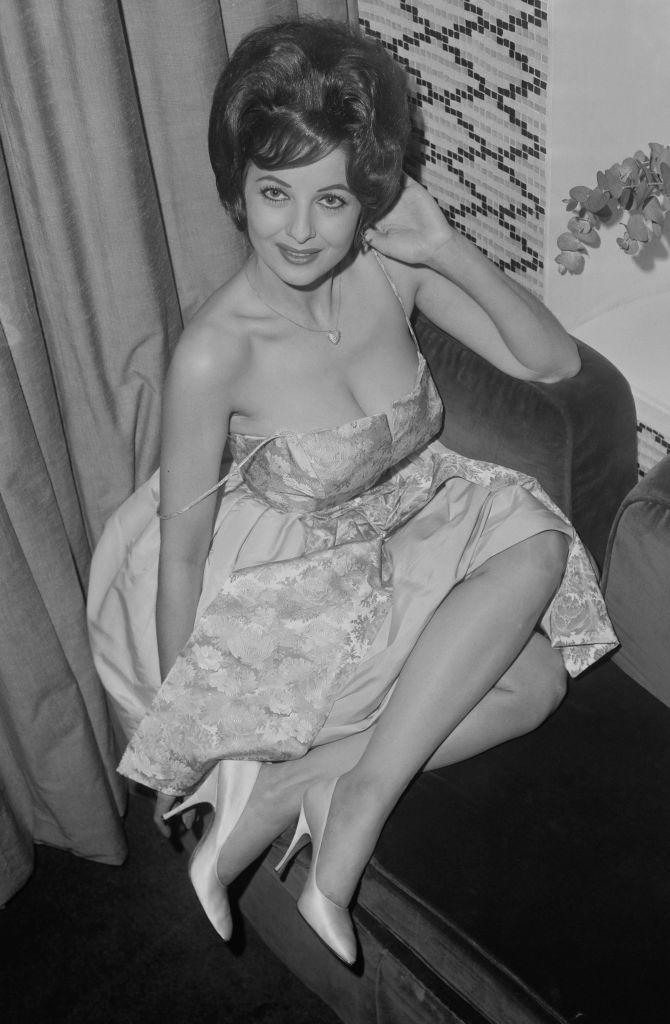
A casting agent suggested that if Annie wanted to succeed in entertainment, she needed a name audiences would remember.
One suggestion was “Tempest Storm.”
Another was “Sunny Day.”
Storm later recalled the conversation with humor.
“I asked her if she had any suggestions. She said, what about Tempest Storm? I asked her if she had any other suggestions. Well, she said, what about Sunny Day? Well, I said, I guess it might as well be Tempest Storm.”
It turned out to be a perfect choice.
The name sounded glamorous, dramatic, and impossible to ignore.
Before long, so was the woman using it.
Storm initially worked as a cocktail waitress, but her striking appearance and natural charisma attracted attention.
One customer suggested she try striptease.
Storm had grown up so far removed from that world that she later admitted she didn’t even know exactly what he meant.
“I said, ‘What is that?’ I was from a small town, I didn’t know. He said it was just dancing, but you take your clothes off. I said: ‘Oh, no, not me. My mother would disown me.’”
Eventually, she reconsidered.
By the late 1940s, Tempest Storm had entered the world of burlesque.
She quickly discovered that she had found her stage.
Her performances were not designed simply around nudity or shock.
Storm treated burlesque as theater.
She wore elaborate gowns covered in rhinestones, feathers, and jewels.
Her routines were carefully choreographed, with the emphasis placed on glamour, anticipation, confidence, and showmanship.
The result made her one of the biggest stars of the burlesque era.
Storm later remembered that the rules surrounding performers were considerably stricter than modern audiences might expect.
“I was more respectable then. You had to wear net panties and a net bra plus jeweled pasties — you couldn’t wear a G-string.”
By the 1950s, her fame had exploded.
She became one of the best-paid performers in her field and was reportedly earning around $100,000 a year by the middle of the decade, an enormous income for the time.
Her image appeared in newspapers and promotional photographs.
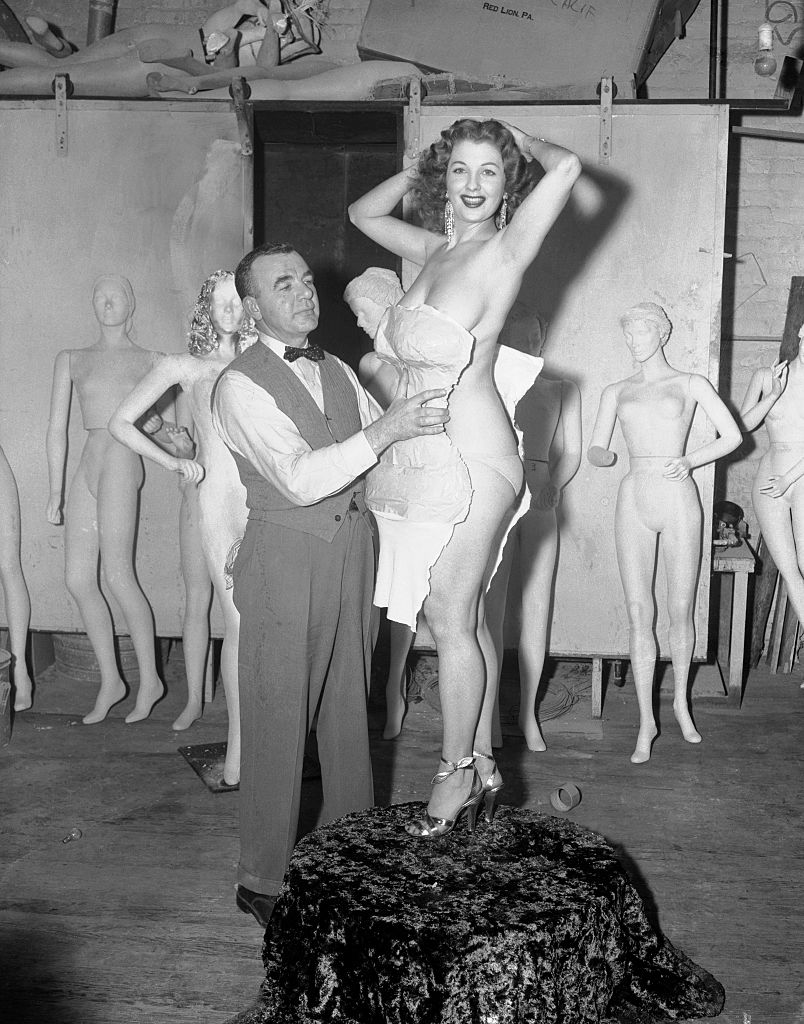
Her measurements became part of her celebrity.
Headlines played endlessly on her name and figure, calling her things such as “Tempest in a D-Cup.”
There were even reports that Lloyd’s of London had insured her breasts for $1 million, adding to the larger-than-life mythology surrounding her.
Storm shared billing with other legendary burlesque performers, including Blaze Starr and Lili St. Cyr.
She also appeared in films such as “Teaserama” in 1955 and “Buxom Beautease” in 1956.
In “Teaserama,” she appeared alongside another enduring icon of the era, Bettie Page.
The films combined striptease, comedy, glamour, and performance at a time when censorship rules surrounding sexuality were far stricter than they would become in later decades.
Storm became part of a generation of women pushing against those boundaries.
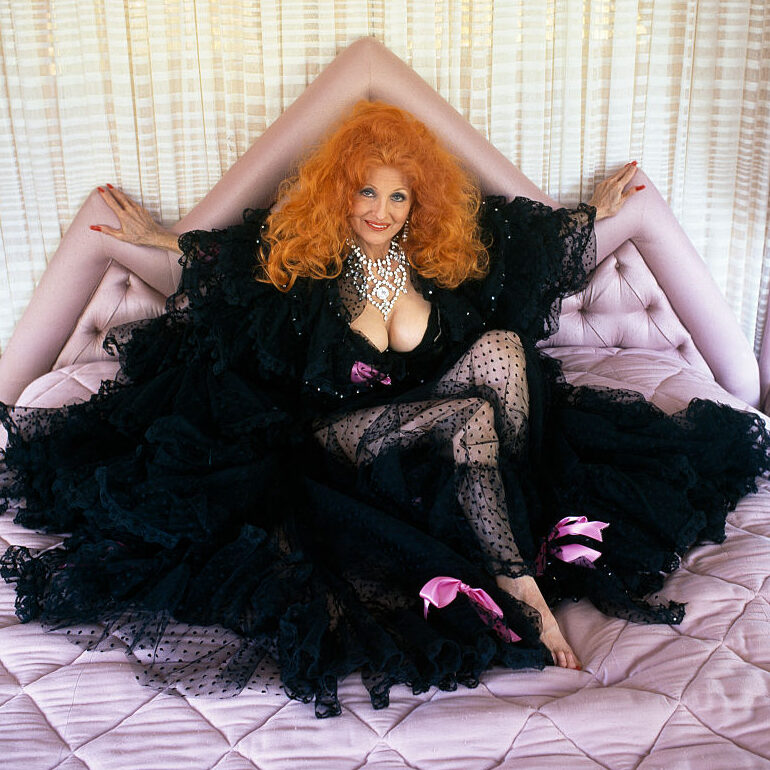
Her red hair became one of her trademarks.
So did her natural figure.
Unlike many performers who later turned to cosmetic procedures to maintain a certain appearance, Storm reportedly resisted plastic surgery.
She believed what she had naturally was enough.
Her lifestyle away from the stage also contrasted sharply with the image some people associated with nightlife entertainers.
She didn’t smoke.
She reportedly avoided strong alcohol, preferring drinks such as orange juice or 7-Up.
Her routines offstage included granola breakfasts, massages, sauna sessions, and time in the whirlpool.
But there was no question about the effect she could have on a crowd.
One especially chaotic example came in 1955 during a visit to the University of Colorado.
Approximately 1,500 students reportedly gathered, and the situation became so intense that damage was left behind.
Storm later described the scene in characteristically colorful terms.
“They must have been shut up for months without women, they rushed me like a herd of cattle.”
Her private life generated almost as much attention as her performances.
Storm was romantically linked over the years to famous names including Elvis Presley, Mickey Rooney, and underworld figure Mickey Cohen.
But one relationship would become especially significant.
In 1959, she married jazz singer and actor Herb Jeffries.
Jeffries was a groundbreaking Black entertainer who became known as Hollywood’s first Black singing cowboy.
At the time, interracial marriage remained illegal in many parts of the United States.
Their relationship therefore attracted enormous attention and controversy.
The couple had a daughter, Patricia Ann Jeffries.
But the marriage also came with professional consequences.
According to later reporting, marrying Jeffries challenged major racial taboos of the period and cost Storm work.
The intense media interest that had followed her career began to decline.
Some venues and promoters reportedly became less willing to work with her.
The marriage ultimately ended, but Storm later indicated that she and Jeffries remained extremely close afterward.
She had made a decision that challenged expectations during a period when doing so could damage a performer’s livelihood.
Still, controversy never succeeded in pushing Tempest Storm completely offstage.
Her career simply refused to end.
Most entertainers associated with burlesque’s golden age eventually retired from public performance.
Storm kept going.
She performed through her 50s.
Then her 60s.
Then continued making appearances well beyond the age when society often expects women—especially women whose careers were built partly around sensuality—to disappear from view.
She refused.
In 1999, Storm returned to San Francisco’s O’Farrell Theatre as the club marked its 30th anniversary.
The occasion was significant enough that San Francisco Mayor Willie Brown declared a “Tempest Storm Day” in her honor.
She also continued appearing at Burlesque Hall of Fame events, performing into her later years and reminding younger audiences exactly why she had become such an enduring name.
Storm ultimately made her final stage appearances while in her 80s.
For her, age never seemed to erase the attraction of the spotlight.
The stage remained a place where she felt powerful and alive.
Her extraordinary story later became the focus of the 2016 documentary “Tempest Storm,” which examined both the glamorous public image and the complicated woman behind it.
By then, she had long since become a bridge between different eras of burlesque.
Her career had begun when such performances operated under strict censorship rules and social stigma.
She lived long enough to see burlesque transformed into a celebrated form of retro performance art embraced by a new generation.
Modern stars including Dita Von Teese have acknowledged the influence of women like Storm, whose performances helped establish the glamour, theatricality, and confidence associated with contemporary burlesque.
During the later years of her life, Tempest Storm lived in Las Vegas.
She died in 2021 at the age of 93.
By then, she had spent more than six decades associated with the stage.
Her legacy, however, went far beyond elaborate costumes or provocative publicity.
Her life reflected enormous contradictions.
She came from poverty and became one of the most famous burlesque stars in America.
She escaped an abusive childhood and created an identity entirely of her own choosing.
She became famous partly because of her appearance, yet built her longevity through discipline, personality, and stage presence.
She challenged racial taboos in her personal life at a time when doing so carried real consequences.
And perhaps most remarkably, she refused to accept the idea that sensuality, confidence, or glamour belonged only to young women.
Tempest Storm continued appearing before audiences long after performers from her generation had disappeared from the spotlight.
She did not quietly fade away.
That was never really her style.
The woman born Annie Blanche Banks reinvented herself as Tempest Storm and carried that name for the rest of her extraordinary life.
It turned out to be more than a stage name.
It became a description.
She arrived loudly.
She challenged expectations.
And decades after the height of burlesque’s golden era, people were still talking about her.
Tempest Storm did not simply perform like a force of nature.
She lived like one.
