On April 21, 2025, the Christian world lost one of its most compassionate spiritual leaders—Pope Francis, who passed away at the age of 88. The Vatican confirmed his death followed a prolonged respiratory illness that culminated in a stroke and irreversible heart failure. Revered for his humble leadership and efforts to modernize aspects of the papacy, Pope Francis left behind a legacy rooted in compassion, environmental stewardship, and a commitment to social justice.
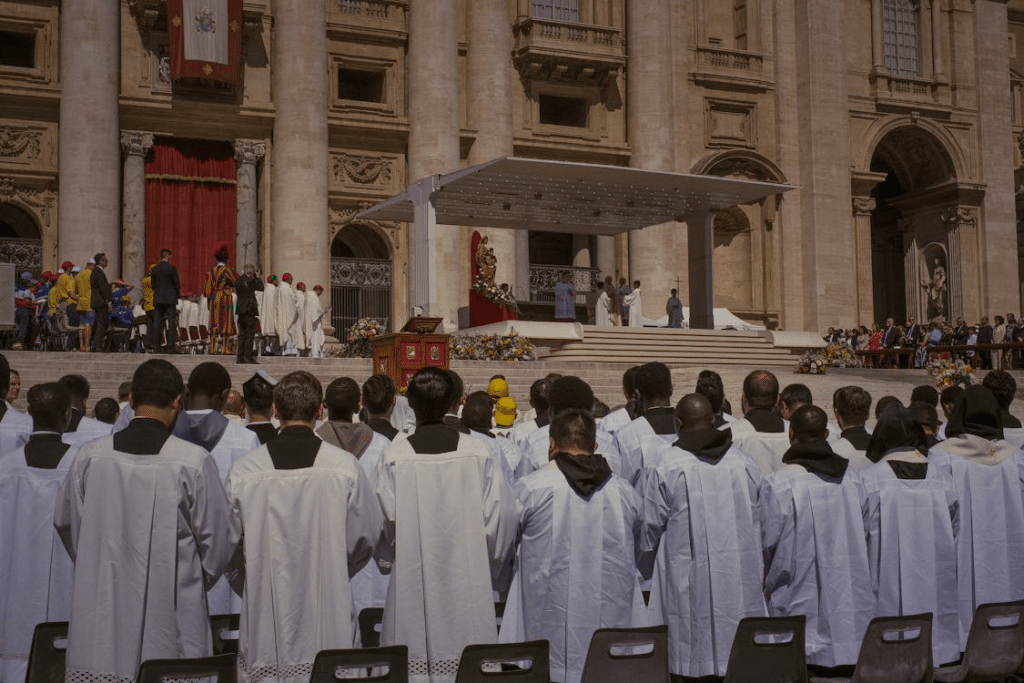
Five days later, on April 26, the Vatican held a solemn yet grand public funeral for Pope Francis in St. Peter’s Square. True to his wishes, however, he was not laid to rest in the Vatican’s traditional papal burial site. Instead, he was interred in a modest tomb inside the Papal Basilica of Santa Maria Maggiore—near an icon of the Madonna that held deep personal significance for him. Mourners gathered quietly outside the basilica as the procession passed, paying tribute to a man who had become a symbol of unity, humility, and moral courage.
Among the world leaders present to honor him were U.S. President Donald Trump and First Lady Melania Trump. Their presence drew global attention—not only due to President Trump’s notably bright blue suit, which sparked debate online—but also due to the broader significance of the international turnout at the funeral. However, one notable figure was absent: King Charles III of the United Kingdom. Instead, Prince William, the Prince of Wales, represented the British monarchy at the service.
This absence was not a slight or a health-related issue, though King Charles is currently undergoing cancer treatment. Rather, it stemmed from longstanding royal tradition. As Supreme Governor of the Church of England, King Charles must observe centuries-old protocol, which includes refraining from attending the funerals of religious leaders outside the Anglican Communion. This rule preserves both constitutional neutrality and the separation between church and state. Royal expert Katie Nicholl confirmed this, explaining that “protocol and precedence dictate that the Sovereign does not attend funerals,” a custom Queen Elizabeth II also upheld during her reign.

When Pope John Paul II died in 2005, then-Prince Charles stood in for the Queen, just as Prince William now steps in for his father. According to royal historian Hugo Vickers, the tradition is deeply rooted in the monarchy’s role: “It’s all about protocol. The Pope did not attend the Queen’s funeral, and Prince Charles was present at the last pope’s funeral. It’s entirely appropriate for the Prince of Wales to represent the monarchy.”
Despite this limitation, King Charles and Queen Camilla expressed their sorrow in a moving public statement. The King praised Pope Francis for his compassion and his vision for unity, noting his efforts to build bridges across faiths and his environmental advocacy. Their personal rapport had grown stronger over the years, especially following a private Vatican meeting where the couple received the Pope’s blessing on their 20th wedding anniversary.
Though he was not physically present, King Charles’ tribute resonated deeply with many around the world who shared in the grief and admiration for a Pope who reshaped the modern role of the papacy. His absence was a reflection not of personal choice, but of the weight of monarchy—its responsibilities, its customs, and the quiet reverence it must often show through symbolic presence rather than physical attendance.
As the world bid farewell to Pope Francis, it was clear that his spirit, teachings, and leadership will remain etched in the hearts of those who continue to seek hope, justice, and compassion in a fractured world.
