Nearly a decade before her name would begin appearing in history books—and nine months before Rosa Parks was arrested—an unassuming but resolute decision by a 15-year-old Black teenager in Montgomery, Alabama, quietly helped fracture the foundations of segregation in the United States.
That teenager was Claudette Colvin, a pioneering figure whose role in the civil rights movement was overlooked for decades. Colvin, who refused to give up her bus seat to a white passenger in 1955, has died at the age of 86. Her death was announced by the Claudette Colvin Legacy Foundation, which described her as leaving behind “a legacy of courage that helped change the course of American history.”
Colvin’s act of resistance occurred in March 1955, when she was a high school student living in Montgomery. Ordered by a bus driver to surrender her seat, she refused. Police were called, and she was arrested—at just 15 years old. The moment came months before Parks’ arrest, which later sparked the Montgomery Bus Boycott and led to a landmark Supreme Court ruling that dismantled bus segregation nationwide.
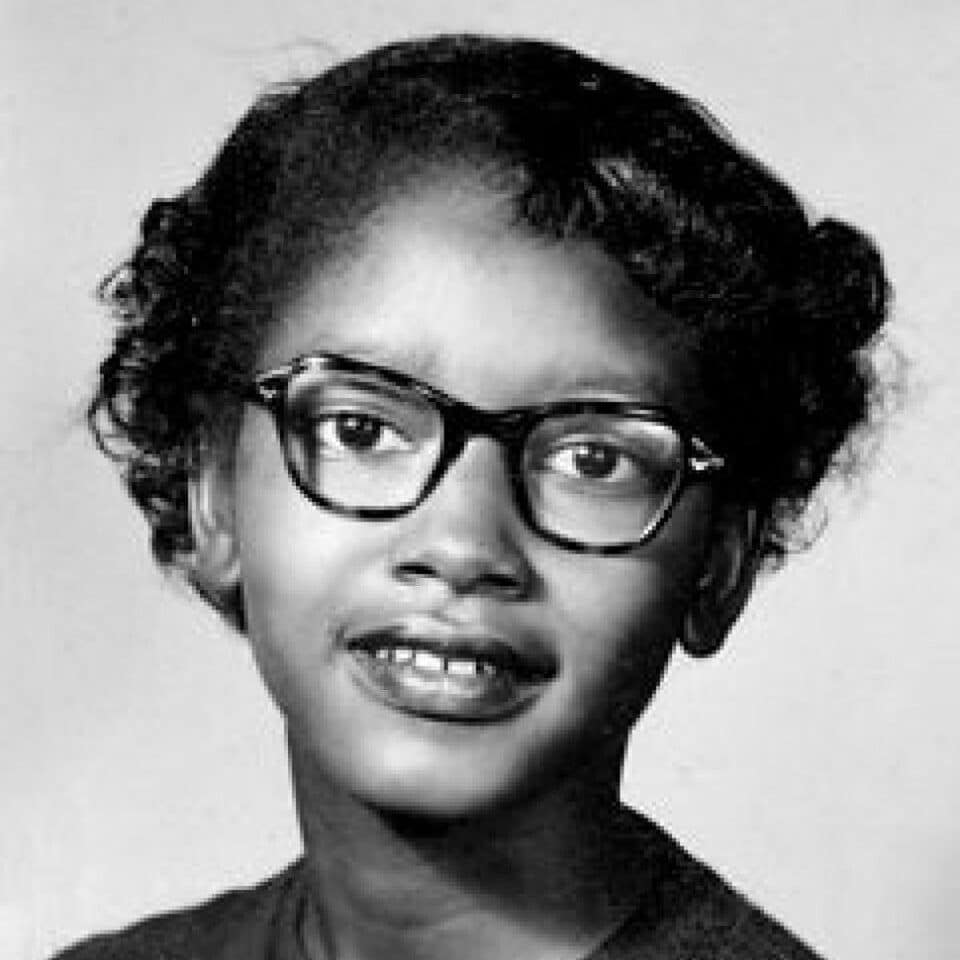
Despite the similarity of circumstances, Colvin’s arrest did not ignite a mass movement at the time. Her story remained largely unknown, even as the boycott reshaped the country and Parks became its most recognizable symbol.
In a 2018 interview with the BBC, Colvin explained that fear was not what she felt when she was taken into custody. Instead, she recalled being angry and deeply disappointed, knowing she had done nothing wrong. She often emphasized that she believed she was “sitting in the right seat,” both legally and morally.
Colvin also spoke about feeling the weight of history in that moment. She famously recalled that it felt as though Harriet Tubman and Sojourner Truth were guiding her—one pressing down on each shoulder—urging her to remain seated and stand her ground.
While Parks became the public face of the movement, Colvin played a critical role behind the scenes. One year after her arrest, the U.S. Supreme Court ruled that segregation on public buses was unconstitutional. That decision rested on the testimony of four plaintiffs in a federal case, and Claudette Colvin was among them. Her participation helped secure a ruling that ended bus segregation not only in Montgomery but across the country.
Even so, her contribution went largely unrecognized at the time. Civil rights leaders made strategic decisions about which cases to elevate publicly, and Colvin—young, outspoken, and facing circumstances deemed complicated—was not put forward as the movement’s symbol. As a result, her role faded from public memory for decades.

It wasn’t until 2009, when the first detailed book about her experience was published, that Colvin’s story began receiving wider attention. Historians and educators have since reassessed her place in history, acknowledging that her quiet defiance was a crucial precursor to the movement that followed.
After the pivotal events of the 1950s, Colvin moved to New York, where she built a life largely outside the public spotlight and worked as a nurse. According to her foundation, she later died under hospice care in Texas.
Today, although her name may still be less familiar than others associated with the civil rights era, Claudette Colvin is increasingly recognized as a vital figure in America’s struggle for justice—a reminder that transformative change is often set in motion by individuals whose courage precedes recognition.
Her story underscores a simple truth: history does not always begin with the names we remember first, but with those who acted when it mattered most.


