He left behind a legacy that reshaped modern music, a voice that didn’t just fill arenas—it defined a generation. Long before the world knew his name, he was just a blonde boy from a small, rain-soaked town, full of energy, curiosity, and something quietly restless beneath the surface.
He was born on February 20, 1967, at Grays Harbor Hospital, in the working-class town of Aberdeen. His mother worked long hours as a waitress, his father as a mechanic. Life wasn’t glamorous, but it was grounded—built on effort, routine, and small, familiar rhythms. Music, though, was always there. It lived in the background, passed through relatives who played in bands, woven into everyday life like something inevitable.
From the beginning, he stood out.
By the age of two, he was already singing. By four, he was experimenting—piano keys, small melodies, even fragments of songs that only he seemed to understand. He drew constantly, too, filling pages with characters and ideas, as if creativity was something he needed just to breathe.
Those early years were described as happy. He was energetic, excitable, sensitive in a way that made people notice. But something shifted when he was around nine.
His parents divorced.

It wasn’t just a family change—it was a fracture that ran deeper than anyone realized at the time. He later admitted that it left him feeling unsettled, even ashamed. He wanted something simple, something stable—a “normal” family. Instead, everything around him kept changing.
His mother entered a new relationship marked by tension and violence. His father remarried despite earlier promises not to. The sense of belonging he once had slowly disappeared, replaced by something harder to define—anger, confusion, distance.
At school, the change was visible.
He became more withdrawn, more defiant. Authority meant less. Expectations felt like something to push against rather than live up to. He struggled to find a place where he fit, and over time, that struggle turned into rebellion.
Eventually, he was sent to live with his father, then shuffled between relatives and friends. Stability never really returned. For a brief period, he leaned into religion while staying with a deeply religious family, but that, too, faded quickly, replaced by skepticism and frustration.
By his teenage years, the disconnect had deepened.
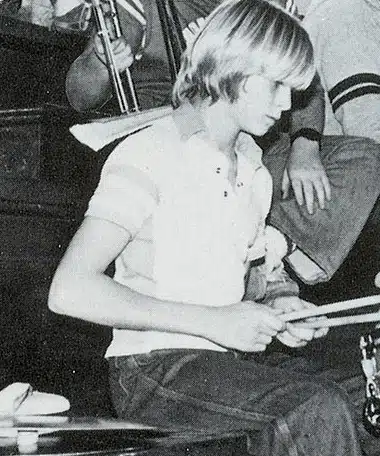
He didn’t care for sports, avoided the typical paths expected of him, and felt increasingly alienated from the culture around him. He would later describe his hometown as being suffocating—socially rigid, judgmental, and limiting.
At school, he became a target.
After befriending a gay student, rumors spread. He was mocked, harassed, sometimes physically attacked. Instead of retreating, he leaned into it, almost defiantly, refusing to let others define him in ways that made sense to them.
His identity became something fluid—not about labels, but resistance.
He dyed his hair, rejected norms, and expressed himself however he could. Art became an outlet. Music became something deeper—a form of release, a language that didn’t require explanation.
Eventually, school fell away entirely.
He dropped out just before graduating. At home, things had deteriorated to the point where his mother gave him an ultimatum: find a job or leave. He left.
What followed was instability in its rawest form—couch-surfing, drifting, surviving day to day. There were stories later about him living under a bridge near the Wishkah River, though even those closest to him questioned the literal truth. Still, the image stuck because it reflected something real—how disconnected, how unmoored his life had become.
And then, something changed.
He found music.
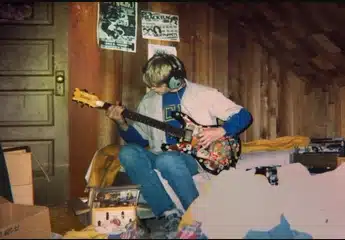
More specifically, he found the underground scene—punk, raw and unfiltered. It wasn’t polished or perfect, and that was exactly the point. It gave him permission to feel everything he had been carrying without translating it into something acceptable.
That discovery led him toward a path that would eventually become Nirvana.
The early years weren’t glamorous. The band shifted members, struggled financially, played small venues. Their first album, Bleach, released through Sub Pop Records, hinted at something powerful—but it wasn’t until a lineup change brought in Dave Grohl that everything aligned.
Then came Nevermind.
And with it, Smells Like Teen Spirit.
The explosion was immediate and overwhelming. What had been underground suddenly became global. The sound—grunge, raw, emotionally exposed—reshaped mainstream rock almost overnight. At the center of it all was Kurt Cobain, a voice that felt both fragile and furious at the same time.
He became the face of a generation.
But the same intensity that fueled his music began to consume him.
Fame brought scrutiny, pressure, expectation. His personal struggles—chronic pain, addiction, depression—grew heavier. His relationship with Courtney Love was constantly under public attention, and together they had a daughter, Frances Bean Cobain.
Behind the success, things were unraveling.
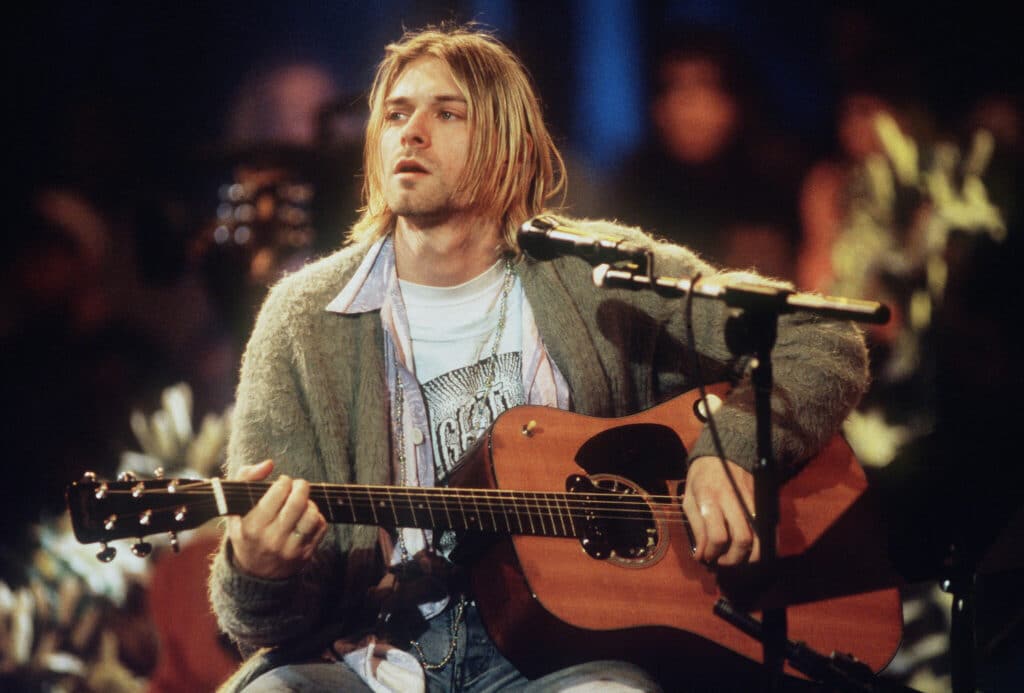
On April 8, 1994, he was found dead at his home in Seattle, at just 27 years old. Authorities concluded he had died days earlier.
The loss was immediate, global, and deeply personal for millions who had seen themselves reflected in his music.
He had come from almost nothing—working-class roots, instability, rejection—and built something that changed the sound of music forever. His work didn’t just entertain; it gave language to emotions people didn’t know how to express.
In the end, his life was both a triumph and a warning.
A story of talent that rose against every odd.
And a reminder that sometimes, the same depth that creates something extraordinary can also carry a weight that’s impossible to hold alone.
More From Daily Positive
 A Girl Appeared Beside My Hospital Bed — Then She Said My Name
 Colorado toddler set to die on Friday – devastated family give heartbreaking update
 When my parents refused to pay for my university education, they said it was to teach me independence. Ironically, my sister never received that lesson. She had absolutely everything covered.
 I watched my father throw my clothes, my books, and the last photo of my mother into the fire like my life meant nothing. Then he looked at me and said, “This is what happens when you disobey me.”
 Vets reveal very last thing all pets do before being put down and it’s heartbreaking
 At my sister’s wedding reception, my mother demanded I sign over the penthouse my grandmother left me—and when I refused, she s.lapp.ed me in front of half of Philadelphia. She thought that would finish me. Then my grandmother walked in with a lawyer.