I didn’t tell my family I bought the house because I already knew how that story would end.
The moment they found out, it wouldn’t be mine anymore—not really. It would become “ours,” which in my family meant something very specific: something I paid for, maintained, and sacrificed for… while someone else decided how it should be used.
So I kept it quiet.
The house sat at the end of a calm street in Raleigh—blue-gray siding, white trim, a wide porch that caught the evening light just right. It was the kind of place I had spent twelve years working toward, one promotion, one late night, one disciplined decision at a time. At thirty-four, I finally signed the papers alone, changed the locks the same day, installed cameras, and told only the people who needed to know.
For six weeks, it was peaceful.
Then one evening, I pulled into my driveway and saw a silver Honda parked crookedly near the curb.
Jenna’s car.
I stopped so suddenly my coffee tipped over, soaking into the passenger seat, but I didn’t even notice. Something in my chest tightened before I had even stepped out of the car.
The front door was unlocked.
Inside, nothing was where I had left it.
My sofa had been pushed against a different wall. The bookshelf I had carefully assembled was half-empty. My dining chairs were scattered in the kitchen, and three cardboard boxes labeled in thick black marker—JENNA – BEDROOM—sat by the stairs like a declaration.
From upstairs, I heard drawers opening.
Then her voice, light, almost cheerful.
“Mom, the guest room is smaller than I thought, but I can make it work.”
For a moment, I couldn’t move.
Then Jenna appeared on the staircase, holding one of my throw blankets, smiling like everything had already been decided.
“Oh,” she said casually. “You’re home early.”
I stared at her. “What are you doing in my house?”
She rolled her eyes, like I was the inconvenience. “Relax. Mom said you’d be dramatic at first.”
At first.
That was the moment it clicked—this wasn’t a misunderstanding. This was a plan.
I noticed more things then. My jewelry dish moved from my bedroom. My mail shifted. My closet door open upstairs. She hadn’t just stepped in—she had started settling.
“Where did you get a key?” I asked.
She shrugged. “The spare. Dad still had it.”
I had never given my father a key.
Something inside me went completely still.
I took out my phone.
Her smile flickered for the first time. “Lauren, don’t be insane.”
I pressed call.
“911,” I said when the operator answered. “My sister is inside my home. She entered without permission and is moving her belongings in.”
That’s when Jenna’s tone changed.
Not apologetic.
Offended.
“This is family,” she snapped.
“This is trespassing,” I said.
She called our mother before I even hung up.
“Mom, she actually called the cops,” she said loudly, pacing like she was the victim in all of this.
I stood there, looking around at what she had already done. Her coat hung on my banister. Her keys sat in a bowl on my table. A framed photo of her and her son had been placed on my kitchen counter like a quiet claim.
My mother arrived before the police.
Of course she did.
Elaine swept into the house like she owned it, her eyes landing on Jenna first, then on me.
“What have you done?” she demanded.
I laughed, short and sharp. “I called the police because Jenna broke into my house.”
“She didn’t break in,” my mother said immediately. “Your father had a key.”
“No,” I said. “He didn’t.”
“He must have. Jenna had one.”
The logic was almost impressive in how little sense it made.
“I never gave Dad a key,” I said. “So either you copied it or took it. Which is it?”
Her expression shifted—no more pretending. Just expectation.
“You have three bedrooms,” she said. “Jenna and Mason need somewhere to stay. This house is too big for just you.”
There it was. Not even a question.
A decision already made.
“Did you ask me?” I said.
“You would’ve said no.”
“Yes,” I said simply.
Jenna jumped in, her voice rising. “So you’d rather let your nephew struggle than help me?”
I looked at the boxes, the furniture, the way she had already begun living there.
“Temporary?” I asked. “You’ve already picked rooms.”
Before she could answer, red and blue lights flashed through the windows.
The silence that followed was different.
Real.
The officers stepped inside, calm, observant, taking everything in—the rearranged furniture, the boxes, the personal items scattered through the space.
“I’m the homeowner,” I said. “She entered without permission. I never authorized this.”
Jenna tried to talk over me, but the officer held up a hand and focused on me first.
Then he turned to her.
“Do you have permission to be here?”
She hesitated, just long enough.
“Mom said it was fine.”
He looked at my mother. “Do you own the property?”
“No, but I’m her mother.”
“That’s not the same thing.”
For the first time, Jenna looked unsure.
Then came the question that broke everything.
“How did you get inside?”
She glanced at our mother. Then said, “Dad gave me the key.”
The officer turned to me. “Did you authorize that?”
“No.”
He nodded and started writing.
My mother stepped in, trying to soften it. “This is being blown out of proportion. There’s no criminal intent.”
The officer glanced around the room. “Someone entered a home without permission and began taking control of it. That’s not a misunderstanding.”
Jenna’s voice cracked slightly. “I wasn’t stealing. I just needed somewhere to stay.”
“You could have asked,” I said.
She had no answer.
When my father arrived, the truth came out quickly. He had copied the key from a temporary one I had given him months earlier. He kept it “just in case.”
When Jenna needed somewhere to go, they decided my house was the solution.
Without telling me.
Because, as he put it, “Lauren always has her life together.”
That sentence explained everything.
I had worked harder, planned better, built stability—and they treated it like a resource they could distribute.
The officers gave me a choice.
I could let it go.
Or I could draw a line.
I chose the line.
Jenna was formally trespassed. The report was filed. The locks were changed that night. Cameras upgraded the next day. Legal notices sent the day after that.
My mother called me cruel.
My father called me unforgiving.
Jenna told anyone who would listen that I chose a house over family.
I stopped responding.
Because the truth was simple.
They hadn’t treated me like family.
They had treated me like access.
Three months later, I adopted a dog.
A cautious, quiet rescue with one bent ear. I named him Bishop. The first night he curled up against my couch—the same couch Jenna had tried to claim—I sat there in the quiet and realized something had shifted.
Not just in the house.
In me.
Calling the police didn’t destroy my family.
It revealed it.
And for the first time in my life, my home wasn’t just a place I owned.
It was a boundary no one could cross again.
 My Husband Left Me for Giving Birth to a Girl – Years Later, I Saw Him in a Supermarket, and My Daughter Did Something I’ll Never Forget
 Doctors reveal that guava leaf tea causes…
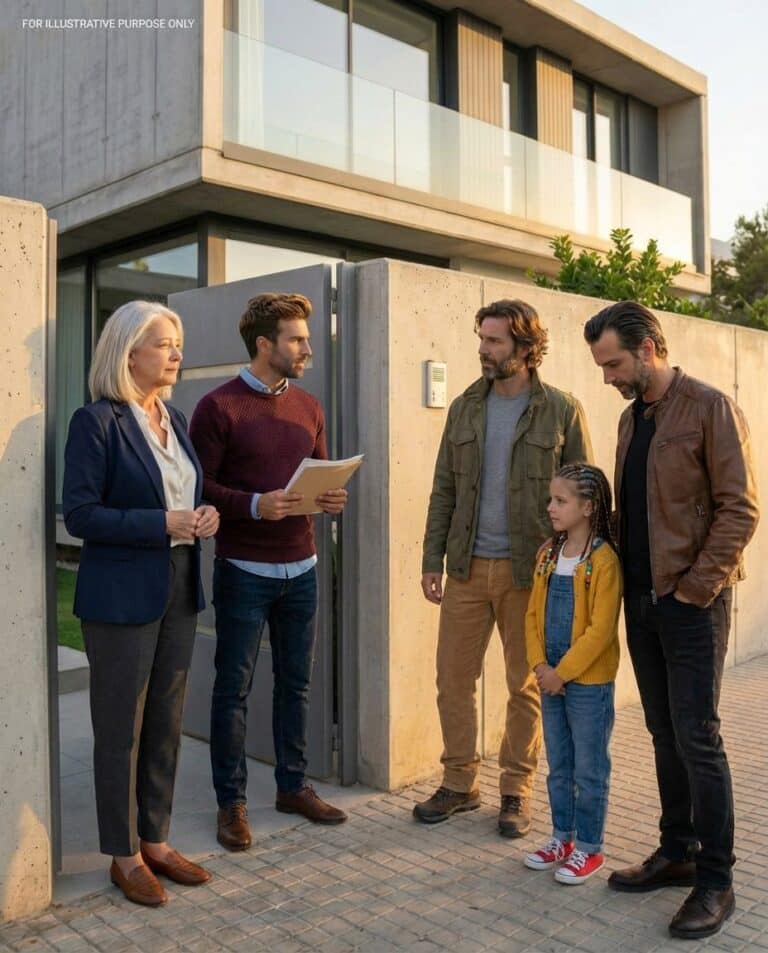 I won $89 million in the lottery and didn’t tell a soul. Hours later, my son, without a hint of affection, blurted out, “Mom, when are you planning on leaving our house?” Inside, I was devastated, but I didn’t say a word. I left quietly. The next morning, I bought their dream house… and when they discovered it would never be theirs, the real story began.
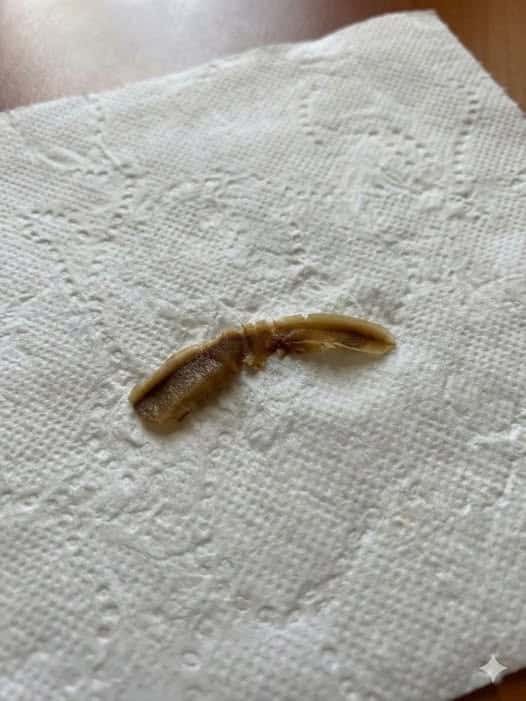 I came across this in my girlfriend’s bathroom, and I’ve been staring at it for an hour—I still have no idea what it’s supposed to be.
 If a woman has small breasts, it means that her part …
 My Husband Convinced Me to Be a Surrogate Twice – When He Paid His Mom's Debt, He Left Me