Looking back at old Oscars photos, especially from the 1970s, brings a nostalgic feeling. There’s something almost haunting about those pictures—they capture a different era, a different America, when the Academy Awards felt truly glamorous. The celebrities had an air of class, elegance, and mystique, and the event itself carried a weight that feels somewhat lost today.
Seeing so many legendary stars who are no longer with us is a reminder of how fleeting life is. There was a time when I knew every nominee, every film, every song in the running. Now, I struggle to keep up with the rapid changes in Hollywood.
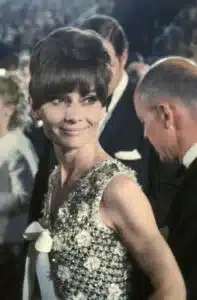
Someone once said the 1975 Oscars were “back when actors and actresses had class and no political agenda.” While that may not be entirely true, it does feel like something has shifted over the years. That year’s ceremony, the 47th Academy Awards, had its share of unforgettable moments, some of which are still discussed today.
It’s impossible to revisit the 1975 Oscars without mentioning Dustin Hoffman. The legendary actor, now 87, was one of the biggest names of the night, not just for his nomination but for his outspoken disdain for the ceremony itself.
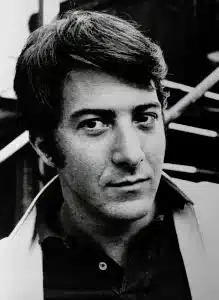
Hoffman was nominated for his role in Lenny, a biographical film about comedian Lenny Bruce. However, he wasn’t exactly thrilled to be attending. He had never been shy about criticizing the Academy, calling the event “garish” and “embarrassing.” In a now-famous remark, he even described it as “ugly” and “grotesque,” comparing it to a beauty pageant.
Host Bob Hope took a lighthearted jab at Hoffman, quipping, “If Dustin Hoffman wins tonight, he’ll have a friend pick it up for him—George C. Scott,” referencing Scott’s famous refusal to accept his Oscar in 1971.
Though Hoffman didn’t take home the Best Actor award that night, that didn’t stop Frank Sinatra, one of the show’s hosts, from making a remark at his expense. Sinatra, always known for his charm, took a shot at Hoffman, but the joke didn’t land well with the audience.
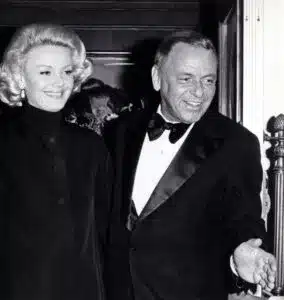
Sinatra didn’t have the smoothest night at the 47th Academy Awards. Reviews from 1975 were less than kind, with famous film critic Roger Ebert reporting that the audience even booed him at one point.
He seemed off his game, fumbling his lines and making “several pointed, tasteless references to his fellow Italian-Americans.” Ebert described the spectacle as “embarrassing.” However, the real controversy of the night was yet to come.
Despite the belief that award shows were once free from political discourse, the 1975 Oscars proved otherwise. In April of that year, the Vietnam War was nearing its end, and the conflict weighed heavily on the evening’s atmosphere.
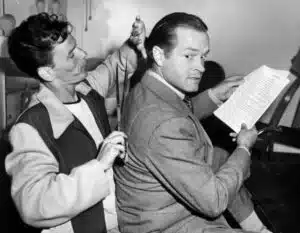
One of the most talked-about moments came when documentary filmmaker Bert Schneider accepted the Best Documentary award for Hearts & Minds, a film about the Vietnam War. Taking the stage, he said, “It’s ironic that we’re here at a time just before Vietnam is about to be liberated.”
He then read a telegram from Viet Cong Ambassador Dinh Ba Thi, which stated, “Greetings of Friendship to All American People.” The message thanked the anti-war movement for its efforts toward peace, which did not sit well with host Bob Hope, a vocal supporter of the Vietnam War.
Not one to let such a statement go unanswered, an hour later, Hope had Frank Sinatra read a counter-telegram to the audience. “The Academy is saying, ‘We are not responsible for any political references made on the program, and we are sorry they had to take place this evening.’”
This didn’t go unnoticed by some of Hollywood’s biggest stars. Shirley MacLaine and Warren Beatty quickly fired back, with Beatty sarcastically responding, “Thank you, Frank, you old Republican.” MacLaine, equally unimpressed, added, “You said you were speaking for the Academy. Well, I’m a member of the Academy, and you didn’t ask me!”
Some felt Schneider’s remarks were tame considering his history of being outspoken about Vietnam. In retrospect, it’s clear that politics were just as intertwined with Hollywood then as they are today.
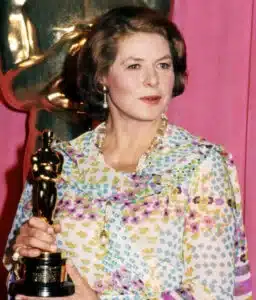
Another unforgettable moment that night came when Ingrid Bergman took the stage. At 59, the legendary Swedish actress received a standing ovation after winning the Best Supporting Actress Oscar for her role in Murder on the Orient Express.
Presented by Katharine Ross and Peter Falk, Bergman accepted the award with humility, insisting that fellow nominee Valentina Cortese deserved it more. Some believe Bergman’s win was influenced by Hollywood’s lingering guilt over how it treated her in 1949 when her affair with director Roberto Rossellini led to industry backlash.
The 1975 Academy Awards, held at the Dorothy Chandler Pavilion in Los Angeles, had everything—grace, fame, drama, and iconic films like The Godfather Part II dominating the night. Looking back, it feels like the peak of Hollywood’s golden age, a time when movie stars had a certain magic that’s hard to find today.
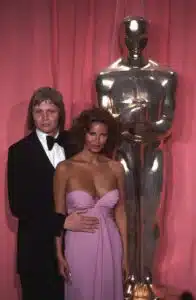
It’s no wonder that one particular image from the evening continues to spark conversation nearly 50 years later. The photo in question features two of Hollywood’s biggest stars of the time: Jon Voight and Raquel Welch.
The image, capturing the two of them standing together, encapsulates the glamour of that era. Voight, dressed in a classic black tuxedo, stood beside Welch, who stunned in a form-fitting dark pink gown. The pair presented the award for Best Cinematography, and though neither was nominated that night, their presence on the red carpet left a lasting impression.
Recently, the photo has gone viral on social media, with opinions divided. Some admire its elegance, while others have raised concerns about Voight’s body language, claiming it appears inappropriate.
“Jon’s looking like a creep. Raquel doesn’t look comfortable. Unless they were a couple—that’s well creepy,” one woman wrote. Another added, “She looks like he is touching her without her consent 🥺.”
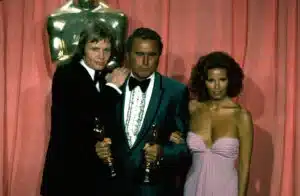
However, many people defended the photo and Voight. One commenter, who claimed to have lived through that time, said, “I was a young woman at the time, and having a man hold me like this at an event or elsewhere happened often and was fine. It could feel very good, but of course, some guys were nicer than others—some sleazy ones—but no big deal. Some of the outrage here just makes me laugh. Lighten up, people!”
Another echoed the sentiment: “Everybody’s so critical. If you weren’t around at that time, you have no opinion. If you were there, you know there’s nothing wrong with this photo! Geez, people….”
This photo remains a fascinating time capsule. It represents an era many look back on with admiration, while others see it as a reflection of outdated norms. Is it a charming glimpse into Hollywood’s past, or does it reveal an uncomfortable truth about gender dynamics in the entertainment industry?
Let’s keep the conversation going—what do you think? Share your thoughts and pass this article along to others!
More From Daily Positive
 I'm Raising My Twin Grandsons Alone After Their Mom Passed — One Day, a Woman Knocked on My Door with a Terrible Secret
 President Trump Provides Key Update After Plane Crash
 Michelle Obama issues a statement amid constant Barack divorce rumors – ‘My husband and I…’
 TV Host Shows Off More Than She Wanted To, Try Not to Gasp..
 The Father Of A Girl With Cancer Who Died In The American Airlines Disaster Shares A Text That Led Him To Believe Something Was Not Right
 Schiff Considering Rejecting Biden Pardon For J6 Committee Amid Blowback