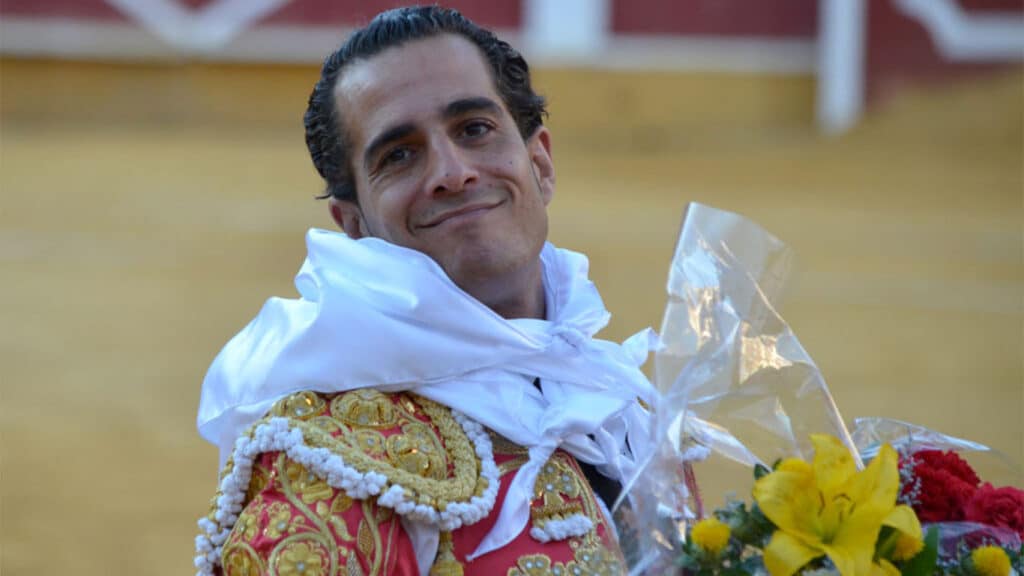
Renowned Spanish matador Iván Fandiño’s tragic death in 2017 remains one of the most chilling incidents in modern bullfighting history—a haunting moment that continues to echo through the tightly knit world of professional matadors and beyond.
The fatal incident unfolded at a bullfighting festival in Aire-sur-l’Adour, a small town in southwest France, known for hosting traditional events. Fandiño, then 36 and a well-respected figure in the arena, had already completed a successful bout earlier in the day. However, when he returned to the ring for a second confrontation, no one could have predicted it would be his last.
Fandiño, who hailed from Orduña in Spain’s Basque Country, had built a reputation as a matador willing to face the fiercest bulls—those other fighters often turned away. His technique was marked by both bravery and grace, and his name had become synonymous with fearlessness. That courage, however, came at a devastating cost.
During the fight, he made a misstep—an error so slight it would have been unnoticeable under different circumstances. As he maneuvered his cape, it tangled around his legs, and he stumbled, falling to the sand in a vulnerable heap. Before he could recover, the nearly half-tonne bull charged and gored him with brutal force.
The horn pierced Fandiño’s side, causing catastrophic internal injuries. Reports confirmed that his lungs were punctured and other vital organs severely damaged. Though he was alert and conscious immediately after the goring, his condition rapidly deteriorated. Eyewitnesses recounted the heartbreaking moment as he was lifted by medics onto a stretcher. His final words—uttered through gritted teeth and intense pain—were: “Hurry up, I’m dying.”
Fandiño suffered a fatal heart attack before he could reach the hospital.
News of his death sent shockwaves through Spain and the broader bullfighting community. Fellow matador Juan del Álamo, who was in the arena at the time and eventually killed the bull that had struck Fandiño, was among the first to react. Still processing what had happened, he said, “I can’t believe it. None of us understand how it could have happened; it was all so fast. The bull knocked him down with its hindquarters and he fell face down.”
Those close to Fandiño knew his career had not been without its risks. In 2014, he was rendered unconscious during a fight in Bayonne, France, after being tossed violently by a bull. A year later, in Pamplona, he was again thrown into the air during a traditional San Fermín festival bout. Despite these encounters, Fandiño continued to fight, driven by a passion few could understand and a sense of duty to uphold a cultural tradition that defined his life.
His death marked the first time in nearly a century that a matador had been fatally gored in France. The last occurred in 1921, when Isidoro Mari Fernando lost his life during a bullfight in Béziers. That statistic alone underlined the rarity—and the severity—of Fandiño’s final bout.
Tributes flowed swiftly in the wake of his passing. Spanish King Felipe VI described Fandiño as a “great bullfighting figure,” while then-Prime Minister Mariano Rajoy expressed condolences on behalf of the nation. Bullfighting fans across Spain and France mourned the loss, with many describing him as one of the most talented and courageous matadors of his generation.
Fandiño’s untimely death came just months after another high-profile fatality had rocked the industry. In 2016, Víctor Barrio, a fellow Spanish matador, was killed during a televised event—becoming the first matador to die in the ring in Spain in over three decades. Together, the two incidents reignited the ongoing debate over bullfighting’s place in modern society.
Once widely celebrated as a symbol of Spanish culture and masculinity, bullfighting has faced growing scrutiny in recent years. While the practice is banned in several regions—including Catalonia—it remains legally protected in others, including parts of France. In 2012, France’s constitutional court ruled in favor of the tradition, classifying it as part of the nation’s cultural heritage. Spain has taken similar steps to safeguard the practice, even as public opinion grows increasingly divided.
Animal rights groups, long critical of the sport, used Fandiño’s death as an opportunity to spotlight the risks not just to humans, but to the bulls themselves—arguing for a permanent end to what they call a barbaric form of entertainment. Defenders of bullfighting, however, see it as an art form and a deep-rooted ritual that symbolizes honor, bravery, and national identity.
Iván Fandiño leaves behind a wife and young daughter. For his family and his devoted fans, he will be remembered not only for his skill in the arena, but also for his unflinching resolve in the face of danger. His final moments, tragic and surreal, now form part of the complex legacy of a tradition that continues to walk the line between glory and mortality.
His death is a sobering reminder of the brutal realities behind the spectacle—where triumph and tragedy coexist, and where, for some, the ultimate price is paid in pursuit of a legacy etched in blood and tradition.
More From Daily Positive
 Pope Francis’s last public appearance leaves profound message
 Karoline Leavitt, 27, Drops Bombshell About Her 59-Year-Old Husband Nicholas Riccio—You Won’t Believe What She Just Admitted!
 When a $10K Lottery Win Turned Into a Prank
 Mic drop moment—Karoline Leavitt hilariously roasts Whoopi Goldberg and The View in live TV showdown. With sharp wit and unshaken poise, Karoline Leavitt delivered a savage takedown of Whoopi Goldberg and The View, lighting up the screen and leaving the hosts visibly stunned. The clash wasn’t just funny—it was fierce, fast, and unforgettable. Here’s why this viral moment has everyone talking.
 Crypto influencer rejects Elon Musk’s offer to have his child
 BOMBSHELL MOMENT: Karoline Leavitt MELTS Hearts After Bringing Her Baby to Work—Fans Can’t Get Enough of One Adorable Detail That Stole the Show! What Made This Behind-the-Scenes Moment So Special and Heartwarming? Get the Full Scoop