She burst onto the scene in the 1980s with a kind of presence that felt effortless and electric, leaping from modeling into acting and collecting critical acclaim almost as quickly as she found fame. To audiences, she looked fearless, luminous, and destined for greatness. But behind the success was a woman shaped by silence, politeness, and trauma — and by a childhood moment when she nearly lost her life before she ever found her voice.
Born on January 21, 1958, in Wareham, Massachusetts, Geena Davis grew up in a household that felt worlds away from Hollywood. Her parents were practical, reserved New Englanders who valued discipline, manners, and modesty above all else. She later joked that they would have been Amish if they’d known such a lifestyle existed. Television was limited, entertainment was restrained, and Disney cartoons were about as wild as things got.
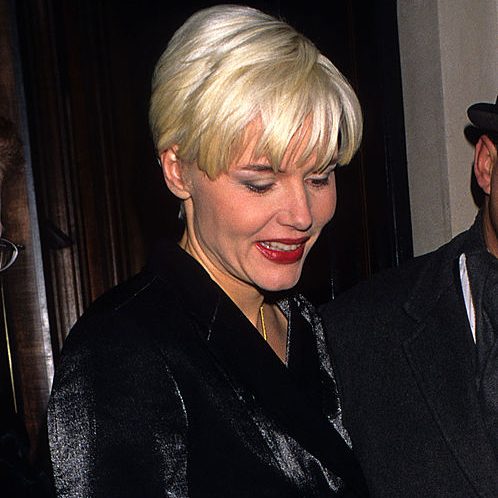
From a young age, she learned how to be polite, quiet, and agreeable — lessons that would shape her entire life, for better and for worse.
One of the most terrifying moments of her childhood happened when she was just eight years old. Riding in a car driven by her 99-year-old great-uncle, she sat silently as he drifted into oncoming traffic. No one spoke up. No one said a word. At the last possible second, he corrected the wheel and narrowly avoided a head-on collision. They survived — but the lesson stuck: never complain, never make a fuss, never be rude, even if your life depends on it.
That instinct to stay quiet followed her into darker territory. As a child, she was sexually abused by a neighbor while delivering newspapers. She didn’t fully understand what was happening, and when her mother confronted the man, no police report was filed. No real explanation was given. Instead, the experience became a secret she carried alone, wrapped in shame and confusion. She later described learning, far too young, that drawing attention to pain was unacceptable.
By high school, another source of self-consciousness emerged: her height. Towering over her classmates, she became a target for teasing and cruel nicknames. She wanted nothing more than to blend in, yet her body made her stand out constantly. Sports helped a little — track, hurdles, high jump — and so did music. She played flute in the marching band and eventually studied abroad in Sweden, becoming fluent in the language.
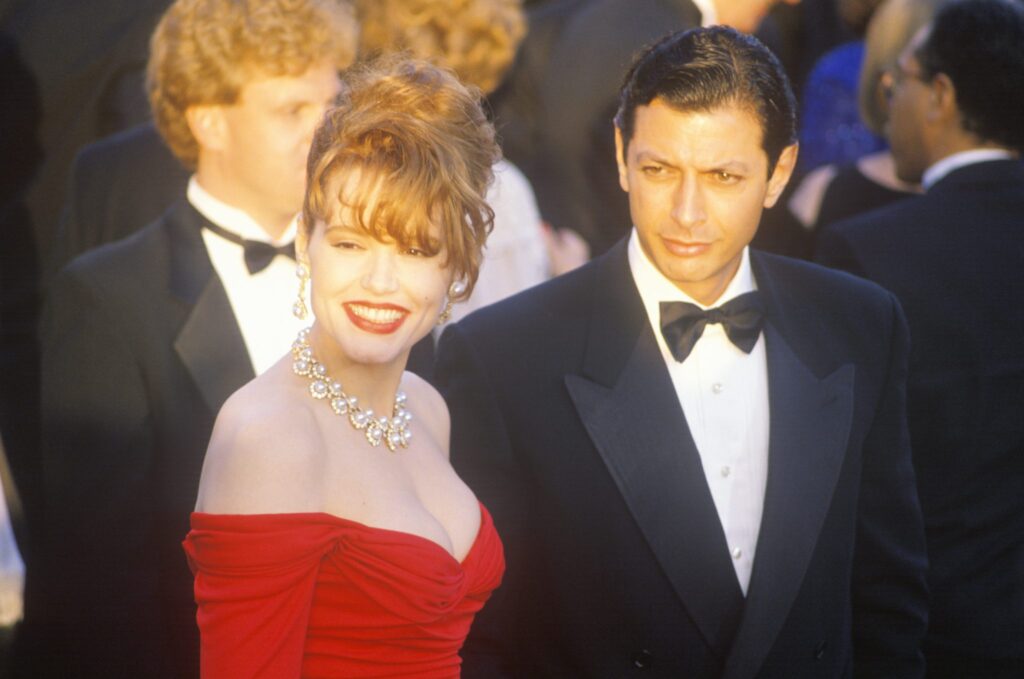
Acting, though, was the quiet dream she held close. After studying drama at Boston University (a degree she never technically finished, something her parents never knew), she moved to New York City. She worked as a waitress, a sales clerk, even a window mannequin, before signing with a modeling agency. Appearing in the Victoria’s Secret catalog changed everything. It was that catalog that caught the eye of director Sydney Pollack, who cast her in Tootsie in 1982.
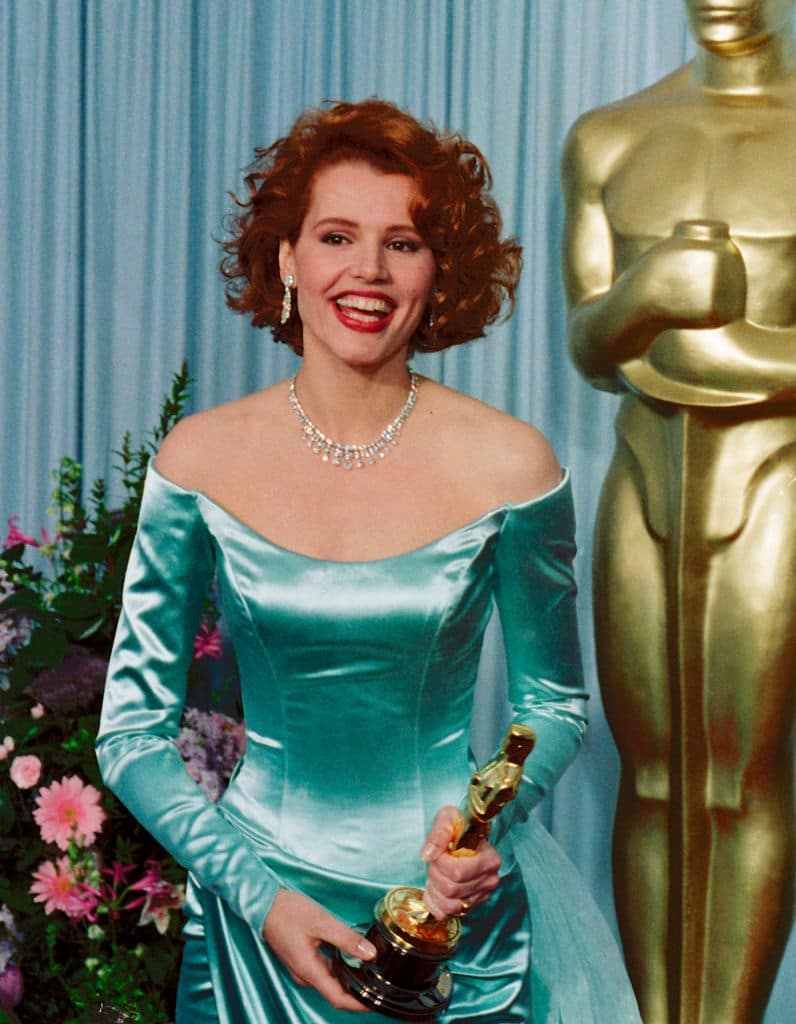
From there, her rise was swift. Film after film showcased not just her beauty, but her intelligence, vulnerability, and depth. The Fly. Beetlejuice. The Accidental Tourist, which earned her an Academy Award. And then Thelma & Louise — the role that would forever define her legacy and reshape how women were portrayed on screen.
That film didn’t just change her career; it changed her personally. Watching her co-star speak openly and assertively helped her begin to unlearn a lifetime of enforced politeness. For the first time, she saw that saying what you think doesn’t make you difficult — it makes you free.
Still, Hollywood has a way of turning its back on women once they reach a certain age. As she approached forty, the roles dried up. She described it simply: she fell off the cliff. But what she gained in return mattered more.
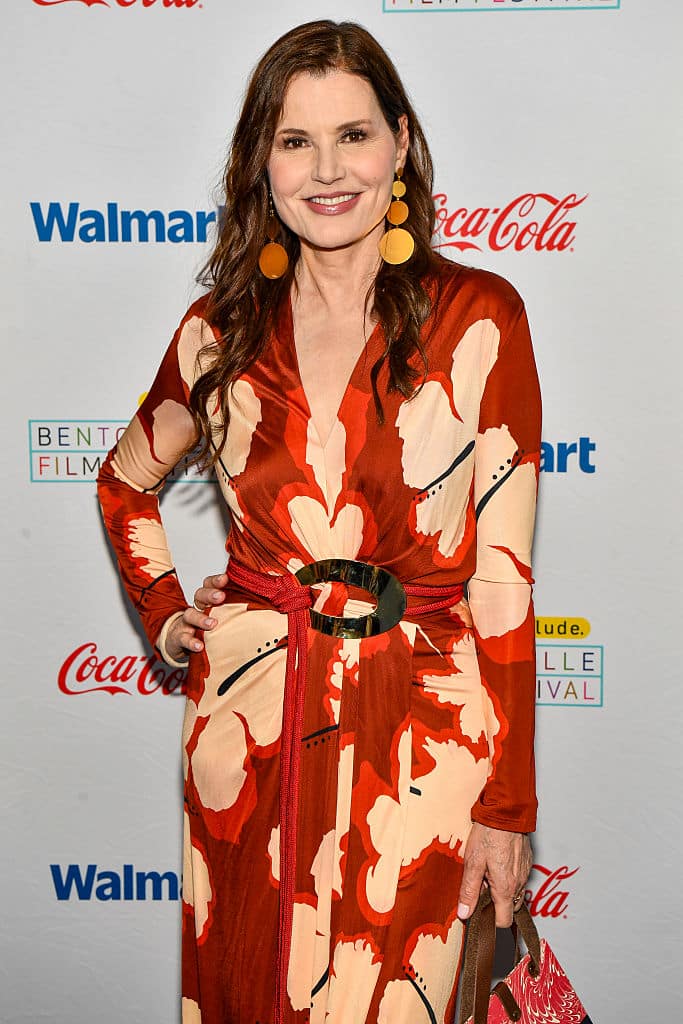
She became a mother in her mid-forties, welcoming a daughter and later twin sons. Motherhood shifted her priorities and sharpened her awareness of gender imbalance in media. Watching children’s shows with her kids, she noticed how rarely girls were represented — and how often women were sidelined. Instead of staying silent, she acted.
In 2004, she founded the Geena Davis Institute on Gender in Media, dedicating herself to research, advocacy, and systemic change in an industry that had long limited women’s voices. What began as personal frustration turned into global influence.
Now in her late sixties, she remains active, thoughtful, and deeply purposeful — still acting, still advocating, still learning how to speak up after decades of being taught not to. Her life story isn’t just about fame or awards. It’s about survival, growth, and the slow, brave process of reclaiming a voice that was quieted far too early.
She once learned that politeness could nearly cost her life. Now, she teaches the world that speaking up can change it.
More From Daily Positive
 Minneapolis Mayor Jacob Frey Calls Situation “Not Sustainable, ,,” Says “We cannot..”
 SHOCKING NEW CLAIMS: Renne Good WAS DRIVING AND ON THE PHONE FOR MINUTES BEFORE COLLIDING WITH ICE AGENT — Investigators say the call at the time was from… Read more
 Erika Kirk’s New Relationship Sparks Public Debate Just Months After Tragedy
 Map reveals the 6 most dangerous places to be if WW3 breaks out
 Create a calm, efficient, and cohesive kitchen with budget-friendly DIY pantry organization. Use dollar store bins for a practical, stylish, long-term storage system—no high costs or professional help required.
 Letting your gray hair go natural often reflects a deep psychological shift toward self-acceptance, authenticity, and emotional maturity. It can symbolize freedom from social pressure, confidence in one’s identity, and a desire to age honestly without hiding changes. Many people view this choice as an empowering statement of self-worth, inner peace, and a healthier relationship with time and personal growth.