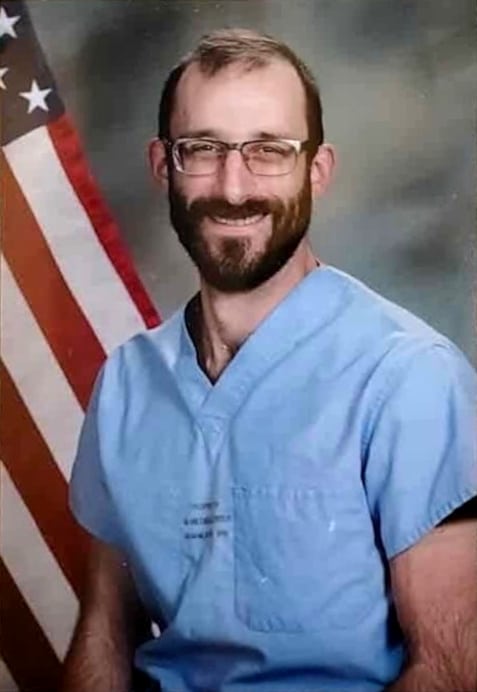
Newly reviewed video footage is raising serious questions about the death of Alex Jeffrey Pretti, a 37-year-old ICU nurse and U.S. citizen who was shot by federal agents during an immigration enforcement operation on January 24 in south Minneapolis.
The shooting has reverberated far beyond Minnesota, triggering protests in Minneapolis and in several other cities across the country. Pretti is the second Minneapolis resident to be killed by federal agents this month, a fact that has intensified public concern and scrutiny around federal enforcement activity in the city.
As news of the shooting was still unfolding, reporters from the Minnesota Star Tribune reached members of Pretti’s immediate family. His sister, overwhelmed with emotion, struggled to speak through tears before ending the call.
In a statement shared with CNN on Saturday night, Pretti’s parents, Michael and Susan Pretti, described their son as a devoted caregiver and a deeply compassionate person.
They said he was a “kindhearted soul who cared deeply for his family and friends and also the American veterans whom he cared for as an ICU nurse.”
They added, “Alex wanted to make a difference in this world. Unfortunately he will not be with us to see his impact.”
Federal officials initially said agents fired their weapons after encountering an armed individual who posed a threat during the operation. According to the Department of Homeland Security, Border Patrol agents were assisting with enforcement efforts when they came across Pretti.
“During the encounter, the individual produced a firearm and resisted officers’ attempts to gain control of it,” DHS said in its initial statement. “An agent fired defensive shots, fearing for the safety of the officers on scene.”
That account is now under close examination following the release of multiple videos captured by bystanders and officers. The footage appears to show Pretti holding a cellphone and recording agents as they approached him. No firearm is clearly visible in his hands prior to the shooting.
During a brief struggle, one officer can be seen reaching toward Pretti’s waist area and pulling away with an object that appears consistent with a handgun. Gunshots follow almost immediately after.
Additional attention has focused on audio recorded after Pretti had already been shot and was lying on the ground. While the sound is difficult to make out initially, it becomes clearer when isolated and slowed. One officer is heard asking a short question, followed by another officer responding that he has the item being referenced. The words “where’s the gun?” have become central to questions about whether the firearm was secured before or after lethal force was used.
Federal authorities have confirmed that all available video and audio evidence is being reviewed as part of an internal investigation. No agent involved in the shooting has been publicly identified as having fired the fatal shots.
Pretti’s family has strongly challenged the government’s version of events. In a public statement, they said claims that he posed an immediate danger were “false” and “contradicted by video evidence.”
“Our son was not threatening anyone,” the family said. “He was holding his phone and filming. The video shows this clearly.”
They have called for a full and transparent investigation and are demanding the release of all body-worn camera footage and communications related to the operation.
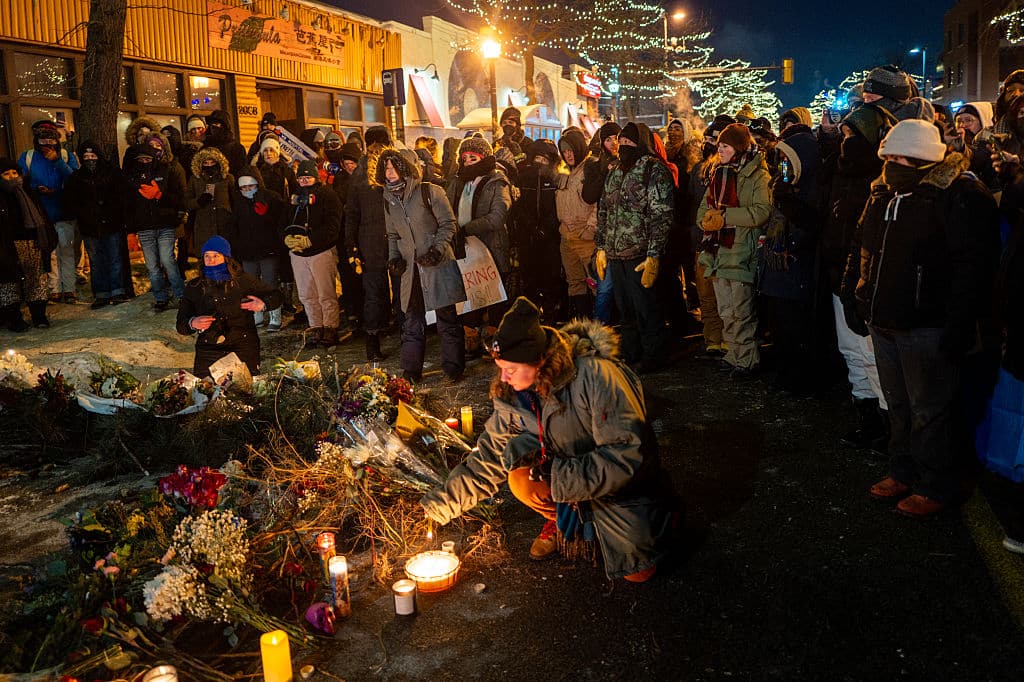
MINNEAPOLIS, MINNESOTA – JANUARY 24: People pay their respects during a candlelight vigil for Alex Pretti after he was shot and killed earlier in the day on January 24, 2026 in Minneapolis, Minnesota. Federal agents shot and killed Pretti amid a scuffle to arrest him. The Trump administration has sent a reported 3,000 federal agents into the area, with more on the way, as they make a push to arrest undocumented immigrants in the region. (Photo by Brandon Bell/Getty Images)
Later that day, mourners gathered in Minneapolis for a candlelight vigil, leaving flowers and messages in Pretti’s memory. The shooting occurred amid an expanded federal presence in the region, with thousands of agents reportedly deployed as part of a broader push to arrest undocumented immigrants.
DHS has said it stands by its initial account while the review continues. “These incidents are taken seriously,” the department said in a follow-up statement. “Any use of force by federal officers is subject to review.”
The case has drawn heightened attention because it follows another fatal incident earlier this month. On January 7, another 37-year-old Minneapolis resident, Renee Good, was shot and killed during a separate encounter involving federal immigration officers. Together, the two deaths have fueled growing tension between federal officials, who say agents were carrying out their duties, and local leaders, who argue that the expanded federal presence has contributed to fear, violence, and instability in the community.
{"post":46254,"page":1,"next":[{"id":46229,"url":"https:\/\/dailypositive24.com\/46229","title":"Every Christmas, My Mom Fed a Homeless Man at Our Local Laundromat \u2013 but This Year, Seeing Him Changed Everything","image":"https:\/\/dailypositive24.com\/wp-content\/uploads\/2026\/01\/beeea423bce2-bbwashingmachine-768x384.jpg"},{"id":46226,"url":"https:\/\/dailypositive24.com\/46226","title":"Plus size is the new average: American women big and beautiful","image":"https:\/\/dailypositive24.com\/wp-content\/uploads\/2026\/01\/616614755_1186746870280931_7449508459814860438_n.jpg"},{"id":46220,"url":"https:\/\/dailypositive24.com\/46220","title":"This Little Boy Grew Up To Be One Of The Most Evil Men In The World","image":"https:\/\/dailypositive24.com\/wp-content\/uploads\/2026\/01\/inna12-664x350-1.jpg"},{"id":46217,"url":"https:\/\/dailypositive24.com\/46217","title":"My Husband Cheated on Me with My Own Mom \u2013 but on Their Wedding Day, My Cousin Called and Said, \u0027You Won\u0027t Believe What Just Happened!\u0027","image":"https:\/\/dailypositive24.com\/wp-content\/uploads\/2026\/01\/621704428_1227178272963777_539479569575442043_n-768x960.jpg"},{"id":46213,"url":"https:\/\/dailypositive24.com\/46213","title":"Sources claim man killed in second ICE shooting in Minneapolis named has been identified","image":"https:\/\/dailypositive24.com\/wp-content\/uploads\/2026\/01\/617540122_122284491146027953_9187984657665899348_n-768x1152.jpg"},{"id":46211,"url":"https:\/\/dailypositive24.com\/46211","title":"Singer\u2019s Sudden Passing After Island Flight Incident Shocks Fans Worldwide","image":"https:\/\/dailypositive24.com\/wp-content\/uploads\/2026\/01\/618518269_122284498136027953_2779650819478445744_n-768x768.jpg"},{"id":46206,"url":"https:\/\/dailypositive24.com\/46206","title":"New video footage from different angle reveals more about latest ICE shooting in Minneapolis","image":"https:\/\/dailypositive24.com\/wp-content\/uploads\/2026\/01\/617616330_122284496906027953_2527417155652195682_n-768x1152.jpg"},{"id":46201,"url":"https:\/\/dailypositive24.com\/46201","title":"5 Mistakes Women Unknowingly Make That Drive Men Away","image":"https:\/\/dailypositive24.com\/wp-content\/uploads\/2026\/01\/618380665_1224709356465689_6480872477908925658_n-768x922.jpg"},{"id":46197,"url":"https:\/\/dailypositive24.com\/46197","title":"20 subtle cancer symptoms commonly missed","image":"https:\/\/dailypositive24.com\/wp-content\/uploads\/2026\/01\/621579958_930869366269071_6006299400639121220_n.jpg"},{"id":46194,"url":"https:\/\/dailypositive24.com\/46194","title":"Lizzo Shares Her Personal Wellness Journey in Recent Photos","image":"https:\/\/dailypositive24.com\/wp-content\/uploads\/2026\/01\/621822895_122308721564011573_2749412483084832614_n-768x1024.jpg"},{"id":46191,"url":"https:\/\/dailypositive24.com\/46191","title":"After I Became a Kidney Donor for My Husband, I Learned He Was Cheating on Me With My Sister \u2013 Then Karma Stepped In","image":"https:\/\/dailypositive24.com\/wp-content\/uploads\/2026\/01\/600294712_848701627915680_957066629465000923_n.jpg"},{"id":46188,"url":"https:\/\/dailypositive24.com\/46188","title":"I Was Scrolling Facebook When I Saw My College Photo \u2013 It Turned Out My First Boyfriend Had Been Looking for Me for 45 Years","image":"https:\/\/dailypositive24.com\/wp-content\/uploads\/2026\/01\/621727598_1226825759665695_2742374679654249975_n-768x960.jpg"},{"id":46185,"url":"https:\/\/dailypositive24.com\/46185","title":"My Husband Invited His Pregnant Mistress to Our Family Holiday Dinner \u2013 But His Parents Quickly Stepped In","image":"https:\/\/dailypositive24.com\/wp-content\/uploads\/2026\/01\/womens_crying_is_a_chemical_turnoff_for_men.jpg"},{"id":46182,"url":"https:\/\/dailypositive24.com\/46182","title":"After My Mom Died, My Dad Married Her Twin \u2013 at Their Wedding, My Grandma Told Me the Truth Behind It All","image":"https:\/\/dailypositive24.com\/wp-content\/uploads\/2026\/01\/620084561_1226470159701255_8431308549529574375_n-768x960.jpg"}]}
 SHE’S OUT! First Trump official gone after defying his orders…
 Why Mosquitoes Always Choose You: The Scientific Explanation Few Know
 What It Truly Means When Women Choose Pinky Rings Today, How a Small Finger Became a Big Symbol of Independence, Self-Commitment, Healing, Style, Power, and Quiet Resistance Against Traditional Expectations About Love, Identity, and Personal Worth
 Loved Ones Remember ICU Nurse Alex Pretti After His Death During Federal Enforcement Operation
 THEY FORCED HER TO MARRY THE “PIG BILLIONAIRE” TO PAY OFF HER DAD’S DEBT, BUT..
 Rubio’s Sudden Power Shift