He grew up in a small Indiana town, surrounded by cornfields and rigid rules, yet somehow went on to become the unmistakable voice behind one of the most iconic rock bands in history. The path from that childhood to global stardom was anything but ordinary—and in many ways, it feels almost implausible when you look closely at where he began.
Born in Lafayette, Indiana, in February 1962, he entered the world as William Bruce Rose. His mother was just 16, his father 20, and the relationship did not last. By the time William was two, his parents had split, and his biological father—later described as charismatic but deeply troubled—abducted him and allegedly abused him before disappearing from his life entirely. William would never meet him again. In 1984, that father was murdered in Illinois, a fact that would later ripple through William’s understanding of his own identity.
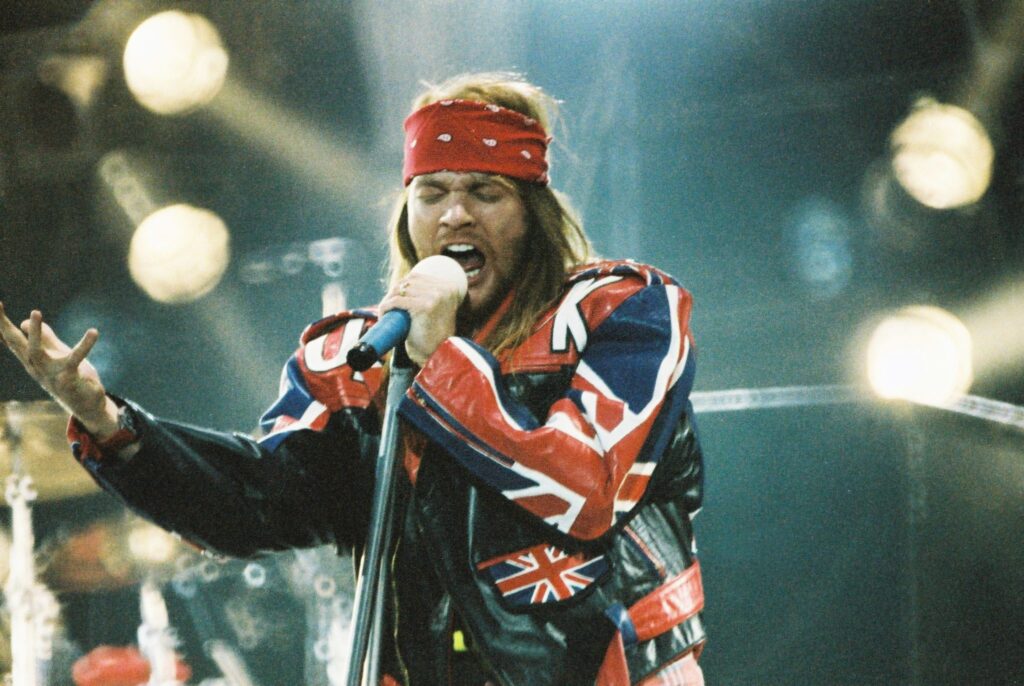
His mother remarried a man named Stephen Bailey, and William grew up believing Bailey was his biological father. The household was intensely religious, shaped by strict Pentecostal beliefs that defined nearly every aspect of daily life. Music, television, and even ordinary behavior were frequently condemned as “evil.” Years later, William would describe the environment as suffocating, recalling how televisions might be thrown out one week and brought back the next, depending on what was deemed sinful at the time. Women, he was taught, were inherently dangerous, and violence in the home was normalized.
That violence was not abstract. He later spoke openly about physical and emotional abuse at the hands of his stepfather, and about the sense of betrayal he felt when his mother allowed it to continue. In interviews, including one with Rolling Stone, he reflected on how those early experiences shaped his anger, his mistrust, and his complicated relationship with women. He described feeling rejected from infancy, watching his mother choose her husband over her child again and again.

School offered little refuge. He was intelligent and outspoken, but also restless and confrontational. Classmates bullied him, sometimes cruelly, taping his mouth shut or shoving him into lockers because of his nonstop talk about becoming famous one day. When others laughed, he doubled down, insisting he would make it out and prove them wrong. By his late teens, he was diagnosed with bipolar disorder, his defiance interpreted as something darker by professionals trying to make sense of his behavior.
Music, however, had always been there. He sang in church choirs, performed with siblings in a small family group, studied piano, and joined school choruses. Teachers remembered him as magnetic and sharp, the kind of student who could take over a room without meaning to. But when he learned the truth about his biological father at 17, something shifted. Instead of quietly rebelling, he rejected everything he had been taught outright.
What followed was a period marked by arrests, jail time, and escalating trouble. He was arrested more than 20 times, sometimes serving months behind bars. Facing the possibility of habitual offender charges, he made a decisive break. In December 1982, with little more than ambition and anger, he left Indiana for Los Angeles.
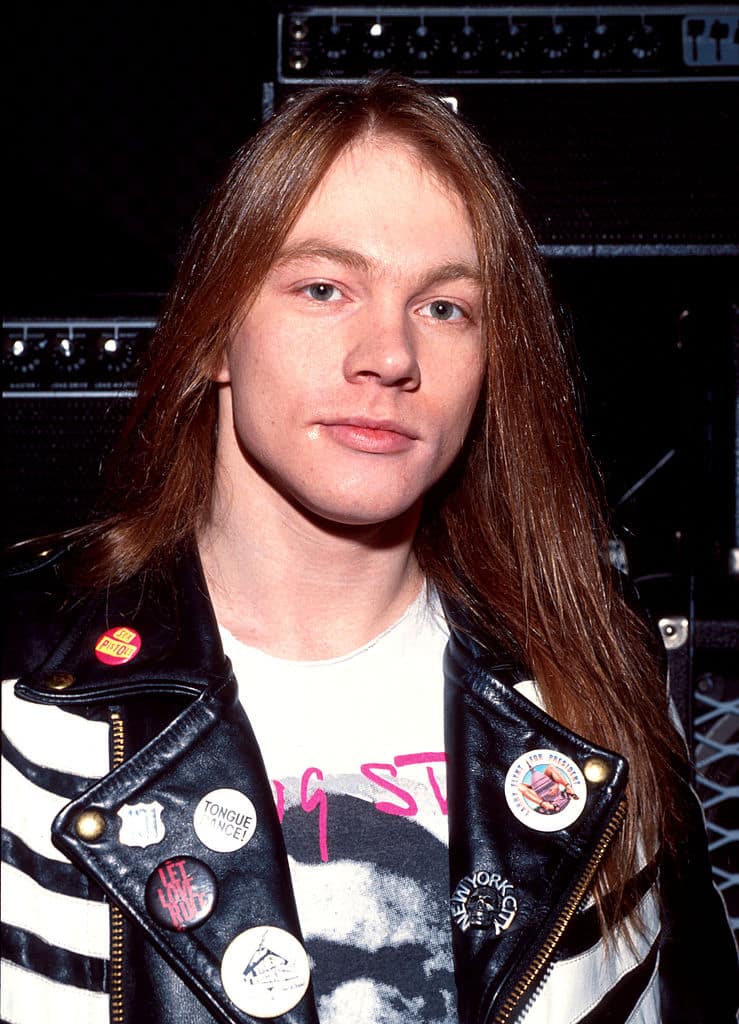
In L.A., the dream sharpened. Inspired by bands like Queen, Aerosmith, and Elton John, he set out to become a rock singer. He formed a band called AXL, and friends encouraged him to adopt a new name—Axl Rose. Later, he would legally change his name to W. Axl Rose, reclaiming the surname of the biological father he never truly knew.
Everything changed in 1985, when he joined forces with musicians from the local rock scene. Out of that collision came Guns N’ Roses. After signing with Geffen Records, the lineup that would define an era took shape: Axl Rose, Slash, Izzy Stradlin, Duff McKagan, and Steven Adler.
When Appetite for Destruction was released in 1987, it didn’t explode overnight. Instead, it built momentum slowly through relentless touring, word of mouth, and the raw energy of songs like “Welcome to the Jungle.” Then came “Sweet Child o’ Mine,” and everything changed. The album climbed to No. 1 and ultimately sold more than 30 million copies worldwide, becoming the best-selling debut album in U.S. history.
Axl’s voice—wide-ranging, powerful, unmistakable—became central to the band’s identity. So did his intensity. As fame grew, so did conflict. The late ’80s and ’90s were filled with public meltdowns, internal band fractures, lawsuits, and infamous onstage incidents. His perfectionism and volatile temper earned him a reputation for being difficult, but also reinforced the sense that he refused to dilute his art for convenience.
Despite the chaos, recognition followed. He was widely praised as one of the greatest rock vocalists of all time, and in 2012, Guns N’ Roses were inducted into the Rock and Roll Hall of Fame. True to form, Axl declined to attend and requested not to be included in the ceremony’s displays.
His personal life mirrored the turbulence of his career. Relationships were intense and often painful, most notably with Erin Everly, who inspired “Sweet Child o’ Mine.” Their marriage was short-lived and later overshadowed by allegations of abuse, legal action, and heartbreak, including a miscarriage that marked a devastating turning point for both of them.
In later interviews, Axl acknowledged the long shadow of his childhood. He spoke about therapy, about learning how early trauma rewired his response to stress, and about the destructive coping mechanisms he had relied on for years. Even now, decades into his career, that intensity still surfaces—sometimes controversially—on stage.
And yet, he continues. Stadium tours, global audiences, a voice that has changed but still commands attention. From a childhood shaped by fear, silence, and control, he carved out a sound that was anything but restrained.
His story is not a clean arc of triumph. It is messy, contradictory, and unresolved in places. But it stands as proof that even the most rigid beginnings can give rise to something explosive—and that trauma, when channeled through art, can echo far beyond the place it began.
More From Daily Positive
 When the hospital said my newborn was gone, my mother-in-law whispered cruel words, and my sister-in-law agreed. My husband turned away in silence. Then my 8-year-old son pointed at the nurse’s cart and asked, “Mom… should I give the doctor what grandma put in the baby’s milk?” The room went still.
 A Letter Left at My Door Made Me Confront a Past I’d Buried
 A Quiet Hospital Stay That Sparked an Unexpected Hope
 My SIL Kicked My 5-Year-Old Daughter Out, Saying She Was 'Inappropriate' for My Niece's Princess Party – Until the Tables Turned
 Trump issues scathing statement after shock approval ratings revealed what Americans really think of him
 Melania Trump breaks silence on Alex Pretti shooting with rare plea to the U.S.