Some observers are openly questioning how much time he has left. Others point to his own insistence that he feels better than ever. As speculation continues, a licensed physical therapist with more than a decade of experience has publicly raised concerns about President Donald Trump’s health—comments that are now drawing widespread attention.
Health questions surrounding Donald Trump are nothing new. Throughout his political career, Trump has consistently presented himself as strong and energetic, often brushing off suggestions that his age or physical condition might be an issue. Still, as he approaches his 80th birthday on June 14, scrutiny has intensified. Trump is now the oldest individual ever sworn into the presidency, and that fact alone has kept public interest in his health alive.
The most recent round of discussion followed Trump’s appearance at the World Economic Forum in Davos, where viewers noticed visible bruising on his hands. An initial explanation suggested the marks were caused by a minor accident involving a bird, but the images sparked renewed debate online about whether there could be broader health concerns at play.
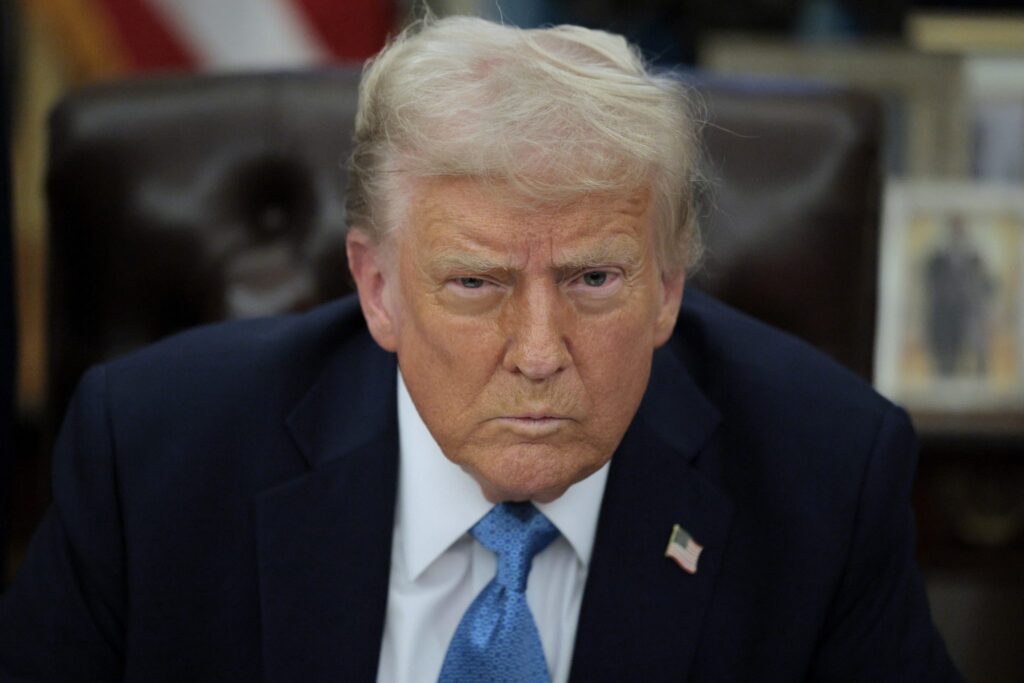
Those discussions gained further momentum after comments made by Adam James, a licensed physical therapist with 14 years of clinical experience. In a recent appearance on The David Pakman Show, James offered his professional interpretation of Trump’s public behavior and physical presentation, emphasizing that his views were based solely on observation rather than direct medical examination.
James, who posts online under the name “Epistemic Crisis,” said he has noticed what he believes may be neurological warning signs. He pointed to Trump’s gait in public appearances, describing what looks like a swinging leg motion and occasional balance issues. According to James, such patterns can sometimes indicate weakness on one side of the body, which in other contexts may be associated with stroke-like events or neurological impairment.
He also cited episodes of slurred speech, apparent confusion over certain factual details, and what he described as repetitive language patterns. In James’ view, these behaviors could suggest cognitive decline. He speculated that the symptoms resemble those seen in frontotemporal dementia, a progressive neurological condition that affects personality, decision-making, and language. James explained that this condition typically carries a life expectancy of seven to twelve years after diagnosis, though progression can vary significantly from person to person.
In Trump’s case, James suggested that the progression appears more rapid than average, leading him to speculate—controversially—that Trump could have as little as two to four years to live. He stressed that this was an estimate based on patterns he has seen in clinical practice, not a confirmed diagnosis. Trump’s medical team has not announced any diagnosis of frontotemporal dementia or any other neurological condition.
James also raised concerns about what he described as reduced impulse control, pointing to instances in which Trump has spoken publicly about sensitive or classified matters. He suggested that such behavior could be linked to changes in the frontal lobes of the brain, which are responsible for judgment and self-regulation. Additionally, he noted that age-related risks and possible chronic conditions—such as heart or kidney issues—could further complicate overall health, even with access to top-tier medical care.
It is important to note that James’ claims remain speculative. Medical professionals generally caution against diagnosing individuals without direct examination, imaging, or access to medical records. Trump himself has repeatedly stated that he feels strong and capable, and no official statement from the White House or his physicians has supported claims of serious neurological illness.
Still, the comments have fueled ongoing debate about transparency, aging leadership, and how much the public should rely on observable behavior when assessing the health of elected officials. Whether these concerns fade or intensify may depend on future medical disclosures—or the lack of them.
For now, Trump continues to project confidence about his health, while critics and commentators scrutinize every public appearance for signs that suggest otherwise.
More From Daily Positive
 I Paid for a Family Vacation for My Husband’s 35th Birthday — then Woke Up to Find I’d Been Replaced by ‘Another Guest’
 We Divorced After 36 Years—At His Funeral, His Father Said Something That Stopped Me Cold
 ‘Beauty 2 the Streetz’ Founder Shirley Raines’ Daughter Drove to Her Home Before Her Mother Was Found ‘Unresponsive’
 Little Girl Calls 911 and Says, “He Said I Don’t Need Pajamas”—When Police See the Bed, They Are Shocked
 Sex Surrogate Who Has Slept With More Than 400 Clients Opens Up About The Realities Of Her Controversial Job
 Woman Who Filmed Alex Pretti’s ICE Killing Reveals Disturbing New Details