I bought the house in secret because I knew exactly what would happen if my family found out too soon.
They would smile, ask for a tour, praise the neighborhood, comment on the porch, the high ceilings, the backyard, the schools nearby—even though I don’t have children—and then, sooner or later, someone would say what they always said in my family when I had something they wanted.
You have so much room.
You’re doing so well.
It would really help Jenna.
That was how it worked with us. Nothing I owned ever stayed fully mine once the family decided it could be “shared.” And by shared, of course, they meant absorbed, occupied, redistributed, and eventually treated as if it had belonged to someone else all along.
So I told no one.
Not my mother. Not my father. Certainly not my younger sister Jenna, who treated boundaries the way some people treat speed limits—annoying suggestions meant for weaker people.
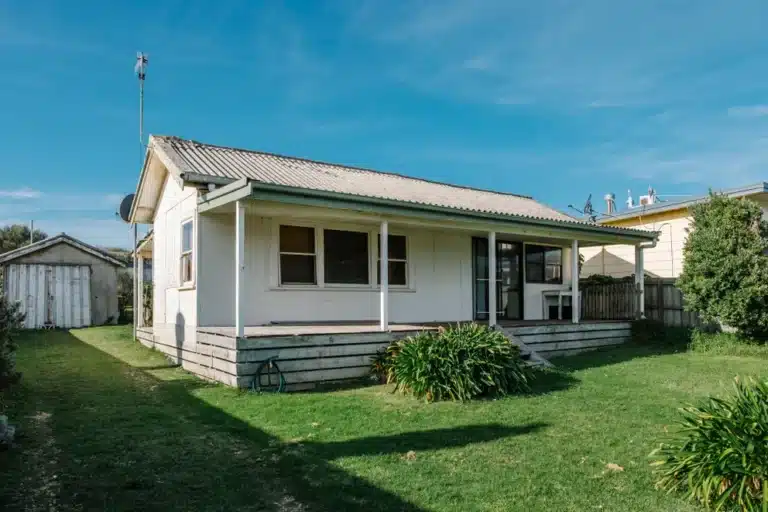
The house was mine, every inch of it. Blue-gray siding, white trim, a broad porch that caught the morning sun just right, and a fenced backyard big enough for the dog I kept promising myself I’d adopt once life stopped feeling like a constant act of defense. It sat at the end of a quiet street in Raleigh, worth every hard-earned dollar of the $550,000 I paid for it.
I was thirty-four, a senior project manager at a medical software company, and I had spent twelve years building a life nobody in my family had helped me create.
I closed on the house quietly. Changed the locks the same day. Installed cameras. Kept the address off social media. For six blissful weeks, it worked.
Then I pulled into my driveway one Tuesday evening after work and saw Jenna’s silver Honda parked crookedly at the curb.
I stopped so fast my coffee slid off the passenger seat and hit the floorboard, but I barely noticed.
The front door was unlocked.
The second I stepped inside, I knew.
My living room had been rearranged.
Not slightly. Not accidentally. My cream sofa had been shoved against the opposite wall. The bookshelf I had spent an entire Saturday assembling and styling was half-empty. Two framed prints leaned against the wall like they’d been rejected from someone else’s vision board. My dining chairs had been moved into the kitchen. And sitting by the staircase were three cardboard boxes labeled in thick black marker:
JENNA – BEDROOM
For one strange second, I didn’t feel anger.
I felt disorientation.
Like I had stepped into a house built to resemble mine, but inhabited by people who thought I no longer belonged there.
Then I heard drawers opening upstairs.
And Jenna’s voice floated down, light and careless.
“Mom, the guest room is smaller than I thought, but I can make it work.”
I stood there in the foyer, my keys still in my hand, and stared at the staircase as if maybe the woman coming down it would not be my sister.
But of course it was.
She appeared halfway down the stairs holding one of my throw blankets, smiling as though she had just caught me arriving a little ahead of schedule for a plan we’d made together.
“Oh,” she said. “You’re home early.”
I looked at her and asked the only question that mattered.
“What are you doing in my house?”
She rolled her eyes so hard it was almost theatrical.
“Relax. Mom said you’d be dramatic at first.”
At first.
That phrase told me this wasn’t impulsive. This wasn’t panic. This wasn’t a desperate sister with nowhere to go making one terrible decision.
This was organized.
Planned.
Discussed.
Approved.
I looked past her and saw more evidence. My jewelry dish from my bedroom now sat downstairs on the hallway console. My mail had been moved. My bedroom closet upstairs stood open. She wasn’t just visiting. She was planting herself into the structure of my home, moving my things around like she was editing my life into one she found more useful.
“Where did you get a key?” I asked.
Jenna shrugged.
“The spare. Dad still had it from when he helped with your move.”
I had never given my father a spare key.
That was the moment the confusion ended.
This wasn’t family overstepping. This was trespassing, entitlement, theft of access—my worst instinct about them made real.
I took out my phone.
Jenna’s expression changed, though not in the way a sane person’s would have. She didn’t look guilty.
She looked insulted.
“Lauren, don’t be insane.”
I pressed call anyway.
“911,” I said when the operator answered. “My sister entered my house without permission, and she’s inside moving her belongings in.”
That got her moving.
She rushed down the rest of the stairs, blanket still in her arms, her face flushing with outrage.
“Hang up right now.”
I backed toward the open front door, putting space between us.
“No.”
“This is family.”
“This is trespassing.”
The operator asked if I felt threatened. I gave my address, explained about the unauthorized key, and stayed calm while Jenna spun in circles around the room like indignation itself could undo what she had done.
Then she called our mother.
“Mom, she actually called the cops,” she hissed into the phone. “No, seriously. She’s doing this. She’s acting crazy.”
I ended my call and looked around.
It got worse the longer I stood there. Her coat hung over my banister. A ceramic bowl holding her keys and lip balm sat on my entry table. A framed photo of her and her son had been placed on my kitchen counter like a flag planted on conquered land.
My mother arrived before the police.
Of course she did.
Elaine swept through the front door in a linen pantsuit and oversized sunglasses like she was entering a luncheon, not a crime scene. She took one look at Jenna on the sofa and me in the middle of the room and immediately chose her side, just like she always had.
“What have you done?” she demanded.
I laughed once, because there was nothing else to do with that level of audacity.
“I called the police because Jenna broke into my house.”
“She did not break in,” my mother said. “Your father had a key.”
“No, he didn’t.”
“He must have. Jenna had one.”
That was my family in one sentence—logic bent backward to protect the person causing damage.
I folded my arms. “I never gave Dad a key. So either one of you copied it without permission, or you took it from somewhere in my belongings. Which is it?”
My mother’s expression hardened. The pretense of confusion dropped immediately.
“You have three bedrooms,” she said. “Jenna and Mason are struggling. This house is too big for one person. Family helps family.”
There it was.
Not guilt. Not apology. Redistribution.
My home had already been mentally converted into a family asset, one that I was selfishly refusing to release.
“Did you ask me?” I said.
She scoffed. “You would have said no.”
“Yes,” I said.
Jenna stood then, dabbing at eyes that weren’t wet. “You’d really let your nephew suffer instead of helping me?”
I looked at the boxes by the stairs, the rearranged furniture, the blanket in her hands, and the absurdity of the question nearly took my breath away.
“Temporary?” I asked. “You’ve already assigned yourself rooms.”
Neither of them answered because there was no answer that didn’t make them sound exactly like what they were.
Red and blue lights flashed through the front windows.
The silence that followed was clean and immediate.
Three officers entered, led by one named Ramirez, who took in the scene with exactly the kind of expression I wanted to see: alert, unimpressed, and already skeptical of the nonsense.
He asked who made the call. I stepped forward.
I explained that I owned the property, that my sister was inside without permission, that my belongings had been moved, and that I had never authorized anyone in my family to live there. I showed him the property app, my closing documents, and then—because fate occasionally has a wicked sense of timing—a text my father had sent me two weeks earlier.
Still keeping that emergency key in the side planter?
At the time, I’d ignored it.
Now it lit up everything.
Officer Ramirez turned to Jenna. “Do you have permission to be here?”
She hesitated, glanced at our mother, and then said, “Mom said it was fine.”
He looked at Elaine. “Do you own the property?”
“No,” she said stiffly. “But I’m her mother.”
“That is not the same thing.”
For the first time, Jenna looked uncertain.
Then came the question that broke the whole thing open.
“How exactly did you get inside?”
She paused too long.
Then she said it. “Dad gave me the spare.”
The officer turned to me. “Did you authorize your father to have or distribute a key?”
“No.”
He nodded once and started writing.
My mother stepped forward, suddenly eager to smooth things over now that consequences had badges.
“This is being blown out of proportion. There’s no criminal intent here.”
Officer Ramirez slowly looked around the room—the moved furniture, the boxes, the personal items, the open drawers upstairs.
“With respect, ma’am,” he said, “someone entered a residence without the owner’s permission and began taking control of the space. That’s not a misunderstanding.”
Jenna’s confidence cracked at last.
“I wasn’t stealing anything,” she said. “I just needed somewhere to stay.”
“You could have asked,” I said.
That shut her up because it was true, and truth sounds very different when witnesses are present.
My father arrived a few minutes later, red-faced and breathing hard, still in his work polo. He tried to start with authority, but the officers already had the shape of the situation.
At first he claimed I had “left the key around.” Then, under pressure, he admitted he had copied it from the temporary lockbox key I had once given him months earlier while I was waiting on the locksmith during move-in week. He kept the copy “just in case.”
And when Jenna got evicted again, they decided my house was the solution.
Without asking me.
Because, as he put it, “Lauren always has her life together.”
That sentence hit me harder than the break-in.
Because it was the truest thing anyone had said all evening.
I did have my life together. I had worked for that. I had planned for it. I had protected it. And in my family, competence had become permission for them to assign my resources to whoever needed rescuing more dramatically.
Jenna got sympathy.
I got assumptions.
The officers gave me choices. I could formally trespass Jenna from the property. I could file a report documenting unlawful entry and unauthorized key duplication.
I said yes to both.
My mother looked at me like I had just crossed some unspeakable line.
“You would do this to your own sister?”
“No,” I said. “I would do this for myself.”
Jenna wasn’t arrested that night, but she was ordered to remove everything immediately and warned that coming back without permission would get her arrested. My father was cautioned about the copied key. The report was filed. The event was documented. That was enough for my attorney the next morning to start drafting exactly what I needed next.
New locks.
Better cameras.
Certified letters.
A formal notice that none of them had access to my home again.
The fallout unfolded exactly the way it always does when entitled people finally meet a boundary they can’t manipulate.
My mother called me cruel.
My father called me unforgiving.
Jenna told everyone I had “chosen a house over family,” which might have been more effective if she hadn’t literally tried to move into it while I was at work.
I stopped answering.
Three months later, I adopted the dog.
A black-and-white mutt from a rescue with one bent ear and cautious eyes. I named him Bishop. The first night he curled up against the couch Jenna had tried to claim, I sat in the quiet and realized the house finally felt fully mine.
Not just because I had bought it.
Because I had defended it.
What changed everything wasn’t the police report. It wasn’t the locks or the letters or the neighbors who now knew exactly what my family was capable of.
It was the truth being dragged into the open.
This had never been about helping Jenna.
It was about a family that believed my privacy was selfishness, my success was communal property, and my boundaries were temporary obstacles waiting to be worn down.
They thought they were solving Jenna’s problem.
Instead, they lost their access to me.
And in the end, that house became exactly what I had hoped it would be from the start.
Not just a place to live.
A line no one in my family would ever cross again.
More From Daily Positive
 My Wife Abandoned Me with Our Blind Newborn Twins – 18 Years Later, She Returned with One Strict Demand
 Couple left to die in shark-infested waters – their diary entries are chilling
 After My Grandma's Death, My Husband Rushed Me to Sell Her House — When I Learned the Reason, I Was Furious and Made Him Regret It
 I bought my $550,000 house in secret because I knew the people closest to me would try to take it the moment they found out.
 My Husband Left Me for Giving Birth to a Girl – Years Later, I Saw Him in a Supermarket, and My Daughter Did Something I’ll Never Forget
 Doctors reveal that guava leaf tea causes…