Thimbles may be small enough to fit on the tip of a finger, but their history stretches across centuries, cultures, and continents. These humble tools—originally designed to protect fingers from the prick of a needle—have transformed over time into intricate works of art, status symbols, and coveted collectibles.
What began as a purely practical object became a canvas for craftsmanship, a token of sentiment, and a quiet witness to the intimate act of sewing, a skill once central to daily life.
From Ancient Workshops to Timeless Keepsakes
The earliest known thimbles trace back to the ruins of Pompeii, where archaeologists uncovered examples dating to the 1st century AD. These Roman thimbles were crafted from bronze—durable, functional, and elegant in their simplicity. Though designed for utility, their survival through volcanic ash speaks to the enduring value of such tools in everyday life.
From those ancient beginnings, the thimble’s journey would weave itself through the Middle Ages, the Renaissance, and into the industrial era, each period shaping its form and meaning.
Materials That Spoke of Time and Place
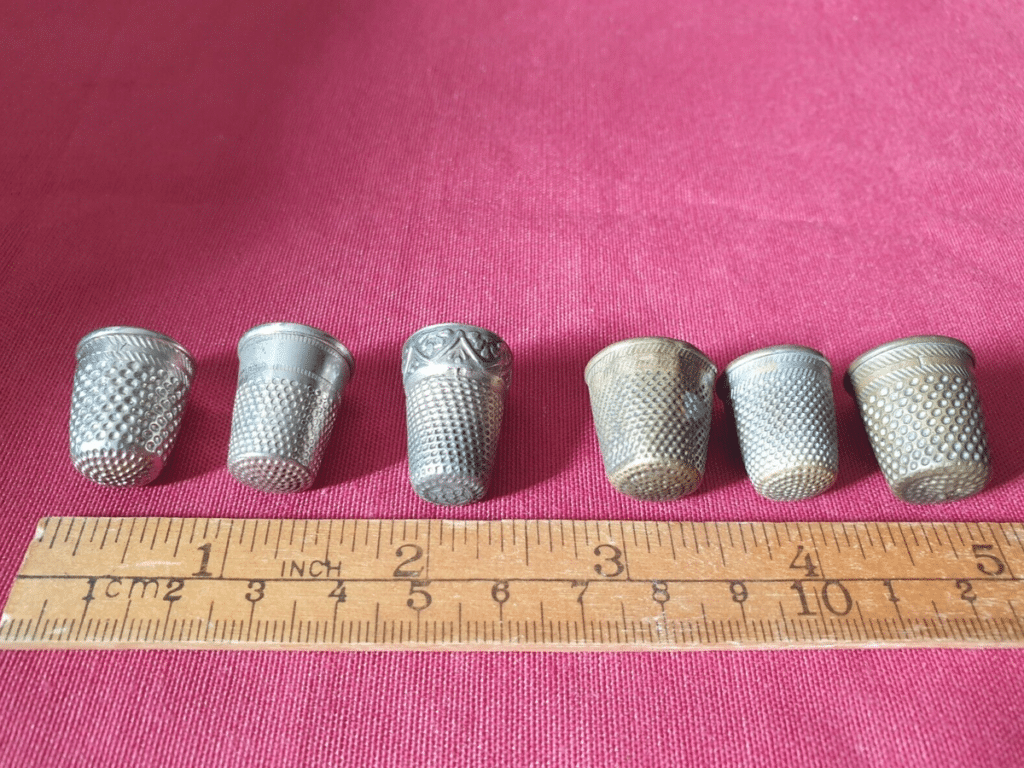
In medieval Europe, thimble makers experimented with a variety of materials—leather for flexibility, wood for affordability, and metals for durability. By the 14th century, Nuremberg, Germany, had become the epicenter of high-quality brass thimble production, a reputation so strong that its influence spread across Europe.
By the 17th century, thimbles had stepped beyond mere practicality. The wealthy adorned their sewing kits with silver and gold versions, sometimes set with enamel or tiny gemstones. Such pieces were as much a statement of refinement as they were a working tool—an elegant fusion of art and utility.
Beyond Sewing: Tools of Trade and Touchstones of Culture
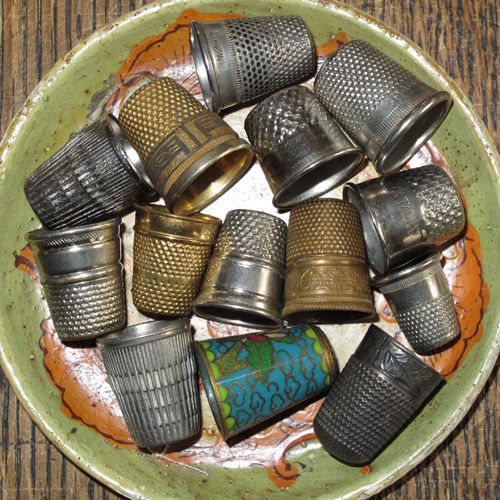
Though forever linked to sewing, thimbles also found their place in other trades: bookbinders, lace-makers, and leatherworkers all relied on them for precision and protection.
In popular imagination, thimbles took on symbolic roles. In J.M. Barrie’s Peter Pan, a thimble is offered as a kiss—turning a tool of labor into an emblem of affection. Even in the playful world of board games, the thimble earned a place: Monopoly’s original set of tokens, launched in the 1930s, included one, reflecting how ubiquitous sewing once was in every home.
From Workbench to Display Case
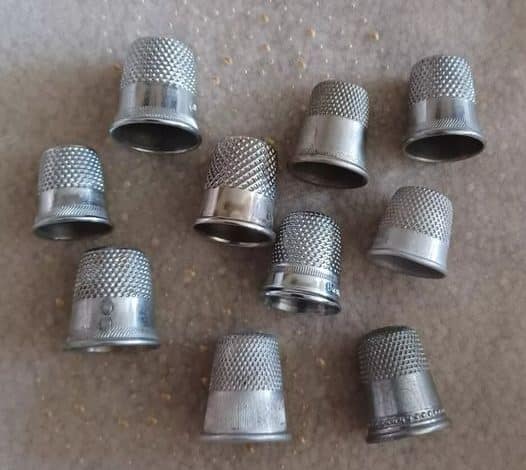
Today, vintage thimbles hold a special charm for collectors. Some focus on materials—porcelain painted with delicate floral motifs, bone china with gilt edges, sterling silver etched with fine patterns—while others collect by era, tracing shifts in design across the centuries.
Museums such as the Fingerhut Museum in Creglingen, Germany, house thousands of examples, from rustic workaday models to rare presentation pieces. Each thimble tells its own story—of the hands that used it, the fashions it passed through, and the societies that shaped it.
A Tool That Refuses to Fade Away
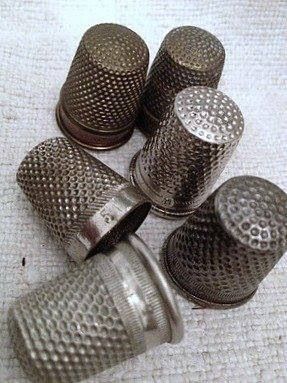
Even in an age when sewing is less a necessity and more an art form, thimbles continue to inspire. Contemporary artisans craft them in traditional styles or experiment with modern materials, blending heritage with innovation. They appear in jewelry design, miniature sculpture, and commemorative art, ensuring the thimble remains as relevant to creative expression as it once was to daily survival.
More Than Metal and Porcelain
The thimble’s long journey—from ancient bronze to modern collectibles—reminds us that even the smallest tools can hold vast histories. It is an object born of necessity, refined through artistry, and kept alive by both tradition and imagination.
A thimble may protect a single fingertip, but its story spans millennia—stitched together by the hands of countless generations, each leaving a mark on its enduring legacy.


