It was meant to be the adventure of a lifetime—a descent into the icy depths of the Atlantic to visit the world’s most iconic shipwreck. Instead, it became a modern maritime tragedy that would send shockwaves around the globe.
Two years after the catastrophic implosion of the Titan submersible, a haunting new detail has come to light: the moment Stockton Rush’s wife, Wendy, heard the very sound of her husband’s death.
Back in June 2023, five men boarded the Titan—a deep-sea sub owned and operated by OceanGate, a company specializing in underwater tourism. Among them were OceanGate CEO Stockton Rush himself, British billionaire Hamish Harding, Pakistani businessman Shahzada Dawood and his 19-year-old son Suleman, and renowned French diver Paul-Henri Nargeolet. Their destination: the remains of the RMS Titanic, resting nearly 13,000 feet below the surface.
But what was intended to be a pioneering voyage quickly turned into a fatal descent. Just 90 minutes after beginning their dive, the sub imploded under the crushing pressure of the ocean, killing everyone aboard in an instant.
At first, no one on the surface knew what had happened. The crew monitoring the expedition from the support ship lost contact with the submersible, sparking a high-profile, multi-agency search. For four days, the world held its breath, hoping for a miracle rescue. But behind the scenes, the truth had already unfolded in a split second of violence that crushed the Titan beyond recovery.
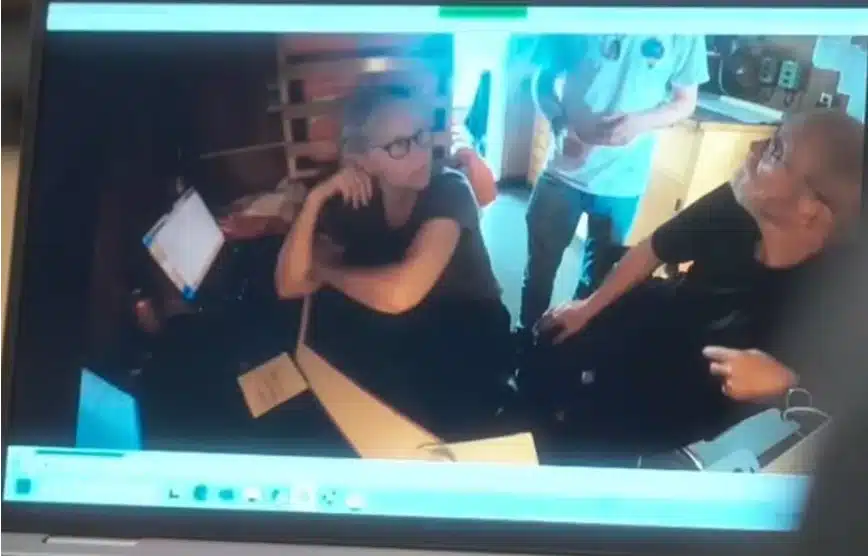
In a newly released BBC documentary, audio shared by the U.S. Coast Guard reveals the eerie moment of the implosion. The footage shows Wendy Rush aboard the support vessel, monitoring communications from below. Without warning, a sharp, percussive sound—described by some as a loud door slam—echoes through the ship’s radio system. Wendy, confused and unaware of the gravity of what she just heard, turns to the crew beside her.
“What was that bang?” she asks.
That chilling sound marked the last moment the Titan existed in one piece.
According to the U.S. Coast Guard, the noise came just before the surface crew received what would be the sub’s final text message, stating it had “dropped two weights”—a normal part of its routine ascent. But that message had been delayed in transmission. In reality, the Titan had already been reduced to debris by the time it was received.
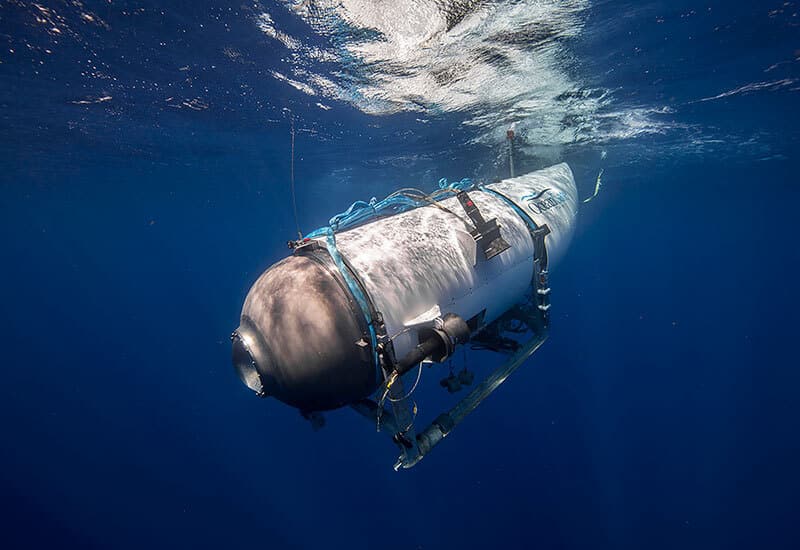
Investigators eventually discovered the wreckage roughly 500 meters from the Titanic’s hull—twisted remnants that told a story of immense pressure and catastrophic failure.
In the aftermath, disturbing questions surfaced. Had the tragedy been preventable?
David Lochridge, a former director of marine operations at OceanGate, had long expressed concerns about the sub’s design and the company’s alleged disregard for engineering standards. In a chilling email revealed during the inquiry, Lochridge wrote, “I don’t want to be seen as a tattletale but I’m so worried he kills himself and others in the quest to boost his ego.”
Stockton Rush, for his part, wasn’t shy about breaking convention. “You’re remembered for the rules you break,” he once said. Speaking of the Titan’s engineering, he had claimed, “I’ve broken some rules. I think I’ve broken them with logic and good engineering behind me.”
But many now question whether logic and ambition clouded critical safety decisions.
Travel Weekly editor-in-chief Arnie Weissman was originally meant to be on that doomed June dive. A last-minute scheduling conflict kept him from joining. The night before the voyage, he recalled a conversation with Rush that now feels almost prophetic. Rush had boasted of using carbon fiber obtained from Boeing “at a big discount” because it was “past its shelf life for use in airplanes.”
“I responded right away, saying, ‘Don’t you have any concerns about that?’” Weissman said. But Rush dismissed the idea, insisting the material was “perfectly sound.”
Evidence now suggests that Titan may never have been suitable for the extreme depths it was built to reach.
Five men died in pursuit of discovery and innovation—but at what cost? The sound Wendy Rush heard that day will forever echo as a stark reminder: when you push the boundaries of exploration, cutting corners can carry fatal consequences.
May they all rest in peace.
