In 1960, Jim Reeves released a song that would go on to redefine country music and blur the lines between genres—He’ll Have to Go. With its smooth vocals and lush orchestration, the track resonated with listeners far beyond traditional country audiences, turning Reeves into a legend. His voice was rich and velvety, his style refined, and the song itself became a cultural phenomenon that showcased Nashville’s finest talent.
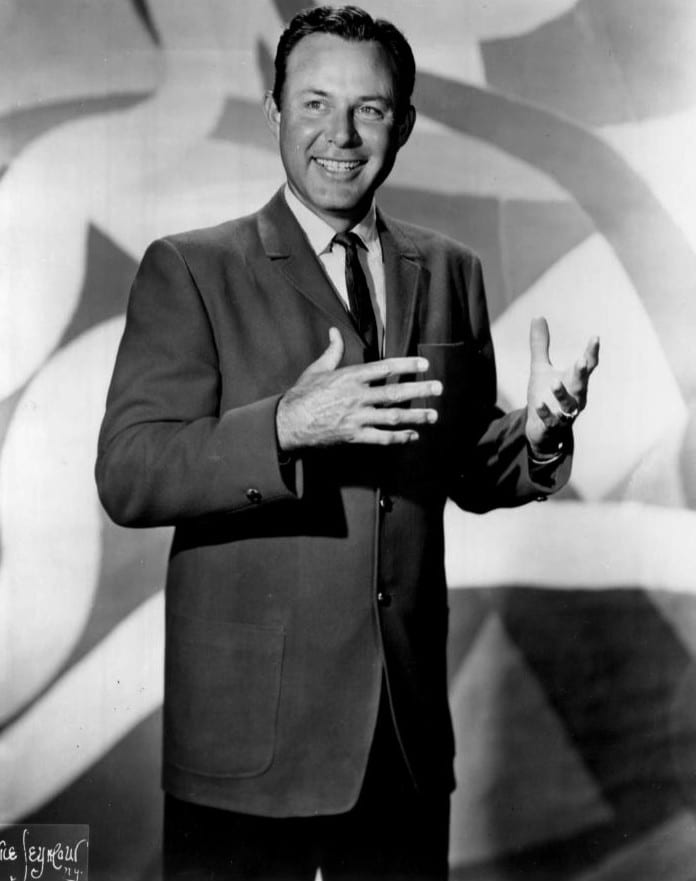
Jim Reeves wasn’t just another country singer. Dubbed “Gentleman Jim,” he had a unique ability to balance elegance with the raw emotion that defined country music. Born in Texas, Reeves initially worked as a radio announcer before transitioning to a full-time music career. By the time He’ll Have to Go was released, he had already established himself as a star, but this song propelled him to a whole new level of fame. His deep, smooth voice and emotive delivery set him apart, creating a signature style that became instantly recognizable.
The origins of He’ll Have to Go are as compelling as the song itself. Written by Joe and Audrey Allison, the inspiration for the lyrics came from an intimate and heart-wrenching moment overheard at a bar. A man, desperately trying to win back his lover, pleaded with her over the phone, telling her to bring her lips closer so he could feel connected despite the distance. That simple yet evocative sentiment became the foundation of the song’s iconic opening line, “Put your sweet lips a little closer to the phone.” It was a melody soaked in longing, vulnerability, and quiet desperation, emotions that millions of listeners found deeply relatable.
When Jim Reeves recorded the song, it wasn’t just about the words—it was about the way he felt them. His performance was understated yet powerful, every syllable laced with sincerity. Producer Chet Atkins ensured that the instrumentation remained subtle, allowing Reeves’ voice to take center stage. The result was an intimate, heart-wrenching ballad that felt both personal and universal.
The song’s impact was immediate. It soared to the top of the Billboard Country Chart and even crossed over to the Pop Chart, peaking at No. 2. This was a defining moment for country music, proving that the genre could not only achieve mainstream success but do so without losing its authenticity. Reeves’ polished delivery and the song’s orchestral arrangement helped cement the Nashville Sound—a smoother, more refined take on country music that appealed to wider audiences.
Beyond the numbers, He’ll Have to Go became a cultural touchstone. The heartbreak and sincerity in the lyrics made it a song that resonated across generations. People from all walks of life connected with the longing in Reeves’ voice, and his performance turned it into an anthem of lost love and quiet regret. His ability to convey deep emotions with effortless grace ensured that his rendition remained the definitive version.
With the success of the song, Jim Reeves’ fame exploded beyond the borders of country music. He toured internationally, bringing country to audiences who had never been exposed to it before. His smooth and polished approach helped shape the future of the genre, proving that country music could be both sophisticated and emotionally rich.
He’ll Have to Go wasn’t just another hit—it was a game-changer. It set the stage for country music’s crossover appeal, something that later artists like Shania Twain, Taylor Swift, and Keith Urban would build upon. The song’s influence extended beyond just country radio, inspiring artists across multiple genres. Legends like Elvis Presley and Ry Cooder recorded their own versions, but none captured the magic quite like Reeves. His rendition remained the gold standard, a testament to his vocal prowess and ability to touch hearts.
Tragically, Jim Reeves’ life was cut short in 1964 when he died in a plane crash at just 40 years old. His sudden passing left a massive void in the world of music, but his legacy lived on through his recordings, especially He’ll Have to Go. The song remained a staple on radio stations and jukeboxes for years, a lasting tribute to his incredible talent. Even after his death, Reeves’ contributions to music were recognized when he was posthumously inducted into the Country Music Hall of Fame.
Decades later, He’ll Have to Go continues to be one of the most beloved country songs of all time. It has been featured in movies, TV shows, and commercials, introducing new generations to its timeless melody and haunting lyrics. The magic of the song lies in its simplicity—raw emotion wrapped in a melody that never fades.
Jim Reeves’ ability to blend country with pop left an enduring mark on the music industry. His smooth vocals, sophisticated style, and heartfelt delivery changed the way country music was perceived. His legacy is still felt today in artists who dare to push genre boundaries while staying true to their roots. He’ll Have to Go wasn’t just a song—it was a milestone in music history, a moment of brilliance that continues to resonate.
His music reminds us that great songs transcend time, connecting people across generations. He’ll Have to Go remains a masterpiece, proof that simplicity, emotion, and an unforgettable voice can make a song last forever. For those who have yet to experience the magic of Jim Reeves, this is the perfect time to discover a legend whose influence still echoes through country music and beyond.


